 Groundhopper
Start free
Groundhopper
Start free
What is the Ticket Vault, and what happens to your tickets?
Where the file actually goes, who can open it, why the AI reader is a button and not an automatic step, and how a ticket gets onto your phone for a turnstile with no signal.
The problem it solves
Tickets arrive by email and then quietly disappear. The PDF is somewhere in an inbox behind a search term you no longer remember; the paper stub from 2014 is in a drawer, or it is not. Neither is attached to the match it belongs to, so the day you want to look at it, you are searching two places at once and finding neither.
The Vault is the boring answer to that: one place, one gallery, sorted by date, searchable by team, ground or city. Nothing clever. The value is entirely in not having to look.
What you can put in it
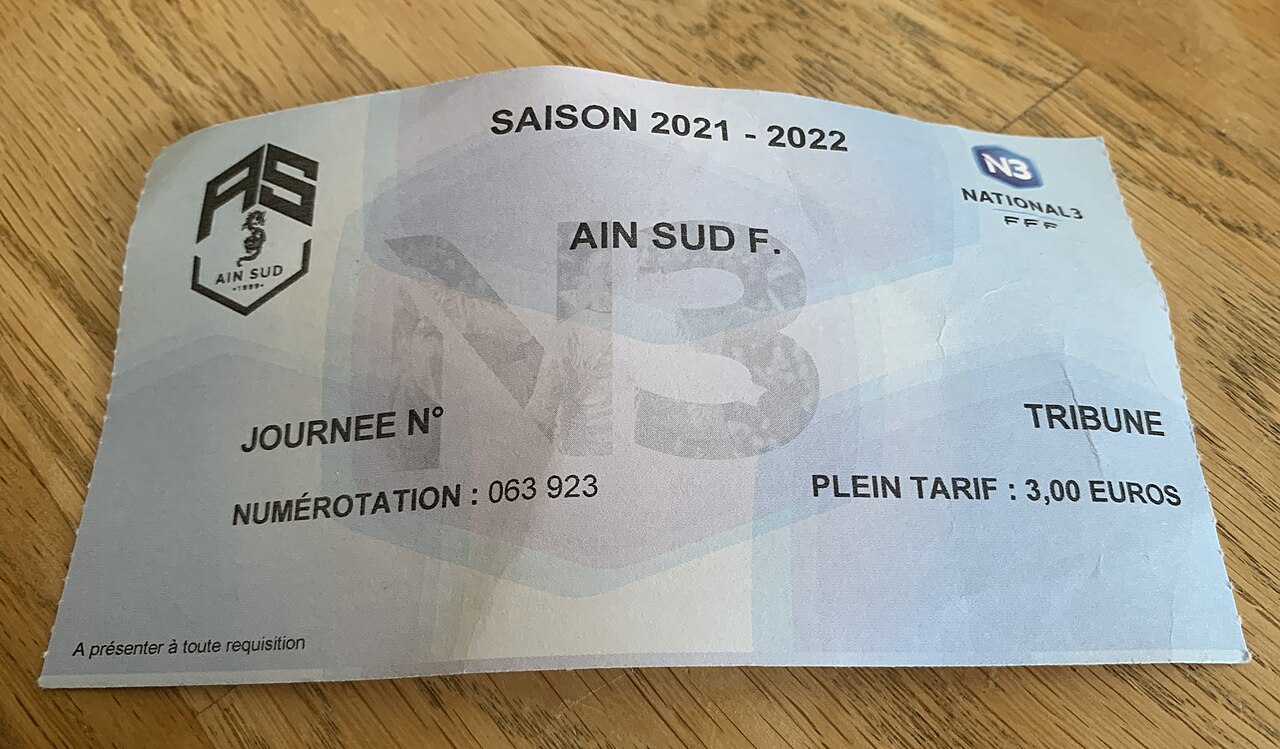
Tap Add ticket at the top of the Ticket Vault page and pick a file. Four formats are accepted: PDF, JPG, PNG and WebP. PDF is first on the list on purpose, because that is what clubs actually send, and re-photographing a screen produces exactly the sort of blurry image that causes trouble later.
The size limit is 10 MB per file — a club PDF is normally a fraction of that — and an account can hold 200 tickets. That ceiling is there so a single account cannot fill a disk, not because anybody expects you to reach it.
.jpg)
Where the file actually goes
This is the part people ask about, and it deserves a straight answer rather than a reassuring adjective.
The file is stored on our server, outside any publicly reachable folder. It is never served straight from a directory, so there is no address anybody can guess. Every single time a ticket is opened, the request goes through a check that it is your ticket and that your plan is active — that check lives in one place and there is no route around it. There is no share link, and no way to publish a ticket. Your public profile does not contain one.
A ticket routinely carries more than a seat number: your name, a booking reference, sometimes a national identity number. We do not read them. They sit exactly as you uploaded them until you delete them. The full wording is in the privacy policy.
Reading a ticket with AI — only if you ask
There is a Read match details button on an open ticket. It sends that one file to our AI provider once, to pick out the teams, the date and the ground, and it shows you what came back.
Three things about it are deliberate, and worth knowing before you tap it:
- It is a button, not an automatic step. Nothing is sent anywhere when you upload. A ticket only leaves our server if you choose to send it, and the app warns you first.
- It changes nothing on its own. The reading appears on screen and you decide whether to log the match. An automatic reader that is confidently wrong about a match from 2011 is worse than no reader at all.
- It has a daily cap, like every AI feature here, because every call costs us money. The exact numbers are in section 12 of the terms. Normal use does not come near them.
If you would rather the ticket never left our server, do not press the button. Every match can be typed in by hand in about thirty seconds, and nothing about your record depends on the reader.
Keep for matchday — the ticket at the turnstile
Tickets live on our server, and reaching a server needs a connection. Twenty thousand people arriving at the same gate in the same ten minutes is precisely where a connection stops existing.
So, while you still have reception, open the ticket and tap Keep for matchday. A copy is saved inside the browser on that one device and opens from the matchday screen with no network at all. Nothing is ever saved there by itself — it is one deliberate tap.


The rules on that copy are narrow on purpose:
| What happens | |
|---|---|
| How many at once | Up to five. More than that is not a matchday, it is a second copy of the vault. |
| How long it stays | Until the day after the match. Without a date on the ticket, a week. |
| Signing out | Cleared. |
| A different account on that phone | Cleared. |
| Plan no longer active | Cleared. |
| Removing it yourself | One tap on the matchday screen, at any moment. |
One honest limit. A copy already on your phone can only be cleared the next time that phone is online. A device that never reconnects is beyond our reach. We would rather write that down than imply a remote wipe we do not have — and it is exactly why nothing is stored there unless you ask for it.
What it cannot do
Some clubs issue entry only through their own app, with a barcode that refreshes every few seconds. Those cannot be saved — not by us, and not by any other app. A screenshot of a refreshing code is a picture of a code that has already expired. For those matches the club app is your ticket, and the Vault is for afterwards: photograph the confirmation, or nothing at all, and log the match by hand.
The Vault also does not add matches to your journey on its own. Uploading a ticket and logging a match are separate acts, in that order or the other one.
The tickets are the evidence; the match log is the record. If you have not started one yet, that is the part worth doing first — it is free, it needs no card, and it works without a single ticket. Start your match log.
Deleting, and what happens if you stop paying
You can delete any ticket at any time, from the ticket itself, and the file is removed from our servers for good. The match and the trip stay in your journey; only the file goes.
Deleting works on the free plan too. If a subscription lapses you lose access to the Vault, but you never have to pay in order to remove your own file. Charging someone for the right to delete their own data would be indefensible, and we have not built it that way.
Nothing else is deleted when a plan ends. Your matches, your map, your stadium list and your history are yours on any plan.
Do you need it?
Honestly: not to keep a football record. Matches are logged by hand on the free plan, the map draws itself, and none of that involves a ticket.
The Vault earns its place if you are the sort of supporter who already keeps the stubs — the person with a shoebox, or the one who has photographed every ticket since 2016 and has them scattered across three phones. It turns that instinct into something ordered, and it means the PDF for Saturday is in the same place as the stub from a decade ago.
If you throw the ticket away at the final whistle, skip it. We would rather say that than sell you a gallery you will never open.
Questions people actually ask
Can anyone else see my tickets?
No. There is no share link and no public view. Every download is checked against your account.
Will it work if I have no signal at the ground?
Only for tickets you deliberately kept for matchday, in advance, while you still had a connection. Everything else needs the network.
Does uploading a ticket create the match?
No. Add the match yourself — the reader can tell you what is printed on the ticket, but it never writes to your journey without you.
What if my ticket is a photo of a paper stub from years ago?
That is the best thing you can put in it. Thermal print fades, and an old stub is the one ticket that genuinely cannot be re-downloaded from anywhere.