 Groundhopper
Start free
Groundhopper
Start free
Sparta Prague stadium guide — Letná, Prague
Buy online, walk in with your phone, pay about six euros. Letná is the easiest ticket in Central European football and a short walk from the Old Town.
.jpg)
The easiest ticket in Central European football
It is worth being blunt about how unusual this is. Across the border in Poland, buying a ticket as a foreigner means a national identification number you do not have and a trip to a ticket window with a passport. At Sparta you open the website, pay, and walk in with your phone.
There is no supporter card, no identification requirement for an ordinary league fixture, and nothing to print. For away-section tickets the club sells up to three hours before kick-off from box office 5, which is about as late as any club in Europe will let you leave it.
At around 170 CZK for a single league ticket, this is also one of the cheapest top-division matches in the European Union.
Getting there
Letná sits on the Letná plain in Holešovice, north of the river and genuinely close to the middle of Prague.
- By tram: the stop is Sparta, directly by the ground.
- By metro: Hradčanská (line A) and Vltavská (line C) are both walkable.
- By bus: the 909 stops nearby.
- On foot: from the Old Town across Čechův most and up through Letná park is about half an hour and one of the better walks to a football ground anywhere.
Parking around the stadium is limited. Use the trams; Prague's network is dense, cheap and frequent, and inspections are common, so validate.
Where away fans sit
Visiting supporters are housed in the north-west corner, between the main stand on the west side and the northern goal end.
Away fans are searched on entry and must use the away section only — the club is firm about this. Neutrals should buy into a side stand instead and will have no difficulty doing so.
The ground itself
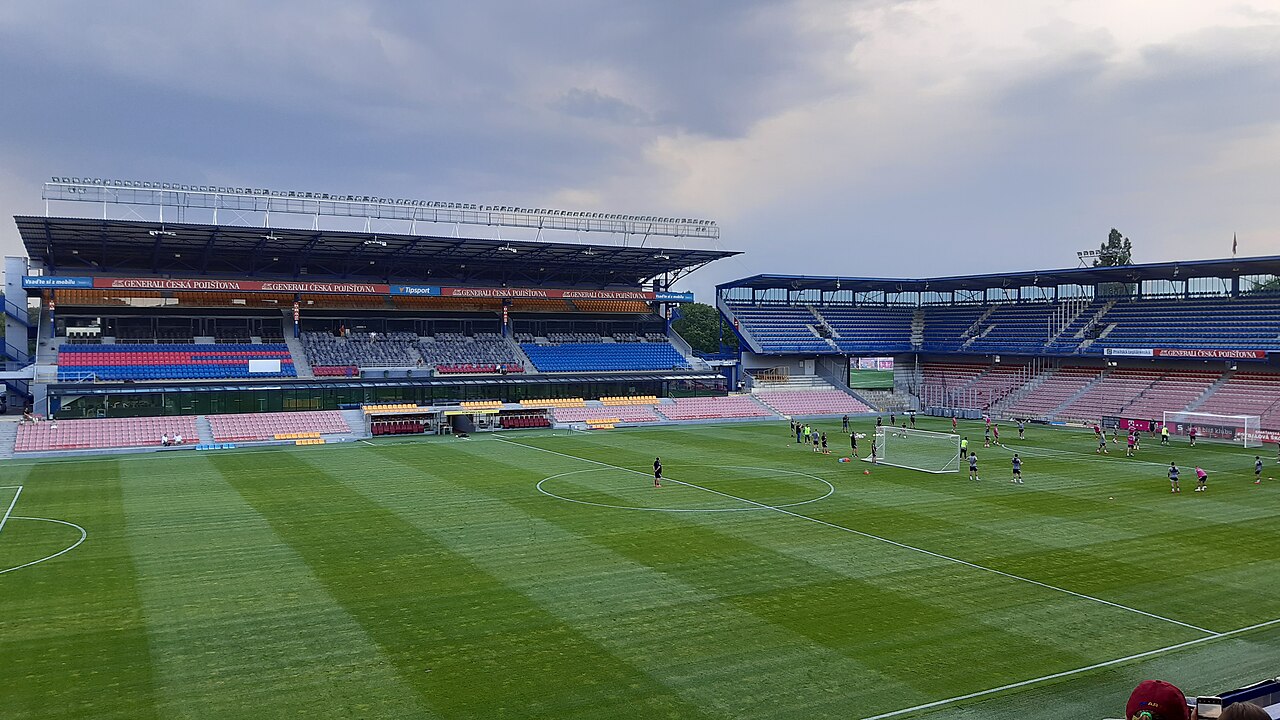
Sparta have played at Letná since the 1920s and the current stadium is a rebuild of a much older ground rather than a new-build on a green field. It holds 18,944 and carries a sponsor name that changes every few years — you will find it called the Generali Arena, the epet ARENA and simply Letná in sources of different ages. Supporters call it Letná.
It is tighter, older and less architecturally tidy than Slavia's stadium across the city, and for a lot of visitors that is the appeal. This is a proper old European ground in a proper old European city, twenty minutes' walk from a medieval square.
The derby
Sparta against Slavia is the derby pražských S — the derby of the Prague S's — and it is among the oldest and largest fixtures in Central European football. The two clubs were founded within a few years of each other at the end of the nineteenth century and have been the dominant pair in Czech football ever since.
Two practical consequences. First, it is the one fixture in the Czech calendar where the relaxed ticketing described above stops applying: it sells, allocations are controlled, and it is not a match to leave to the week before. Second, it is not the fixture to attend as a curious neutral in the wrong colours. Buy a side stand, wear neither, and enjoy it.
If the fixture list gives you the derby on a weekend you are in Prague, take it. If it does not, an ordinary league Saturday at Letná is still an easy and cheap afternoon.
Eating and drinking at the ground
Czech stadium catering: klobása off the grill, langoš, and lager at full strength — Czech law does not cap stadium beer the way Polish law caps it at 3.5%.
- It is cheap inside the ground as well as outside.
- Some Czech grounds run kiosks on a token or card system rather than taking payment at each counter. Look for the sign as you come in.
That said, you are ten minutes' walk from some of the best beer gardens in Prague. Drink there.
Prague before the match — the Letná side

What to see
The ground sits inside one of the best districts in the city for spending an afternoon, and it is not the one the tour groups use:
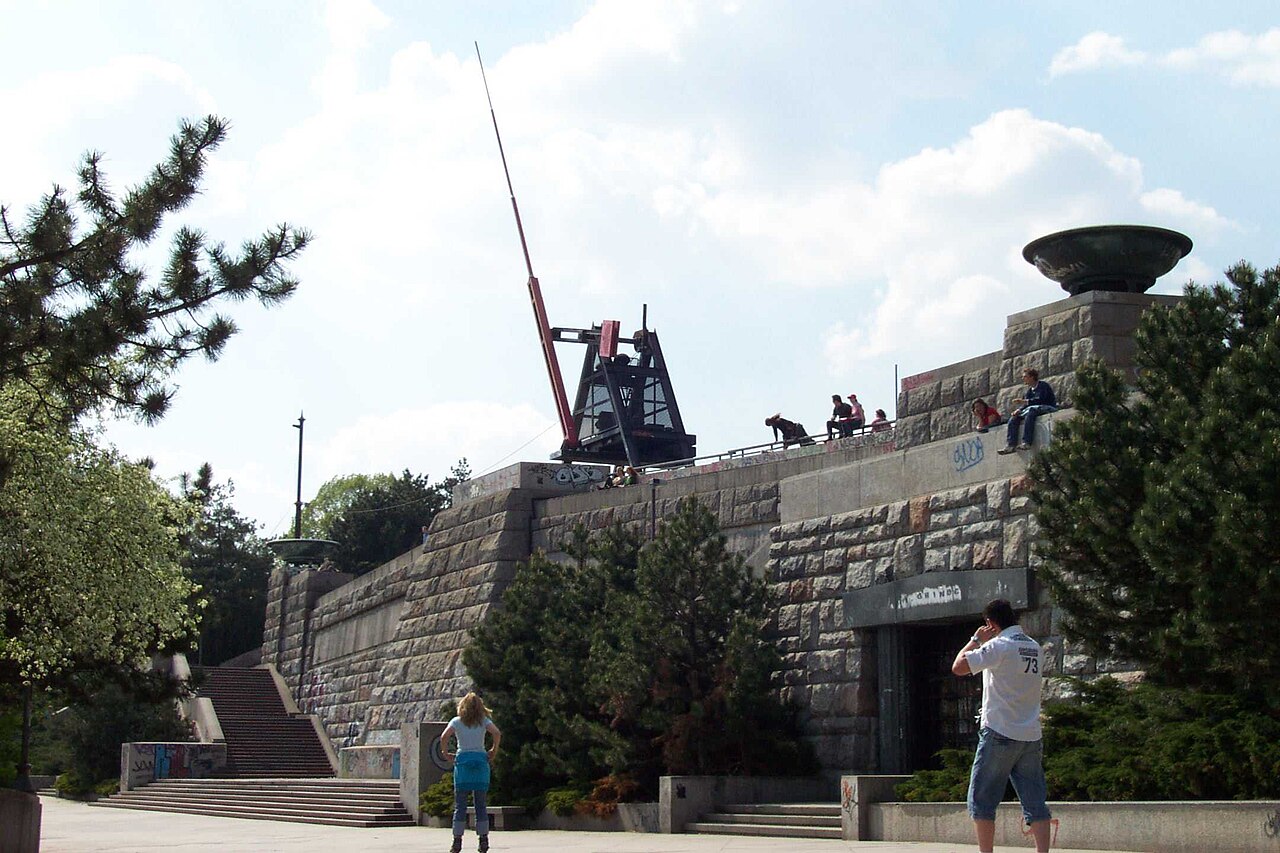
- Letná park — the plateau above the river, with the finest view of Prague's bridges anywhere. The metronome at the top stands on the plinth where a colossal statue of Stalin stood until 1962, when it was blown up. The plinth is still there.
- Letenský zámeček and the beer garden — open-air tables under the trees above the Vltava. On a warm evening before a match there is nowhere better in the city.
- Stromovka — the royal deer park north of the ground, and the biggest green space in Prague.
- Holešovice — the former industrial quarter behind the stadium, now full of galleries, the DOX centre for contemporary art, and a large covered market hall.
- Prague Castle — twenty minutes' walk west along the ridge if you want the postcard as well.
What to eat and drink
Czech pub food, done in a district where the pubs are for residents rather than visitors:
- Svíčková na smetaně — beef in cream sauce with bread dumplings and cranberries. The national dish.
- Guláš with dumplings, and smažený sýr — fried cheese with tartare sauce — which is the correct thing to eat after a match and at no other time.
- Utopenec — a pickled sausage, eaten with beer and dark bread.
On beer: look for tankové pivo, unpasteurised lager served from a tank rather than a keg. Prague pubs that serve it advertise it, and the difference is not marketing. Half a litre in an ordinary pub costs less than a coffee does in most European capitals.
Common questions
Can I really buy on the day?
For an ordinary league fixture, yes — and away-section tickets are sold until three hours before kick-off. For a Prague derby or a European night, buy early like anywhere else.
Do I need to print the ticket?
No. The turnstiles read a phone.
Can I do Sparta and Slavia in one weekend?
If the fixture list cooperates, easily — they are twenty minutes apart by tram. Two top-flight grounds, one metro ticket, one hotel. That is the case for Prague as a groundhopping destination in a sentence.
A ground twenty minutes' walk from a medieval square, with a ticket you buy on your phone. Add Letná to your bucket list and see whether Slavia are at home too.