 Groundhopper
Start free
Groundhopper
Start free
FC St. Pauli stadium guide — Millerntor-Stadion, Hamburg
Nearly seventeen thousand standing places, a stadium the club has refused to sell the name of since 2007, and the Reeperbahn a few minutes' walk away.
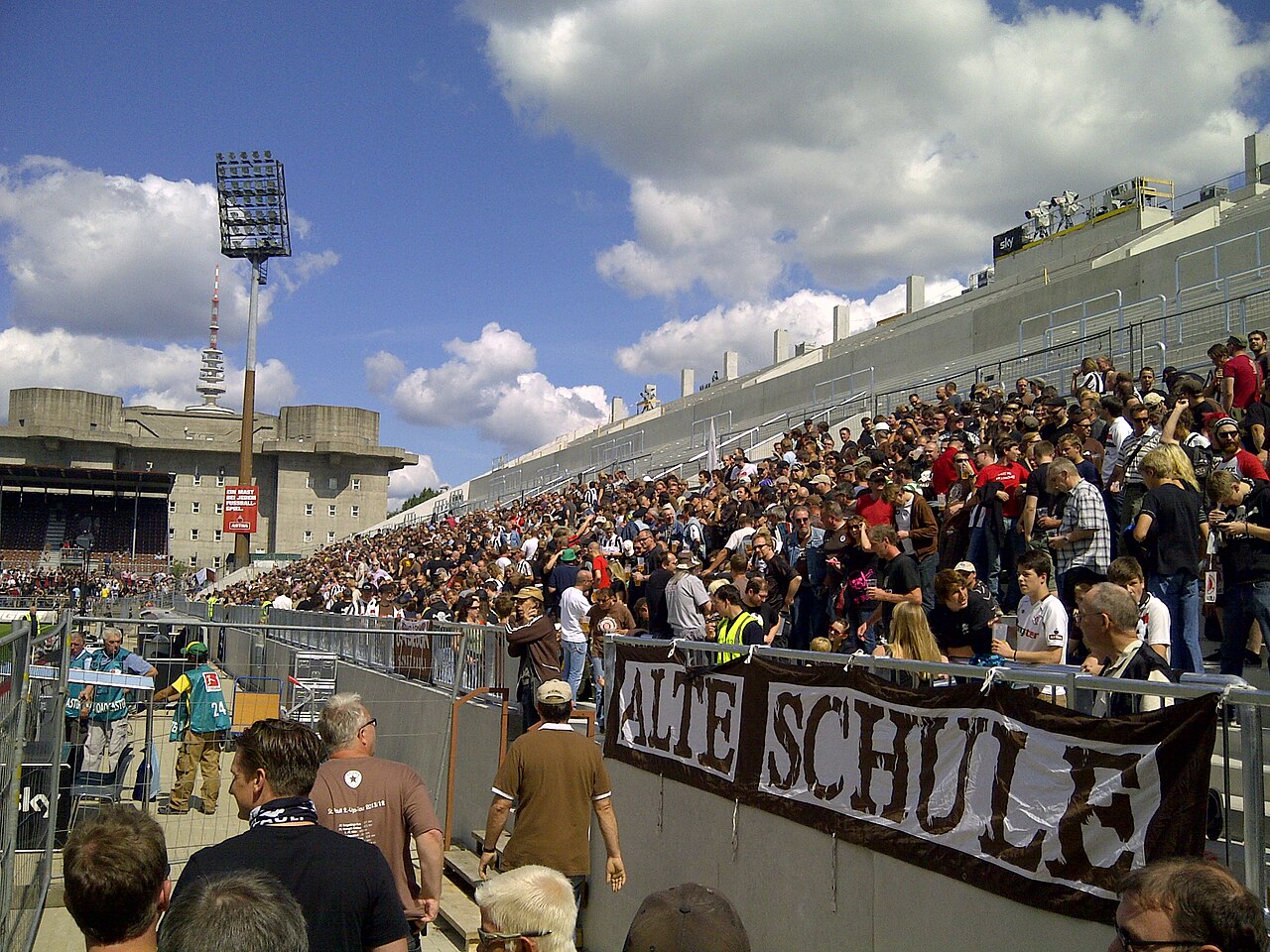

The most famous small club in Europe
St. Pauli have won nothing. No league title, no cup, no European campaign worth the name. They have spent most of their history in the second division and are back in it now.
They are also, by some distance, the club in this series that people abroad have most often heard of — and that is worth understanding before you go, because it determines everything about getting in.
The reputation was built in the 1980s, when the ground sat in a district of squats, dockers and sex work, and the crowd that assembled there decided what it wanted to be. The skull and crossbones came off the flags of the neighbourhood squatters. In 1991 the club adopted stadium rules banning racist and right-wing displays — early, and unusual at the time. The politics are not marketing bolted on afterwards; they arrived before the shirts did.
Two consequences follow for a visitor. The atmosphere is genuinely unlike the rest of Germany. And the demand is international, which makes a ground of under thirty thousand very hard to get into.
The stadium that refuses to be sold
Almost every ground in this series has changed its commercial name at least once. Bochum has had five. Stuttgart's changed while the photographs were still in circulation.
The Millerntor has not, and it is not an accident. In 2007 the club ruled out selling naming rights to the stadium. That decision has a history behind it: in the late 1980s supporters organised against a plan to replace the ground with a commercial "Sport-Dome", and won. The stadium you visit exists because the crowd blocked the alternative.
It was then rebuilt anyway, stand by stand, between 2006 and 2015 — South Stand, Main Stand, the Gegengerade along the far side, then the North — for around €55 million, while football continued throughout. The result is modern without being generic, and the terracing survived the rebuild rather than being seated over.
Getting there
- U-Bahn: St. Pauli or Feldstraße, both a short walk. Feldstraße puts you next to the ground.
- On foot: the Millerntor is in the middle of the city, not out on a ring road. From the Reeperbahn it is a few minutes.
- From the Hauptbahnhof: ten to fifteen minutes on the U3.
- Match ticket and transport: as at most German grounds, the ticket covers local public transport on the day.
Tickets
The German pattern applies — no document demanded, a queue behind season-ticket holders and members, general sale some weeks out — but St. Pauli is the hardest version of it in the second division and one of the hardest in the country.
Under thirty thousand places, a season-ticket base that absorbs most of them, a membership in the tens of thousands, and a following spread across Europe that plans trips around this fixture list. Do not travel to Hamburg assuming you will get in. Find the release date, be ready on it, and have a fallback.
The good news: this is a second-division season, so the fixture list carries more obtainable opponents than a Bundesliga one would. The bad news: everybody reading this knows that too.
Where away fans go
Visiting supporters get the allocation German league rules require, in the away section of a compact ground where you will be very close to the home crowd. Arrangements are set per fixture, so confirm yours. Neutrals should take a side stand, and should decide between terrace and seat before booking — the split here is unusually even, and it changes the day.
The ground itself
Four stands, tight to the pitch, no running track, and a terrace culture that most German clubs of this size quietly gave up. The Gegengerade along the far side is the one to know about.
The entrance music is Hells Bells by AC/DC, and it is not a small detail — it is a genuine set piece and the reason a good many people put this ground on a list in the first place. Goals are met with Blur's Song 2.
One practical warning: the Heiligengeistfeld is also a fairground. Three times a year the Hamburger Dom funfair occupies the open space beside the stadium for a month at a time, which changes the walk in, the crowds and the noise completely. Check the dates — it is either a bonus or an obstacle depending on your temperament.
Eating and drinking at the ground
Northern German catering: Bratwurst, Currywurst, and — this being Hamburg — Fischbrötchen, a bread roll with pickled or fried fish, which is the correct order here and at almost no other ground in this series.
The beer is Astra, brewed in St. Pauli itself, sold in the ground and drunk across the district with a loyalty that has little to do with the taste. Full strength, as everywhere in Germany. Payment by stadium card: load it on arrival, cash out afterwards. Cups carry a Pfand deposit refunded on return.
Hamburg before the match
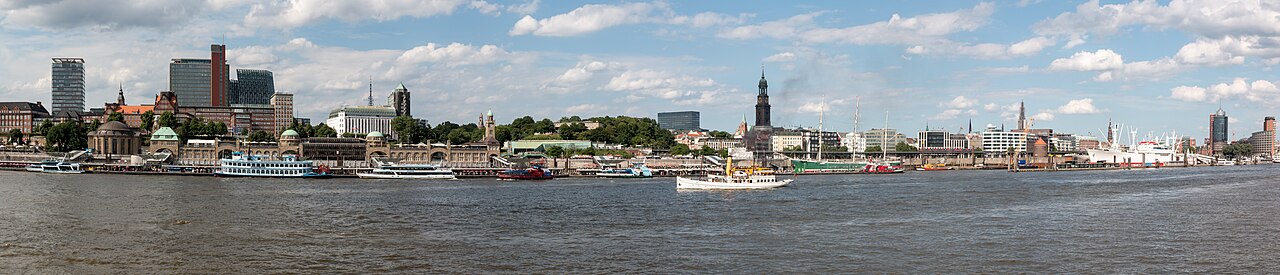

What to see
You are in the middle of the best part of a very good city, and the ground is walkable from most of it:
- The Fischmarkt — Sunday mornings from five o'clock, on the Elbe. Fish, fruit, live bands in the old auction hall, and a crowd made up in roughly equal parts of early risers and people who have not yet been to bed. If your fixture is a Sunday, this is the morning before it.
- The Speicherstadt — the red-brick warehouse district standing on timber piles, the largest of its kind in the world and on the UNESCO list. Walk it after dark, when it is lit.
- The Elbphilharmonie — the concert hall built on top of an old warehouse. The Plaza viewing level is open to the public with a timed ticket; you do not need a concert to go up.
- A harbour ferry — public ferry line 62 from the Landungsbrücken is an ordinary local service that happens to run through one of Europe's biggest ports, and your day ticket covers it. The cheapest harbour cruise anywhere.
- The Reeperbahn — on the doorstep, and honest about what it is. Worth the walk; the side streets are where the music venues are.
What to eat and drink
- Fischbrötchen — Bismarck herring, Matjes or fried fish in a roll. Eat it at the harbour, standing up, and do not overthink it.
- Labskaus — salt beef, potato and beetroot mashed together and served with a fried egg, a rollmop and gherkins. It looks alarming and tastes considerably better than it looks.
- Franzbrötchen — the Hamburg cinnamon pastry, flat and buttery, eaten at breakfast and effectively unavailable elsewhere in Germany.
- Astra and Alsterwasser — the local beer, and the local word for a shandy. Ask for a Radler and you will be understood, but placed.
Common questions
Is the derby with HSV on this season?
Not in the league. HSV are in the Bundesliga and St. Pauli are not, so the two meet only if the cup draws them together. To collect both Hamburg grounds you need two fixtures — which is easy enough, since they are about twenty minutes apart.
How hard is a ticket, really?
Hard. Under thirty thousand places against demand from all over Europe. This is the one ground in the German series where you should build the trip around a confirmed ticket rather than the other way round.
Standing or seated?
Standing, if the choice is yours. More than half the ground is terrace, the atmosphere lives there, and the tickets are cheaper.
Is it comfortable for a neutral?
Yes, and conspicuously welcoming to visitors from abroad. Wearing another club's colours is fine. Wearing anything with far-right associations is not, and the stewards enforce it.
Sixteen thousand standing places, a stadium the club refuses to sell the name of, and the Reeperbahn round the corner. Add the Millerntor to your bucket list and pair it with the Volksparkstadion.