 Groundhopper
Start free
Groundhopper
Start free
Hamburger SV stadium guide — Volksparkstadion, Hamburg
For fifty-five years the only club never relegated from the Bundesliga, with a stadium clock counting the seconds. In 2018 it stopped. What that means for a visit.

The dinosaur, and the clock that stopped
HSV were a founder member of the Bundesliga in 1963 and stayed in it, without interruption, longer than anybody else. German football called them the Bundesliga-Dinosaurier — the dinosaur — and the club mounted a clock inside the stadium counting the years, days, hours and seconds of unbroken top-flight membership.
It ran until May 2018, when they went down. The clock was reset, and the club spent years in the second division before climbing back.
That history explains the crowd. This is a very large club with a very long memory in a very large stadium, and the atmosphere is shaped by both the pride and the fall. The North Stand is where the noise comes from.
Getting there
The Volksparkstadion sits in the Altona-Nord parkland, several kilometres west of the centre.
- By S-Bahn: to Stellingen, then a walk or shuttle to the ground. This is the standard route and it is busy on matchday.
- Public transport is strongly advised — parking at the stadium is limited, and as at most German grounds the match ticket covers local transport on the day.
- From Poland: Hamburg is a long way — roughly seven hours from Szczecin by rail. This is a ground for a dedicated trip rather than an add-on.
Tickets
The German pattern: no document required, but a queue behind season-ticket holders and members, with general sale opening some weeks before the match. Buy from the club.
Fifty-seven thousand places absorb a lot of demand and HSV sell well, but ordinary league fixtures are usually obtainable if you watch the date. The northern derby against Werder Bremen and matches against Bayern or Dortmund are not.
As everywhere in Germany, decide deliberately between standing and seated. The standing areas are cheaper and are where the noise is.
Where away fans sit
Visiting supporters are placed opposite the North Stand — that is, facing the most vocal home section rather than beside it, which gives an unrestricted view of the loudest part of the ground.
The allocation is generous by European standards, as German league rules require. Confirm the specific arrangement for your fixture, and travel by public transport: parking is limited and the club says so.
The ground itself
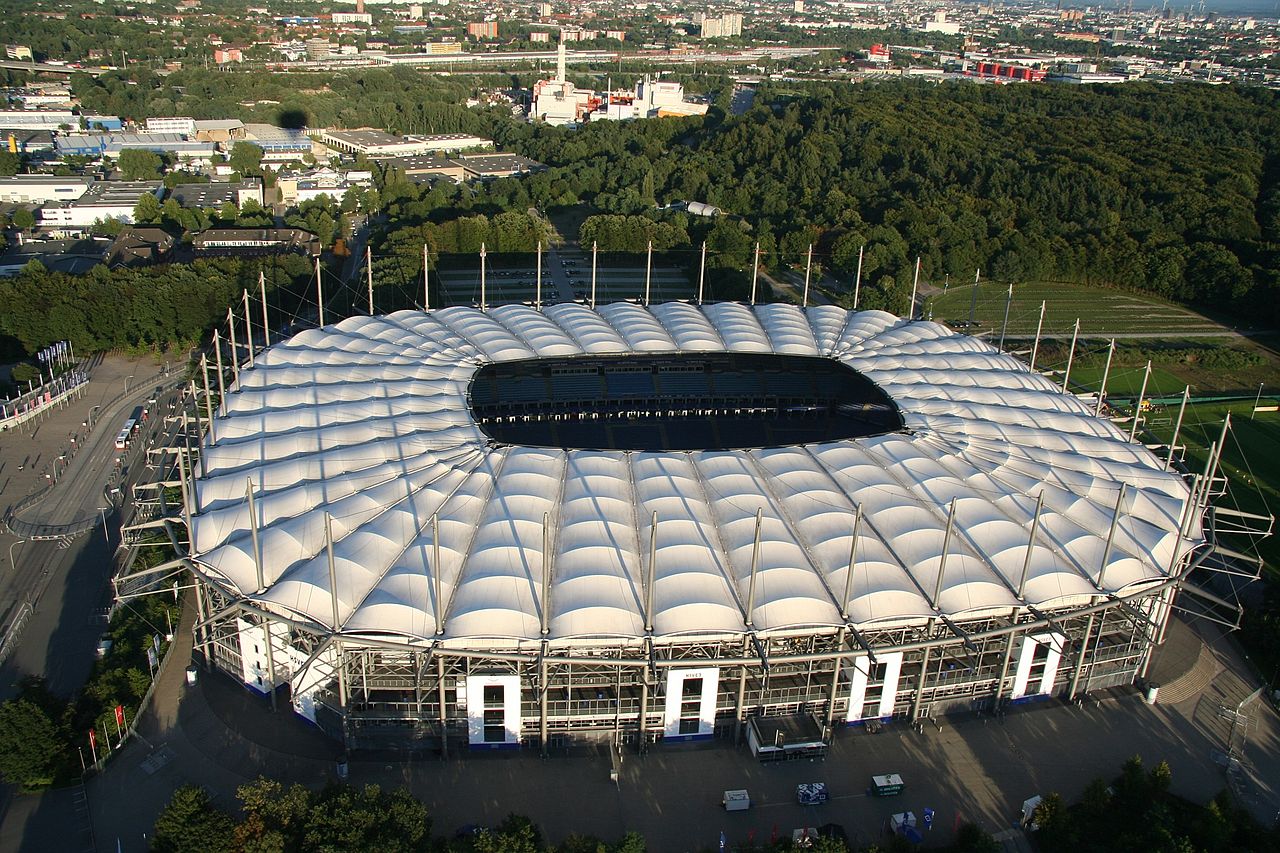
There has been a stadium in the Volkspark since the 1950s. The current building is the product of a complete rebuild around the turn of the century, with four covered stands, a capacity in the mid-fifties of thousands, and the pitch dropped below ground level so the stands sit tight around it.
It is a large, modern, comfortable arena rather than a characterful old ground. What lifts it is the size of the crowd and the intensity of a support that has been through more than most.
Eating and drinking at the ground
Bratwurst, Currywurst, pretzels and full-strength beer — and in Hamburg, expect Fischbrötchen, a soft roll with pickled herring or fried fish, to be available too. Take the fish option once; this is a port city and it does them properly.
Payment is by stadium card: load it on the way in and cash out the balance afterwards. Cups carry a Pfand deposit refunded on return.
Hamburg before the match

What to see
Hamburg is one of the great European port cities and is comfortably worth a weekend of its own:
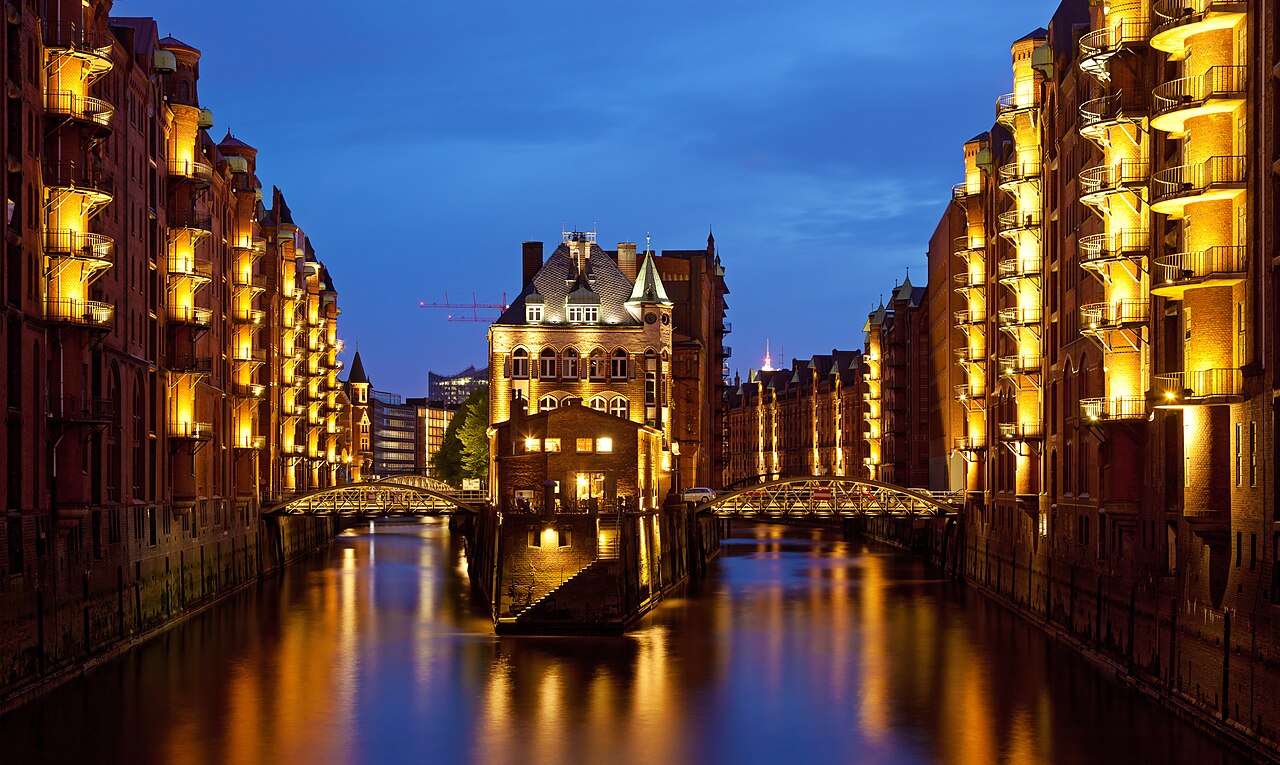
- The Speicherstadt — the largest warehouse district in the world, built on oak piles across a network of canals, and a UNESCO World Heritage site. Go at dusk when the brick is lit.
- The Elbphilharmonie — a concert hall of glass set on top of a 1960s warehouse. The public viewing platform between the two halves is free and open to anyone with a ticket from the machine.
- The Fischmarkt — the Sunday morning fish market at Altona, which opens around five and is attended in roughly equal parts by people buying fish and people who have not yet been to bed.
- The Reeperbahn — St Pauli's main street, and a reminder that Hamburg has a second football club with an even stronger identity than this one.
What to eat and drink
- Fischbrötchen — herring, or fried fish, in a roll with onion and remoulade. Eat it at the harbour, standing up.
- Labskaus — corned beef, potato and beetroot with a fried egg and rollmops.
- Aalsuppe — the local sour-sweet soup, which despite the name does not always contain eel.
- Franzbrötchen — a flattened cinnamon pastry found nowhere else in Germany. Buy one for the walk to the ground.
Common questions
What was the clock?
A stadium clock counting HSV's unbroken Bundesliga membership. It stopped at relegation in 2018. The club has kept a version of it as a reminder rather than a boast.
HSV or St Pauli?
Different sports, effectively. HSV is a big club in a big stadium; St Pauli is a small ground beside the Reeperbahn with one of the most distinctive supporter cultures in Europe, built around politics and a skull-and-crossbones rather than around trophies. The two sets of supporters have very little time for each other. If both are at home across one weekend, do both — the contrast is the most instructive thing available in German football inside a single city.
Which fixture should I aim for?
The Nordderby against Werder Bremen, if both are in the division and the calendar cooperates. The two cities are an hour apart, the rivalry runs back decades, and it is the northern German fixture of the season. It is also the hardest ticket of the year here, so have a fallback.
Is it worth the journey from Poland?
Only as part of a longer trip. Hamburg is a long way east-to-west; combine it with Bremen an hour away, or with a wider northern German route.
A fifty-seven-thousand-seat ground, a clock that stopped, and one of the best port cities in Europe. Add the Volksparkstadion to your bucket list and pair it with Bremen.