 Groundhopper
Start free
Groundhopper
Start free
1. FC Köln stadium guide — RheinEnergieStadion, Cologne
A live goat on the pitch, beer in glasses the size of an espresso, and fifty thousand people in a good mood regardless of the league table.
.jpg)
Getting there
- By tram: lines run west from the centre to the stadium in around twenty minutes. This is the way to do it and, as at most German grounds, the match ticket covers the journey.
- On foot from the tram: a short walk through the Äußerer Grüngürtel, the outer green belt that surrounds the city.
- From Poland: Cologne is a long way west, but it sits on the main European rail spine and has a major airport, so it is easier to reach than the map suggests.
Tickets
The German pattern: no document demanded, but a queue behind season-ticket holders and members, with general sale opening some weeks before the fixture. Buy from the club.
Köln have one of the largest memberships in German football and a stadium of under fifty thousand, which is a tighter ratio than at Schalke or Frankfurt. Ordinary fixtures are obtainable with planning; the Rheinland derby is not.
Decide deliberately between standing and seated. The standing section behind the goal is cheaper and is where the singing is.
Where away fans sit
Visiting supporters are allocated a section of the ground with a substantial capacity by European standards, as German league rules require. Arrangements are set per fixture — confirm yours — and expect segregation to be enforced firmly for the derby.
Neutrals should take a side stand and should not wear Gladbach colours anywhere near this stadium, or Köln colours anywhere near Borussia-Park.
The ground and the goat
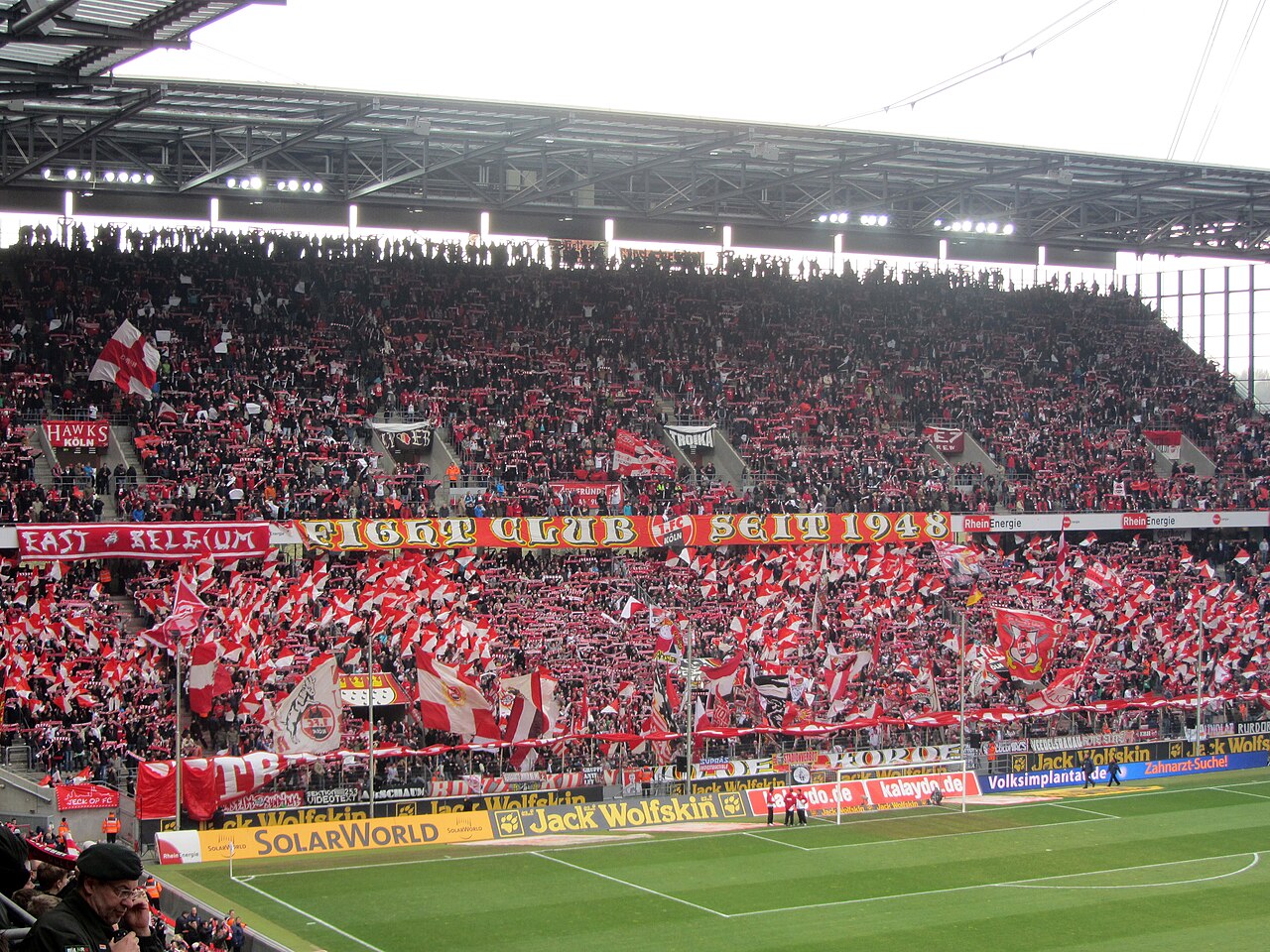
The RheinEnergieStadion was rebuilt in the early 2000s on the site of the old Müngersdorfer Stadion. Four covered stands, just under fifty thousand, with four tall floodlight pylons rising from the corners and carrying the roof — a distinctive silhouette and, unusually for a modern German ground, one you can recognise from a distance.
The club mascot is a live billy goat named Hennes, currently in his ninth or tenth incarnation depending on when you count from. He has his own enclosure at the training ground, appears on the pitch before matches, and is treated with complete seriousness. The goat is on the club crest. This is not a gimmick bolted on for tourists; it has been going since 1950.
Why this club is worth understanding
Köln are one of the largest clubs in Germany by membership and one of the least reliable by results. They won the very first Bundesliga title in 1963–64 and have spent much of the last thirty years going up and down between the divisions with a support that does not shrink when they go down.
The club is bound into the city's identity in a way few German clubs are. Cologne's carnival culture, its dialect and its self-deprecating humour all run through the terraces. The anthem is sung before kick-off by fifty thousand people who mean it, and the relationship between the club and the city does not depend on the league table.
For a visiting groundhopper that produces something specific: a very big crowd, in a very good mood, at a club that is frequently not very good. If you have only ever been to grounds where the atmosphere depends on winning, this is worth seeing.
Eating and drinking at the ground
Bratwurst, Currywurst, pretzels — and Kölsch, which needs its own paragraph.
Kölsch is the local beer and it is served in a Stange, a straight glass holding 0.2 litres. Two hundred millilitres. In the city's beer halls a waiter called a Köbes will replace your empty glass without being asked and mark your beer mat, and will keep doing so until you put the mat on top of the glass to signal that you are finished. It is a system, everyone understands it, and visitors who order "a large beer" get a lesson in local identity.
Payment inside the ground is by stadium card: load it on the way in, cash out the balance afterwards.
Cologne before the match

What to see
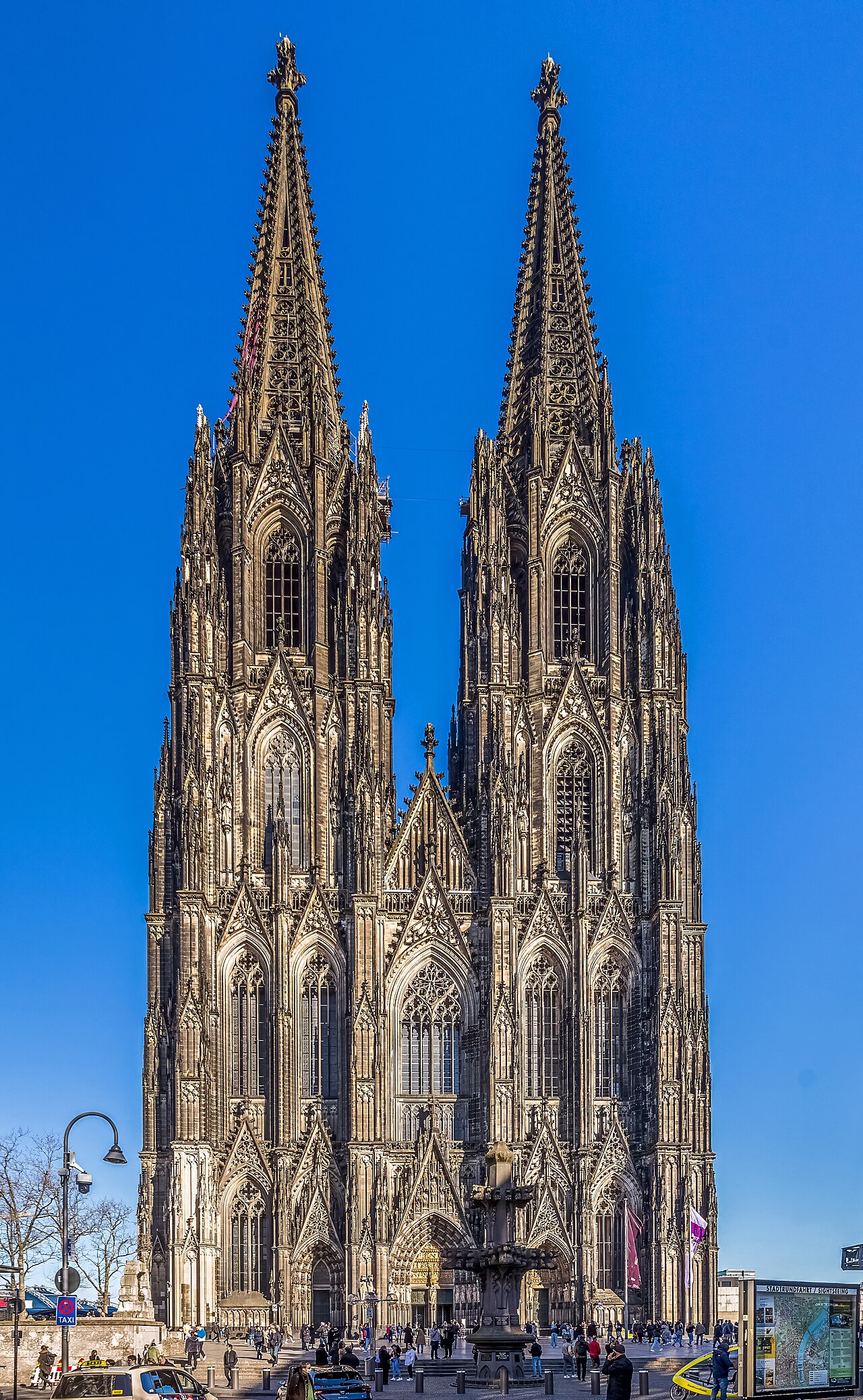
- The Dom — the cathedral, and simply one of the great buildings of Europe. It took six hundred years to finish, it survived the war standing in a flattened city, and it is directly outside the main station. Climb the south tower if your legs allow.
- The Rhine and the Hohenzollern bridge — walk across for the classic view back at the cathedral.
- The Romanesque churches — twelve of them across the old city, and far less visited than the Dom.
- The Ludwig Museum — twentieth-century art next to the cathedral, including one of the largest Picasso collections anywhere.
One timing note: Karneval peaks in the days before Ash Wednesday and the city becomes a single enormous street party. Either plan for it deliberately or avoid the week entirely.
What to eat and drink
- Halver Hahn — a rye roll with a slab of aged Gouda. The name means "half a chicken", which it emphatically is not; ordering it is a small local joke you are now in on.
- Himmel un Ääd — "heaven and earth": black pudding with mashed potato and apple sauce.
- Rheinischer Sauerbraten — beef marinated for days and served with a sweet-sour raisin sauce.
- Kölsch — in a brewery hall, from a Köbes, in 0.2-litre glasses, until you cover the glass with the mat.
Common questions
Can I combine Köln and Mönchengladbach?
Yes — thirty-five miles apart with frequent trains, and Leverkusen and Düsseldorf are in between. The Rhineland is the second-best cluster in Germany after the Ruhr.
Is the goat real?
Entirely real, and has been since 1950. Each Hennes is numbered, lives at the club's training ground and retires rather than simply disappearing.
Standing or seated?
Standing, if you want the atmosphere this club is known for. Seats are easier to obtain.
A cathedral, a live goat and beer in glasses the size of an espresso. Add the RheinEnergieStadion to your bucket list and look at Gladbach the same weekend.