 Groundhopper
Start free
Groundhopper
Start free
Werder Bremen stadium guide — Weserstadion, Bremen
A stadium whose roof is a solar power station, a riverside walk to reach it, and a home terrace you cannot buy into unless you are a member.

Getting there: walk along the river
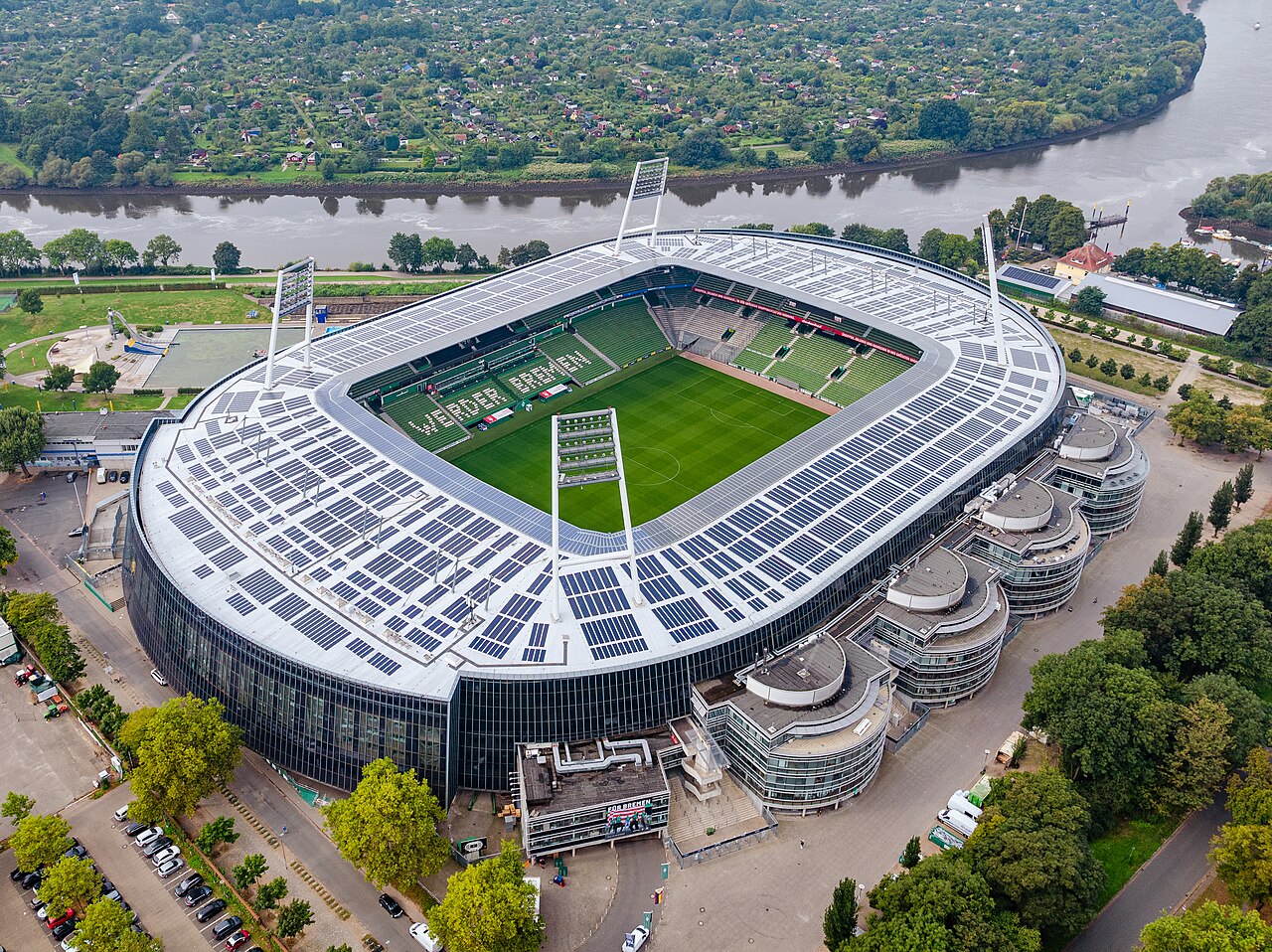
The stadium sits by the Weser east of the centre, close enough to walk and far enough that it feels separate from the city.
- On foot: follow the northern bank of the Weser out from the centre. It is a couple of kilometres of riverside, it fills with people heading the same way, and it is how the day should start.
- By tram or bus: the network reaches the ground directly, and your match ticket entitles you to free travel on the BSAG and VBN services on matchday.
- By car: don't. There is no parking at the stadium. The Park+Ride at Hemelinger Hafen is the recommended alternative.
Tickets
The German system as covered throughout this series: nobody asks for a document, but you are at the back of a queue behind season-ticket holders and club members, and general sale opens some weeks before the fixture. Buy from the club.
Forty-two thousand places and a large, loyal membership means ordinary league fixtures are obtainable if you watch for the date. Bayern, Dortmund and the northern derby against Hamburg are not.
Where away fans go — and the members-only terrace
Visiting supporters enter through Gate 11 for standing and Gate 11a for seats, in blocks 114, 116, 118 and 120, with 115, 117, 119 and 35 opened up when needed. The allocation here is small by German standards, so away tickets go quickly.
The home end is the Ostkurve behind the east goal, and it is worth understanding how it is arranged, because it catches visitors out. The lower tier is standing and reserved for club members — blocks 122 to 142 — while the upper tier above it is seated. A narrow VIP level runs right around the ground between them.
The consequence for a neutral: you cannot simply buy into the loudest part of this ground. If you want to stand, look at what is actually on general sale rather than assuming the terrace is available.
The ground itself
There has been a stadium on this site since the 1900s, and the current building is the result of successive rebuilds rather than a single new arena. Four covered stands, just over 42,000, close to the pitch, with a distinctive external skin.
The Weserstadion is also one of the more genuinely sustainable grounds in European football: the roof and facade carry a large photovoltaic installation, and the club has made rather more of the energy question than most.
Werder are one of the historic names of German football — multiple championships, a European trophy, and decades of top-flight football — and the crowd behaves like a club that remembers all of it.
The Nordderby
Werder against Hamburger SV is the Nordderby, and it is the fixture of the northern German season. The two cities are an hour apart, both are Hanseatic ports with long memories, and both clubs spent decades in the top flight regarding each other as the main obstacle.
It became rarer for a while — the two were in different divisions for several seasons after Hamburg went down in 2018 — which if anything sharpened it. When both are in the Bundesliga, this is the match to aim for, and it is correspondingly the hardest ticket of the year at either ground.
If you are planning a northern German trip and the fixture list offers it, everything else should move around it. If it does not, Bremen and Hamburg on consecutive days is still one of the better weekends available in Germany.
Eating and drinking at the ground
Bratwurst and Currywurst, pretzels, and full-strength beer — in this city, Beck's, which is brewed a short distance away.
Payment is by stadium card: load it at a kiosk on the way in and cash out the balance afterwards. Cups carry a Pfand deposit refunded on return.
Bremen before the match

What to see
Bremen is a Hanseatic city-state and looks like one:
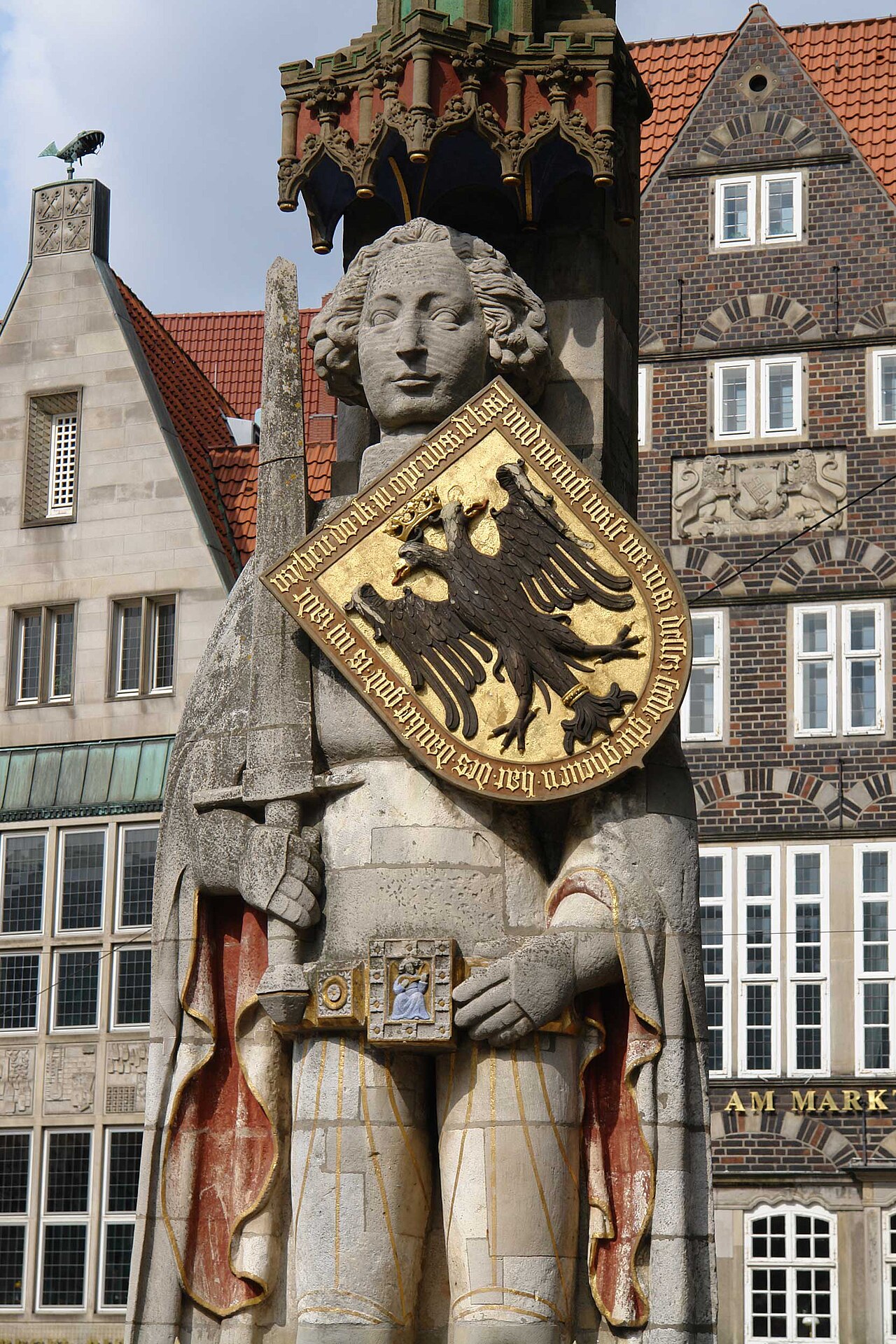
- The Marktplatz — the town hall and the stone Roland statue in front of it are together a UNESCO World Heritage site. The Roland has stood there since 1404 as a declaration of the city's independence.
- The Town Musicians of Bremen — the bronze donkey, dog, cat and cockerel beside the town hall. Grab the donkey's front legs; everyone does.
- The Schnoor — the oldest quarter, a knot of tiny lanes and fifteenth-century houses that survived the war.
- Böttcherstraße — a short street rebuilt in the 1920s in expressionist brick, entirely unlike anything around it, and one of the strangest pieces of architecture in Germany.
What to eat and drink
- Labskaus — corned beef, potato and beetroot mashed together and served with a fried egg, rollmops and gherkins. Sailors' food, and it looks worse than it tastes.
- Knipp — a Bremen sausage of pork and oats, fried in slices and eaten with potatoes and pickles.
- Kohl und Pinkel — kale with a smoked sausage, the winter dish of the whole region, traditionally eaten after a long walk in the cold.
- Beck's — brewed here since 1873, and drunk here rather more than elsewhere.
Common questions
Can I get into the Ostkurve?
The lower standing tier is for club members. Check what is genuinely on general sale before you build the trip around standing on that terrace.
Is the walk to the ground worth it?
Yes — it is the best part of the matchday and it costs nothing. Allow forty minutes from the centre and go with the crowd.
How does Bremen combine with other grounds?
Hamburg is around an hour away by train, which makes the two northern giants a natural pair if the fixture list cooperates.
A riverside walk, a members' terrace and a match ticket that covers the tram home. Add the Weserstadion to your bucket list and check whether Hamburg are at home too.