 Groundhopper
Start free
Groundhopper
Start free
Union Berlin stadium guide — Stadion An der Alten Försterei, Berlin
Eighty per cent standing, a terrace rebuilt by 2,300 supporters in their own time, and the closest Bundesliga ground to Poland. How to get a ticket, and why it is hard.

German tickets are a queue, not a document
This series has covered two very different ticketing systems. In Poland the obstacle is a document: a national identification number the purchase form demands and a foreign visitor does not have. In Czechia there is effectively no obstacle at all.
Germany is a third thing again, and it is the one people underestimate. There is no card to hold and no number to produce — most clubs will sell to anyone. The obstacle is that you are at the back of a queue.
German clubs are owned by their members. The 50+1 rule requires that the club's members retain majority voting control, which is why a German club is a membership organisation rather than an asset. Tickets follow that structure. Season-ticket holders are served first, then members, and only what is left reaches general sale — often just a few weeks before the match.
The practical consequences for a visitor:
- Watch the calendar, not the form. Find out when public sale opens for your fixture and be there on the day. There is no equivalent of turning up at a ticket window.
- Not everything sells out. Mid-table fixtures at larger grounds are frequently obtainable. A derby, a title race match or a visit from Bayern is not.
- Buy from the club. The official site is the cheapest and the only reliably valid route.
- Tickets are cheap when you get one. German football is the best value in major European football, and standing places are cheaper still.
At Union specifically, add one more: the ground is small, the club is fashionable, and demand comfortably exceeds 22,000. Treat every fixture here as a difficult ticket.
The stadium the supporters built
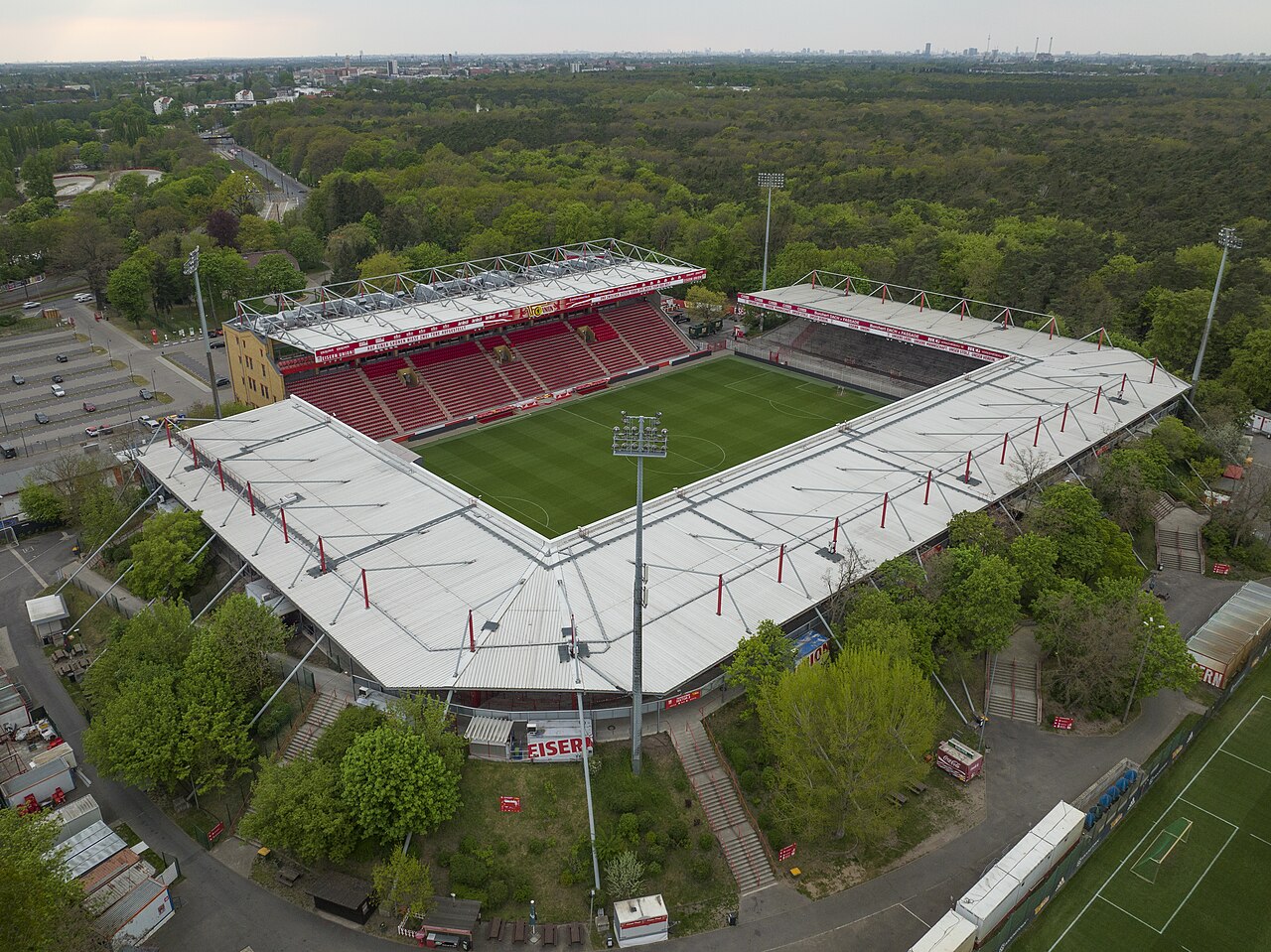
An der Alten Försterei opened on 7 August 1920 and sits in woodland on the edge of Köpenick, in the far south-east of Berlin. Its modern history is the reason people travel to see it.
By the mid-2000s the ground needed rebuilding and the club could not afford contractors. So the supporters did it. More than 2,300 volunteers worked on the site through the 2008–09 reconstruction, putting in around 140,000 hours of labour: clearing, digging, laying the terraces they would later stand on.
That is not a marketing story retold by the club. It is the reason the place feels the way it does, and it is why the Waldseite — the standing terrace behind the goal, backed by trees — produces a noise that a modern all-seater bowl cannot manufacture at any price.
Expansion is planned; the first phase would take the ground towards 37,500. Whatever gets built, it will not be this. Go now.
Getting there
Köpenick is a long way from the middle of Berlin and that is part of the character — you travel out through the city into forest.
- By S-Bahn to Köpenick, then tram or a walk through the woods to the ground. The last stretch on foot, with the crowd, is the correct way to arrive.
- Public transport is strongly advised — parking around the ground on matchday is very limited.
- From Poland: Berlin is roughly two hours from Szczecin and around five to six from Poznań by train. Of the eighteen Bundesliga grounds, this is the one to reach from a Polish base.
Where away fans stand
Visiting supporters are housed in a corner of the Wuhleseite. Allocations are set per fixture, so confirm your specific match.
If you are a neutral, understand what you are buying: most of this ground is a terrace. A standing ticket means standing, packed, for ninety minutes, and that is the experience people come for. If you would rather sit, buy a seat deliberately rather than by accident.
Eating and drinking at the ground
German stadium catering is a serious business and Union's is famously good-humoured: Bratwurst and Currywurst off the grill, pretzels, and full-strength beer in reusable cups against a deposit — you pay a Pfand on the cup and get it back when you return it, or keep the cup.
Most German grounds run a cashless card system: you load a stadium card at a kiosk and pay with that rather than with cash or a bank card. Top it up when you arrive and cash out anything left at the end.
Union also do something almost nobody else does: the club holds a Christmas carol singalong on the pitch every December, with tens of thousands of people standing in the dark holding candles. If your trip falls near it, that is the fixture to aim for.
Berlin before the match

What to see
Köpenick is a genuine district rather than a stadium car park, and Berlin is Berlin:
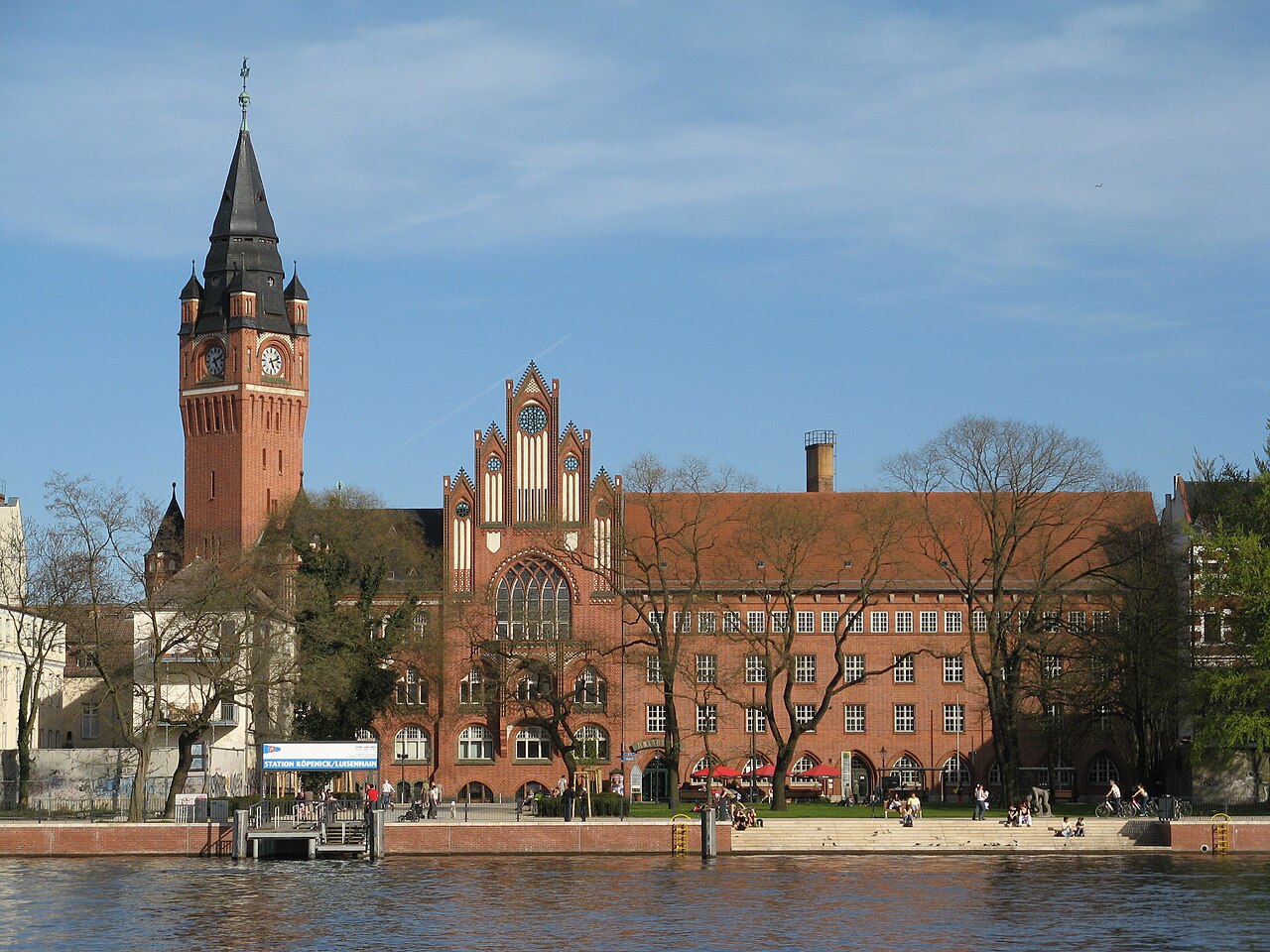
- Köpenick old town — a small baroque core on an island where the Dahme meets the Spree, with a palace and a town hall famous for a 1906 confidence trick still retold as a folk story.
- Müggelsee — the largest lake in Berlin, a short ride from the ground, with forest around it and swimming in summer.
- Central Berlin — Museum Island, the Reichstag dome, the East Side Gallery. Forty minutes away by S-Bahn and not the point of this trip, but there if you want it.
What to eat and drink
- Currywurst — Berlin's contribution to world cuisine: sliced sausage, curry ketchup, chips. Eat it standing up at an Imbiss.
- Döner — the modern Berlin version was developed by Turkish workers in this city and it is better here than anywhere.
- Eisbein — boiled pork knuckle with sauerkraut and pea purée, the old Berlin plate.
- Berliner Weisse — sour wheat beer, traditionally served with green or red syrup. Order it once.
Common questions
How hard is a ticket, honestly?
Hard. Twenty-two thousand places, a large membership and a club that has been in European competition. Find the public sale date and be ready on it.
Standing or seated?
Standing, if you can handle ninety minutes on your feet in a crowd. It is why the ground is famous, and it is cheaper.
Is this the best first German ground?
For atmosphere and for a Polish traveller, yes. For ease of getting in, no — a larger club with a mid-table Saturday fixture is an easier first ticket.
A terrace built by the people standing on it, at the Bundesliga ground closest to Poland. Add An der Alten Försterei to your bucket list and watch for the sale date.