 Groundhopper
Start free
Groundhopper
Start free
VfL Wolfsburg stadium guide — Volkswagen Arena, Wolfsburg
A club owned outright by a car company, in a town that company caused to be founded in 1938 — and one of the easiest tickets in German football.

A town that exists because of a car
Most football clubs in this series come from places that existed first. Wolfsburg does not.
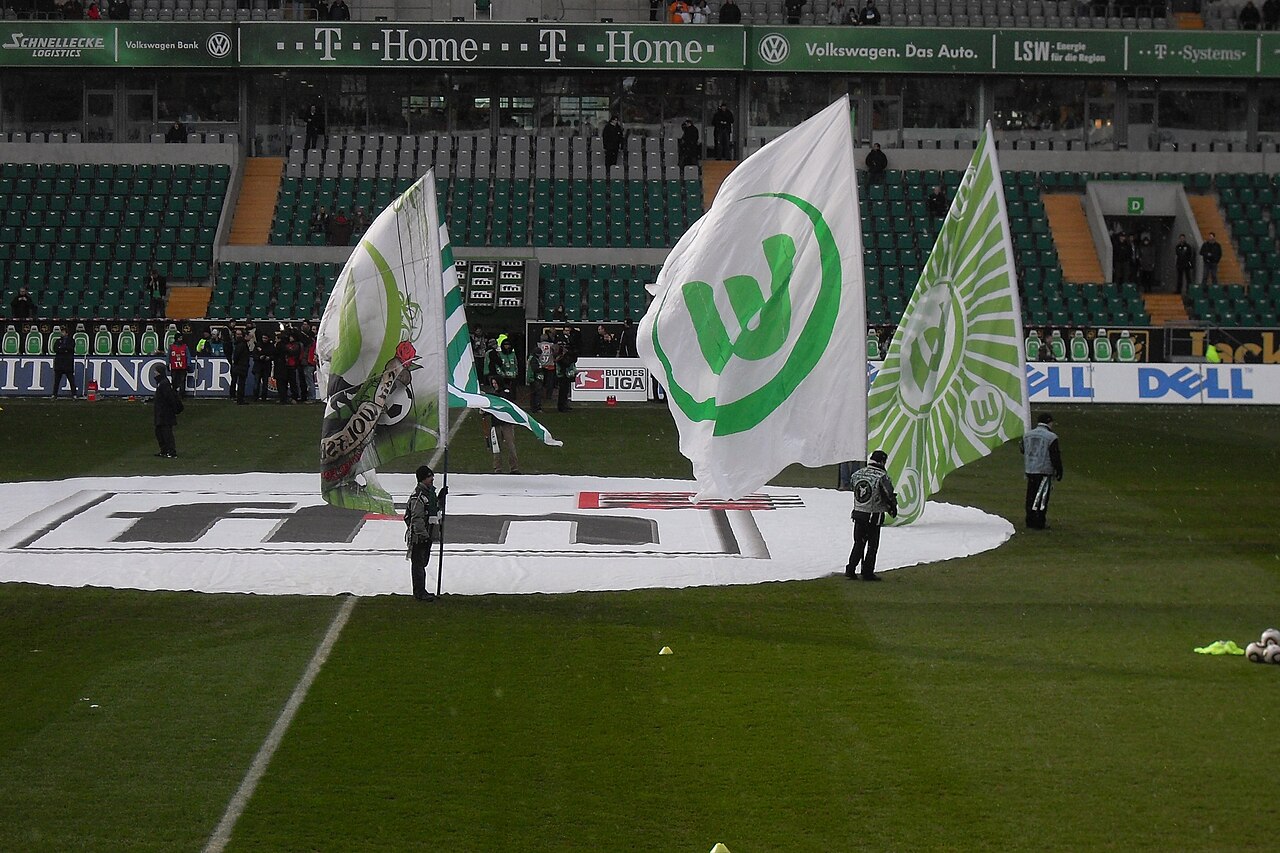
On 1 July 1938 the Nazi government founded a settlement called Stadt des KdF-Wagens bei Fallersleben — "town of the Strength-through-Joy car near Fallersleben" — to accommodate the workforce of a new factory that would build the KdF-Wagen, the car the world later knew as the Volkswagen Beetle. After the war the town took the name of a nearby castle and became Wolfsburg.
Everything follows from that. The factory is enormous and sits across the canal from the centre. The club is a subsidiary of the company. The stadium carries the company's name because the company is not a sponsor but the owner.
You do not have to like the arrangement to find it interesting. It is the most complete example in European football of a club that is a department of a manufacturer, and it is visibly so from the moment you arrive.
Where this sits on 50+1
This series has traced Germany's ownership rule through four clubs: Union Berlin, where the members own it and rebuilt the ground themselves; RB Leipzig, which satisfies the letter of the rule with about twenty-one members; Bayer Leverkusen, which holds a written exemption as a backer of more than twenty years' standing; and Hoffenheim, which held that kind of exemption and gave it back in November 2024.
Wolfsburg belongs with Leverkusen. Volkswagen has funded this club continuously since it was founded by the factory's own workers, which is precisely the situation the long-standing-backer exception was written for. It is the rule working as drafted, not the rule being evaded — and, as at Leverkusen, whether the rule should have been drafted that way is a separate and entirely fair argument.
Getting there
- By train: Wolfsburg Hauptbahnhof is on the Berlin–Hanover high-speed line, which makes this one of the easiest grounds in Germany to reach. Berlin is about an hour; Hanover around half an hour.
- On foot: the stadium, the station, the Autostadt and the factory are all within a short walk of each other. You can arrive by train and be inside the ground in fifteen minutes.
- Pairing: Braunschweig and Hanover are both close.
- Match ticket and transport: as at most German grounds, the ticket covers local transport on the day.
Tickets
The German pattern: no document demanded, season-ticket holders and members first, general sale some weeks out. Buy from the club.
Wolfsburg has thirty thousand places and a city of around 125,000 with no deep football tradition — the club was in the regional leagues until the 1990s. This is one of the easier tickets in German football, in the same category as Hertha and Nürnberg, and a sensible choice if a fixture you want elsewhere has sold out.
The trade is the same one as at Hoffenheim: easy entry, and an atmosphere that will not trouble Dresden or St. Pauli.
Where away fans go
Visiting supporters get the allocation German league rules require, and at Wolfsburg the away following is frequently the loudest part of the ground. Arrangements are set per fixture, so confirm yours. Neutrals should take a side stand.
The ground itself
A clean, modern, fully covered bowl for thirty thousand, football-specific, opened in 2002 and comfortable in every respect. There is no running track and no bad view.
It is also, honestly, a corporate stadium in a corporate town, and it feels like one on an ordinary afternoon. Come for the ease of access, the factory next door and the completeness of the story rather than for noise.
Eating and drinking at the ground
Lower Saxon catering: Bratwurst, Currywurst, pretzels and full-strength Pilsner.
One genuine curiosity: Volkswagen makes its own currywurst in the factory here, under its own part number, and has done for decades. It has at times been the company's best-selling product by unit. You can buy it in the town, and it is exactly as odd as it sounds.
Payment by stadium card: load it on arrival, cash out afterwards. Cups carry a Pfand deposit.
Wolfsburg before the match

What to see
Wolfsburg has no old town, because in 1938 there was nothing here to be old. What it has instead is unusually good:
- The Autostadt — Volkswagen's visitor complex beside the factory, with pavilions for the group's marques, a car museum, and two glass silos where new cars are stacked and retrieved by automated lifts. Whatever you think about cars, the towers are a genuinely striking piece of engineering theatre.
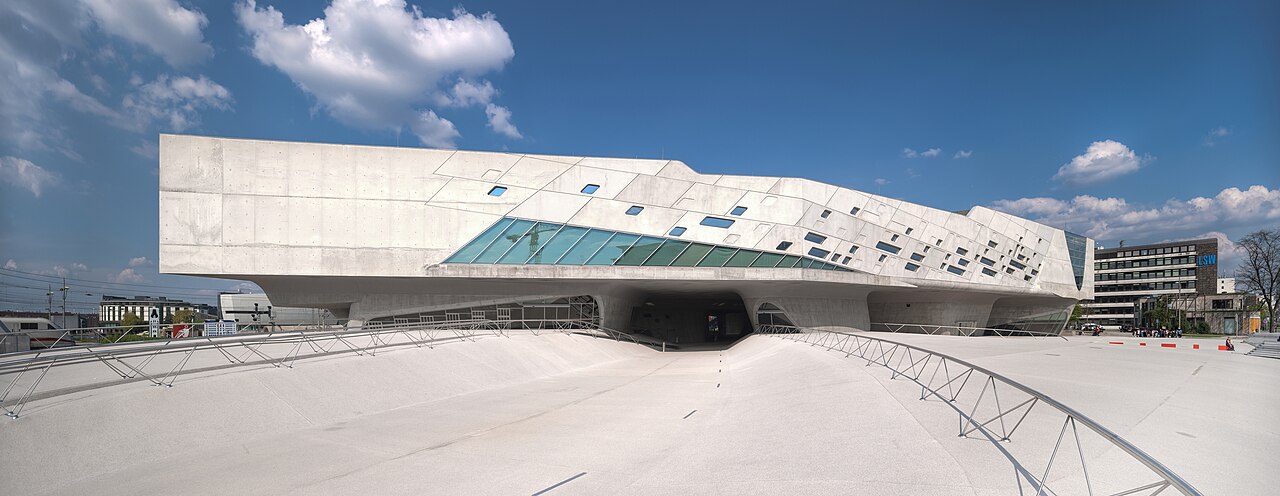
- The Phaeno — a science centre by Zaha Hadid, a concrete building standing on cones directly opposite the station. It is the best piece of architecture in the city by a distance.
- Schloss Wolfsburg — the Renaissance castle the town was eventually named after, north of the centre.
- The factory itself — among the largest car plants in the world, with its two brick chimneys visible from everywhere. Tours run; book ahead.
What to eat and drink
- Currywurst — here specifically, the factory's own.
- Grünkohl mit Pinkel — kale with a smoked groats sausage, the Lower Saxon winter plate.
- Braunschweiger Wurst — the smoked spreadable sausage from the city half an hour away.
- Regional Pilsner, cold and unfussy.
Common questions
Is Wolfsburg a "plastic club"?
The label gets used, and the club's rise was funded rather than earned in the traditional way. But it is not a modern invention: the team was founded in 1945 by workers at the plant and spent decades in the lower leagues. The money arrived later. Compare it with Leipzig, which was assembled in 2009, and the difference is real even if the ownership looks similar.
How easy is the ticket?
Among the easiest in Germany. If you have a free Saturday in the north and no confirmed ticket elsewhere, this is the fallback that works.
What is actually worth doing here?
The Phaeno and the Autostadt, both within walking distance of the station and the ground. Two hours covers them.
Can I combine it?
Easily. Braunschweig is half an hour, Hanover half an hour the other way, and Berlin is an hour by fast train.
A club owned by a car company, in a town the same company caused to exist, next to a science centre by Zaha Hadid. Add the Volkswagen Arena to your bucket list and pair it with Braunschweig.