 Groundhopper
Start free
Groundhopper
Start free
Bayer Leverkusen stadium guide — BayArena, Leverkusen
A hotel built into the stand with rooms looking onto the pitch, a factory club with a legitimate 50+1 exemption, and the only unbeaten season in Bundesliga history.

The legal exception, not the loophole
This series has already covered two ends of German football's ownership argument: Union Berlin, where the members physically built the stadium, and RB Leipzig, where the members number about twenty-one and the Federal Cartel Office calls the arrangement a circumvention.
Leverkusen is the third position, and it is the one people most often get wrong. German rules allow an exemption from 50+1 where a person or company has substantially funded a club continuously for more than twenty years. Bayer has backed this club since it was founded by the company's own workers in 1904. Volkswagen has the same standing at Wolfsburg.
Whether you think a corporation should control a football club is a fair question. But the distinction matters: Leverkusen's position is the rule working as written, not the rule being evaded. Understanding the difference is most of what separates informed criticism of German football from lazy criticism.
There is a fourth position too, and it is worth knowing because most sources are out of date on it: Hoffenheim held an exemption from 2014 and gave it back in November 2024, returning voting control to the club's members.
The unbeaten season
Leverkusen spent decades as German football's most celebrated runners-up — second in the league, beaten in cup finals, beaten in a Champions League final — to the point where the nickname Neverkusen followed them around for twenty years.
Then in 2023–24, under Xabi Alonso, they won the Bundesliga without losing a match, the first side ever to complete a German league season unbeaten. If you are visiting this ground, you are visiting a club that spent a very long time being the best team never to win anything and then ended the argument in a single season.
Getting there
- By train: Leverkusen Mitte, then a short walk or shuttle. The ground is close to the middle of a small city.
- From Cologne: about fifteen minutes by train. Most visitors base themselves in Cologne or Düsseldorf, both of which are better places to spend an evening.
- Match ticket and transport: as at most German grounds, your ticket covers local public transport on the day.
Tickets
The German pattern: no document demanded, but a queue behind season-ticket holders and members, with general sale opening some weeks before the match. Buy from the club.
Leverkusen is a small city with a modest membership by German standards, and thirty thousand places is a reasonable ratio. Ordinary fixtures are among the more obtainable in the Bundesliga. Bayern, Dortmund and Champions League nights are not.
Where away fans sit
Visiting supporters have their own section with the substantial allocation German league rules require. Arrangements are set per fixture, so confirm yours. Neutrals should take a side stand.
The ground itself
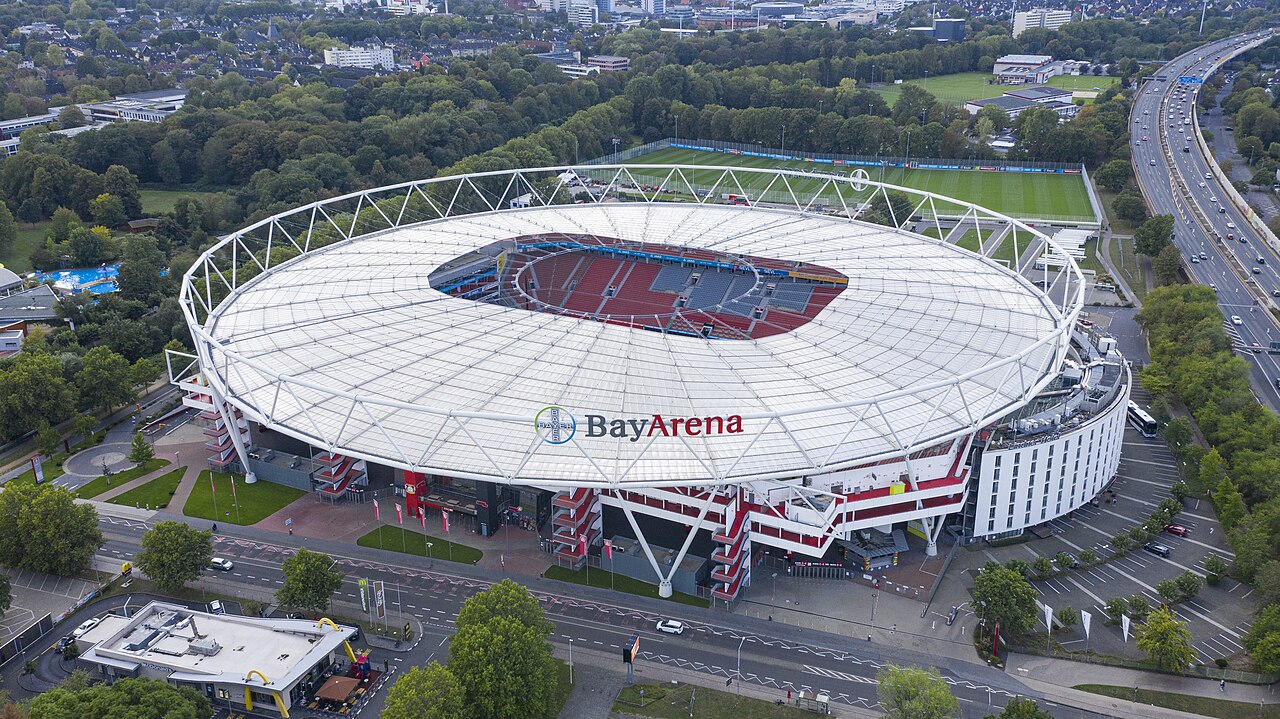
The BayArena is a compact, fully enclosed bowl for just over thirty thousand, rebuilt in stages and closed off completely in the 2000s. It is tight, modern, and considerably louder than its size suggests, because the stands are close and the roof holds the noise in.
It also has something almost no other ground in Europe has: a hotel built into the stand, with rooms looking directly onto the pitch. If you want to watch a Bundesliga match from your bed, this is the one place you can arrange it.
Eating and drinking at the ground
Bratwurst, Currywurst, pretzels and full-strength beer. Payment by stadium card: load it on arrival, cash out afterwards. Cups carry a Pfand deposit refunded on return.
The Rhineland before the match

What to see
Leverkusen is a twentieth-century company town and does not pretend otherwise. Use the region:
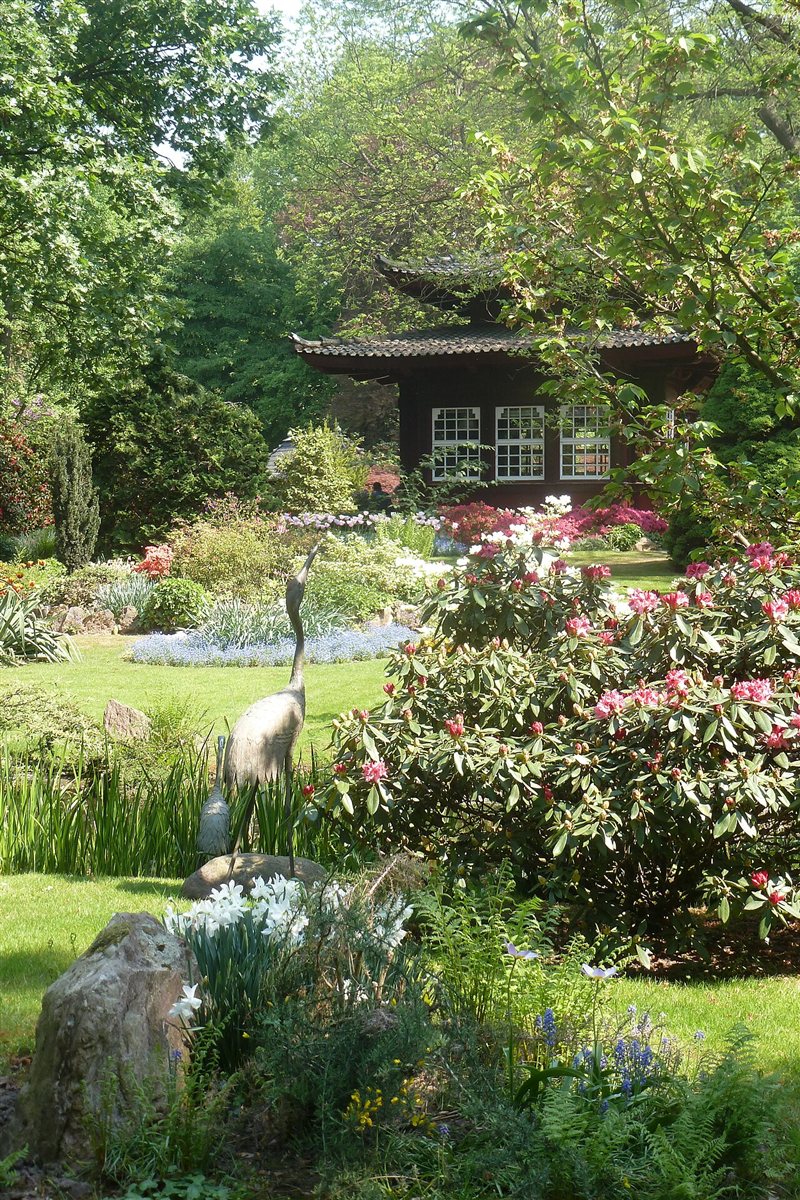
- The Japanese Garden — laid out by the Bayer company in 1912 beside its works, and genuinely lovely. It is the one thing in Leverkusen worth a detour on its own.
- Cologne — fifteen minutes away, with the cathedral and everything else.
- Düsseldorf — twenty minutes the other way, with the Altstadt and the Gehry buildings in the harbour.
- Schloss Burg — a restored hilltop castle above the Wupper, half an hour east, and the best half-day in the immediate area.
What to eat and drink
You are in the Rhineland and the local kitchen is shared with Cologne:
- Rheinischer Sauerbraten — beef marinated for days, served with a sweet-sour raisin sauce and dumplings.
- Himmel un Ääd — black pudding with mashed potato and apple sauce.
- Halver Hahn — rye roll with aged Gouda, and not the half chicken the name promises.
- Kölsch or Alt — Leverkusen sits between Cologne and Düsseldorf, which means it sits on the fault line of Germany's most enjoyable beer argument. Pick a side.
Common questions
Is Leverkusen's exemption the same as Leipzig's arrangement?
No, and the difference is the point. Leverkusen qualifies under a written exception for backers of more than twenty years' standing. Leipzig complies with the letter of the rule through a membership of about twenty-one people, which the Federal Cartel Office has called a circumvention.
Can I really stay in the stadium?
Yes — the ground has a hotel built into one stand with rooms looking onto the pitch. Book a long way ahead for a match night; there are not many of them and they are not a secret.
Where should I stay otherwise?
Cologne or Düsseldorf. Both are minutes away, both are far better evenings, and both put two more Bundesliga grounds within an hour of your hotel.
A factory team, a legitimate exception, and the only unbeaten season in Bundesliga history. Add the BayArena to your bucket list and pair it with Cologne.