 Groundhopper
Start free
Groundhopper
Start free
VfL Bochum stadium guide — Vonovia Ruhrstadion, Bochum
Six names since 1911, no running track, and a whole crowd singing a 1984 pop song about their own city before every home match.

A song, sung by everybody, about a town nobody visits
In 1984 Herbert Grönemeyer, who grew up here, released an album called Bochum with a title track that is essentially a love letter to an unglamorous industrial city. It is affectionate, slightly rueful, and completely specific to the place.
It is played before every VfL Bochum home match, and the ground sings it. Not a chorus — the song. The line about the city being no beauty queen but honest with it lands differently when twenty-seven thousand people are delivering it in a stadium wedged between a ring road and a hospital.
This series has covered a good deal of noise: Dortmund's terrace, Köln's good humour, Dresden's intensity. Bochum's set piece is different in kind. It is a whole crowd agreeing, in public, that where they are from is worth something. If you collect grounds for atmosphere, put this one higher than the league table suggests.
Six names and one stadium
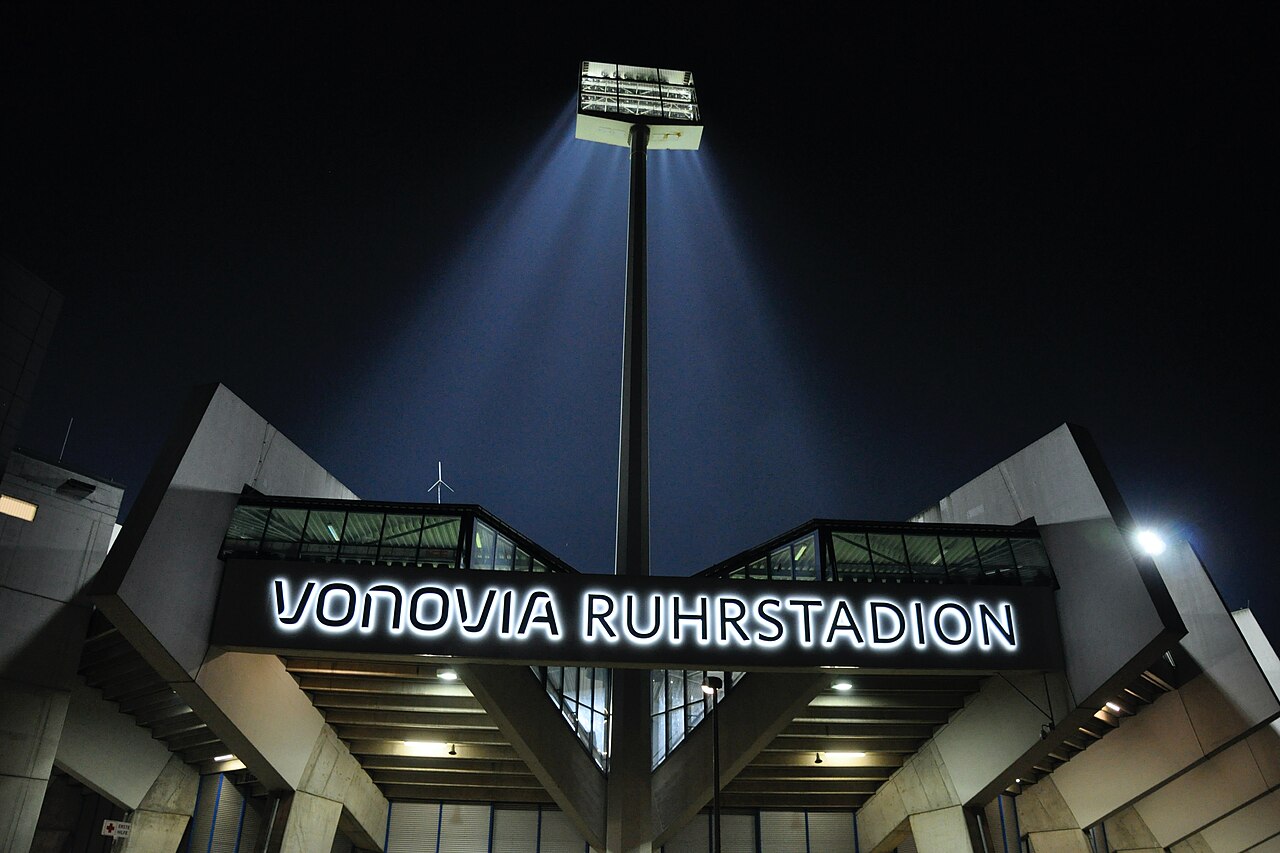
The building has been on the same site since 1911 and has been called, in order: the SuS-Sportplatz an der Castroper Straße, the TuS-Sportplatz an der Castroper Straße, the Stadion an der Castroper Straße, the Ruhrstadion, the rewirpowerSTADION, and since 2016 the Vonovia Ruhrstadion.
That list is a compact lesson in reading German football sources. A stadium name in an article, a photograph or an old ticket tells you the decade, not the place. Locals mostly say Ruhrstadion and everyone understands.
Compare St. Pauli, forty kilometres of motorway and an entire philosophy away, where the club formally refused to sell the name at all.
Getting there
- By tram: the ground is on the Castroper Straße, a short ride from Bochum Hauptbahnhof and served directly on matchdays.
- On foot: about twenty-five minutes from the station, which is realistic in good weather.
- From the rest of the Ruhr: Dortmund is fifteen minutes by train, Essen ten, Gelsenkirchen a little more. This is the densest cluster of grounds in Europe and Bochum sits in the middle of it.
- Match ticket and transport: as at most German grounds, the ticket covers local transport on the day.
Tickets
The German pattern: no document demanded, season-ticket holders and members first, general sale some weeks before the match. Buy from the club.
Bochum is a mid-sized club with a loyal, largely local following and a ground under thirty thousand. That makes it moderately difficult — easier than St. Pauli or Dresden, harder than Hertha or Nürnberg. Derby fixtures against Schalke or Dortmund, when the divisions line up, are a different matter entirely.
Part of the ground is standing. Take it.
Where away fans go
Visiting supporters get their own section with the allocation German league rules require, part of it terrace. In a compact ground with no track, the away end is close enough to the home crowd to matter. Arrangements are set per fixture, so confirm yours. Neutrals should take a side stand.
The ground itself
Built in 1921 and rebuilt between 1976 and 1979 into what you see now. The original capacity was over fifty thousand, on terraces of a kind that no longer exist; successive safety modifications have brought it down to around 27,600.
What survived is the shape. No running track, four stands hard against the touchlines, a low roof and a steep rake. It is an old-fashioned German football ground of a type that is disappearing, and it does the one thing modern bowls struggle with: it holds sound in.
Do not come for facilities. Come because it is tight, loud and unrenovated in the ways that matter.
Eating and drinking at the ground
Ruhr catering, which means Currywurst is not a novelty item but the default, plus Bratwurst, chips, and full-strength Pilsner. Ask for Pommes rot-weiß — chips with both ketchup and mayonnaise — and you will have ordered correctly.
Payment by stadium card: load it on arrival, cash out afterwards. Cups carry a Pfand deposit refunded on return.
Bochum before the match
.jpg)
What to see
Bochum is not a tourist city and does not pretend to be. It does have two genuinely first-rate things, both to do with what the Ruhr used to be:
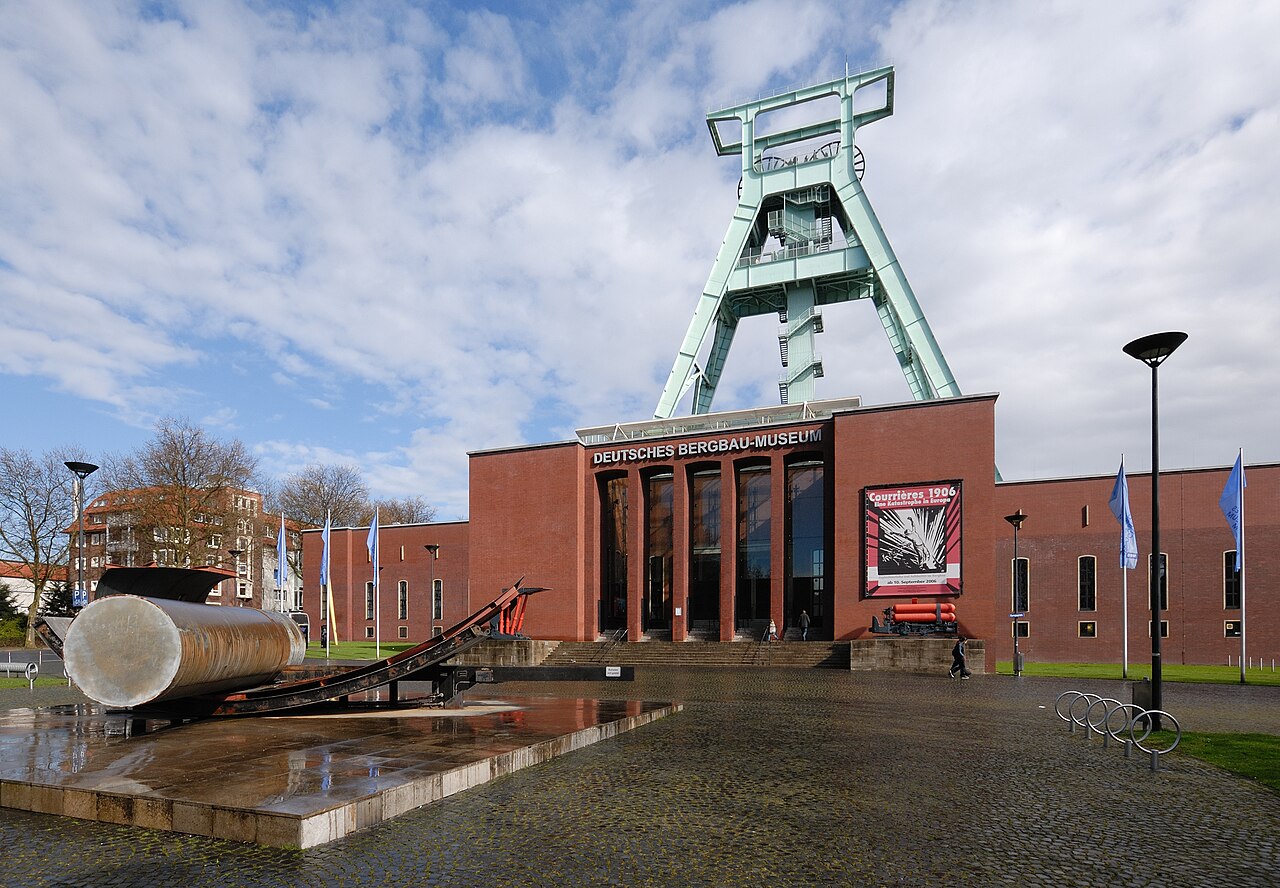
- The Deutsches Bergbau-Museum — the German Mining Museum, the largest of its kind in the world, with a demonstration mine beneath the building and a winding tower you can go up for a view across the city. This is the single best indoor hour in Bochum.
- The Jahrhunderthalle — a vast 1902 industrial hall built for the Bochumer Verein steelworks, now a concert and festival venue standing in a park made out of the old works. Free to walk around when nothing is on.
- The Bermudadreieck — the "Bermuda triangle", the compact quarter of bars and restaurants in the centre where the city goes out. Convenient before and after.
- Zeche Zollverein in Essen — ten minutes away by train, a UNESCO-listed coal mine and coking plant and the definitive Ruhr industrial site. If you have half a day spare, spend it there rather than in Bochum.
What to eat and drink
Ruhr cooking is working food and unpretentious about it:
- Currywurst mit Pommes — the regional plate. The Ruhr and Berlin both claim it; do not adjudicate this in public.
- Grünkohl mit Mettwurst — kale stewed with sausage, eaten in winter.
- Pfefferpotthast — a peppery beef stew from neighbouring Dortmund, served with boiled potatoes and beetroot.
- Pilsner — the region drinks it cold, in small glasses, in quantity.
Common questions
Is the song really that good?
Yes. Arrive in the ground before kick-off rather than at kick-off, which is the single most common mistake visitors make here.
How many grounds can I do in a weekend from here?
Realistically three. Bochum, Dortmund and Schalke are all within half an hour of each other, and Mönchengladbach and Köln are an hour further. Check the three fixture lists together; the Ruhr is the most efficient groundhopping region in Europe.
Is it worth it if the football is second division?
The ground does not change with the division, and neither does the crowd. Bochum in the second tier is a better afternoon than several Bundesliga clubs in modern bowls.
Which stand should I choose?
Standing on the side if you can get it, seated on the side if you cannot. Behind the goals is fine too — without a track, there is no bad view here.
Six names, no running track, and a whole ground singing about the city it is in. Add the Ruhrstadion to your bucket list and put Dortmund and Schalke on the same weekend.