 Groundhopper
Start free
Groundhopper
Start free
1. FC Kaiserslautern stadium guide — Fritz-Walter-Stadion, Kaiserslautern
A city of a hundred thousand people with a stadium for fifty thousand, on a hill above the town, named after the captain who won the 1954 World Cup.
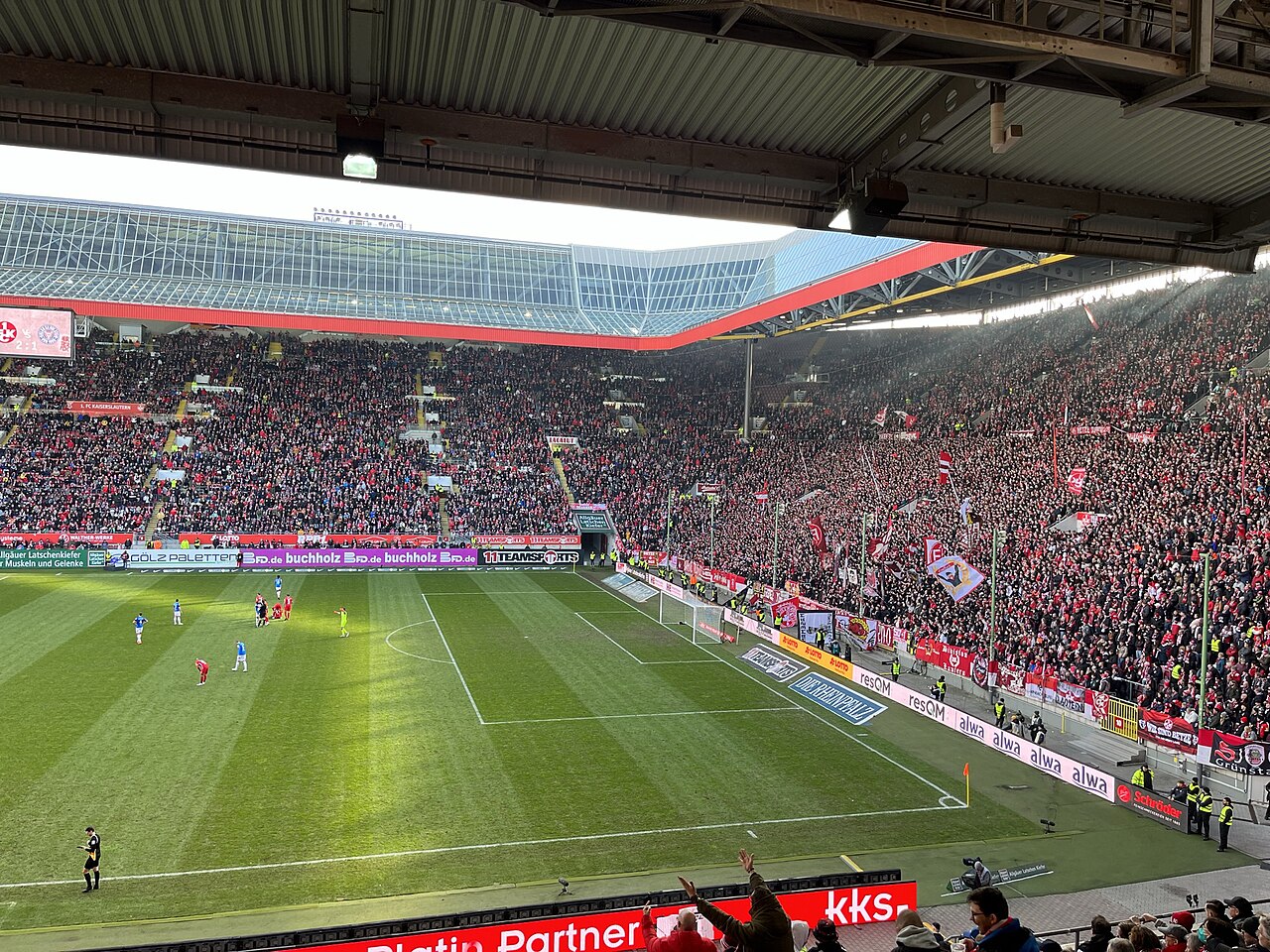

A city of 100,000 with a stadium for 50,000
Start with the number, because everything here follows from it. Kaiserslautern has roughly a hundred thousand inhabitants. The Fritz-Walter-Stadion holds 49,327. Half the city would fit inside it.
Nothing else in this series is arranged like that. Dortmund is a city of nearly six hundred thousand behind 81,365 seats. Freiburg, Augsburg, Bochum, Nürnberg all draw on populations several times their capacity. Kaiserslautern sits in the Palatinate, an hour from anywhere, and fills a Bundesliga-sized ground from a town and the countryside around it.
What that produces on a matchday is the reason people come: a small place where the football is plainly the main event of the week, in a ground far too big for it, on top of a hill.
Fritz Walter, and 1998
The stadium is named after Fritz Walter (1920–2002), who played his entire career for this club and captained the West Germany side that won the 1954 World Cup — the victory Germans still call the Miracle of Bern. A one-club man whose name is on the ground is not common anywhere; in Germany, where stadium names change with sponsors every few years, it is close to unique. Bochum's ground has had five names in a century. This one has had one that matters.
The other date to know is 1998, when Kaiserslautern were promoted into the Bundesliga and won it at the first attempt. No German club has done that before or since. It is the kind of season a town of this size gets once, and it is still what the Betzenberg is about.
Getting there
- By train: Kaiserslautern Hauptbahnhof, then a matchday shuttle or a walk. Note the walk is up — the ground is on a hill and you will feel it.
- From Mannheim or Frankfurt: roughly an hour and an hour and a half respectively. Frankfurt Airport is the practical arrival point from abroad.
- Pairing: Mainz is about an hour away and Elversberg a little over, which makes a Palatinate weekend genuinely efficient.
- Match ticket and transport: as at most German grounds, the ticket covers local transport on the day.
Tickets
The German pattern — no document demanded, season-ticket holders and members ahead of you, general sale some weeks before the fixture. Buy from the club.
Fifty thousand places in the second division means most fixtures are obtainable, which puts Kaiserslautern in the useful category alongside Hertha: a famous ground you can realistically get into. The exceptions are the big travelling supports and anything with promotion at stake late in the season.
Decide on standing before you buy. A third of this ground is terrace, and the terrace is the reason to come.
Where away fans go
Visiting supporters get the substantial allocation German league rules require, part of it standing. Arrangements are set per fixture, so confirm yours. Neutrals should take a side stand; the ground is football-specific, so there is no bad distance from the pitch.
The ground itself
Opened in 1920 and rebuilt in stages ever since, most recently between 2002 and 2005 at a cost of around €76.5 million ahead of the 2006 World Cup, when it hosted five matches. Four steep covered stands, no running track, and the whole thing wedged onto a hilltop so that the stands step down the slope.
The record attendance is 50,754, against Bayern Munich on 6 May 2006 — more people than the ground now holds, from a period of looser counting.
The approach is part of the experience. The Betzenberg is visible from most of the city, the walk up is genuinely steep, and the ground appears above you rather than in front of you. Very few stadiums in Europe are sited like this.
Eating and drinking at the ground
Palatinate catering, which is a cut above the German standard because the region cares: Pfälzer Bratwurst, Currywurst, pretzels, and full-strength beer — with wine alongside, because you are in one of Germany's largest wine regions and nobody here regards that as unusual at football.
Payment by stadium card: load it on arrival, cash out afterwards. Cups carry a Pfand deposit refunded on return.
The Palatinate before the match
.jpg)
What to see
Kaiserslautern is a working town that was heavily bombed and rebuilt plainly. The reason to come early is what surrounds it:
- The Pfälzerwald — the Palatinate Forest, the largest contiguous woodland in Germany and a UNESCO biosphere reserve, starting at the edge of the city. Sandstone crags, castle ruins and marked trails.
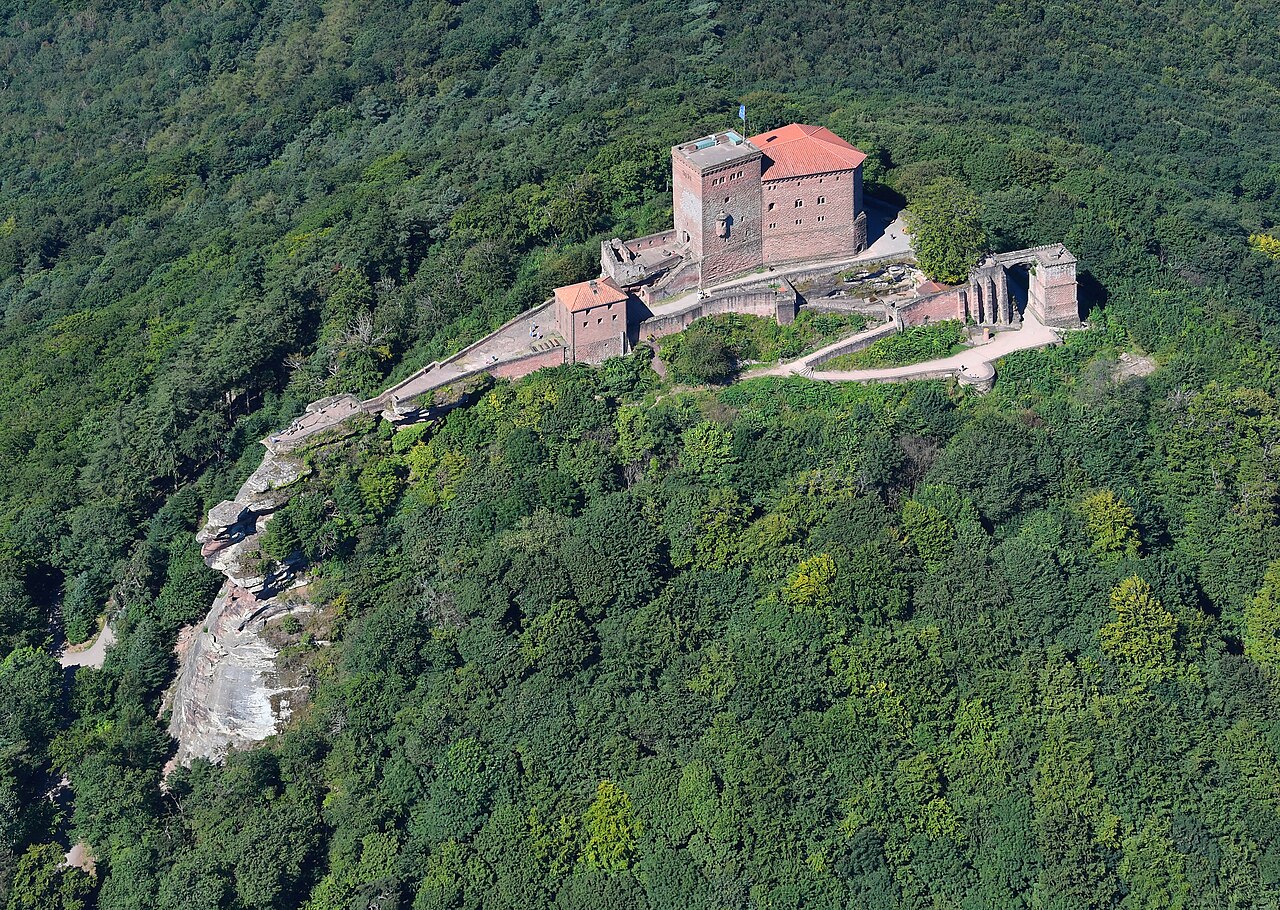
- Burg Trifels — the hilltop castle where the imperial regalia were kept and where Richard the Lionheart was held prisoner in 1193. Around forty minutes south and the best half-day in the region.
- Speyer — forty-five minutes east, with a Romanesque imperial cathedral on the UNESCO list, the largest of its kind still standing.
- The Japanese Garden and the Gartenschau — both in the city itself, the latter with a large and frankly unexpected collection of life-sized dinosaurs. It is more fun than it has any right to be.
What to eat and drink
Palatinate cooking is generous, pork-heavy and unembarrassed:
- Saumagen — pork, potato and spices cooked in a stomach lining and served in slices with sauerkraut. The regional dish, and the one Helmut Kohl fed to visiting heads of state.
- Pfälzer Bratwurst — coarser and longer than the Nuremberg version, eaten in a roll with mustard.
- Dampfnudeln — steamed dumplings with a salt crust, served either with wine sauce or, confusingly to outsiders, with potato soup.
- Riesling and Dornfelder — the Palatinate is Germany's second-largest wine region and the vineyards begin just outside town. Order a Schorle: wine with sparkling water, the regional default, and sensible before a match.
Common questions
How hard is a ticket?
Easier than the club's reputation suggests, because the ground is enormous relative to the division. Most fixtures are straightforward; late-season promotion matches are not.
Is the walk up really that steep?
Yes. Allow more time than the map suggests, wear something you can climb in, and take the shuttle if the weather is poor. Coming back down afterwards with fifty thousand people is slower still.
What else can I reach from here?
Mainz in about an hour, Elversberg a little over, Frankfurt within ninety minutes. The Palatinate is a better base for a multi-ground weekend than its profile suggests.
Is the town itself worth a night?
Honestly, not for its own sake. Stay if it is convenient for the football, and spend your daylight in the forest or at Trifels rather than in the centre.
Fifty thousand seats above a town of a hundred thousand, sixteen thousand of them standing. Add the Betzenberg to your bucket list and build a Palatinate weekend around it.