 Groundhopper
Start free
Groundhopper
Start free
SV Elversberg stadium guide — Ursapharm-Arena an der Kaiserlinde, Spiesen-Elversberg
Ten thousand seats in the Bundesliga, in a municipality of thirteen thousand people — the smallest place ever to reach the German top flight, at a ground the builders have not finished.
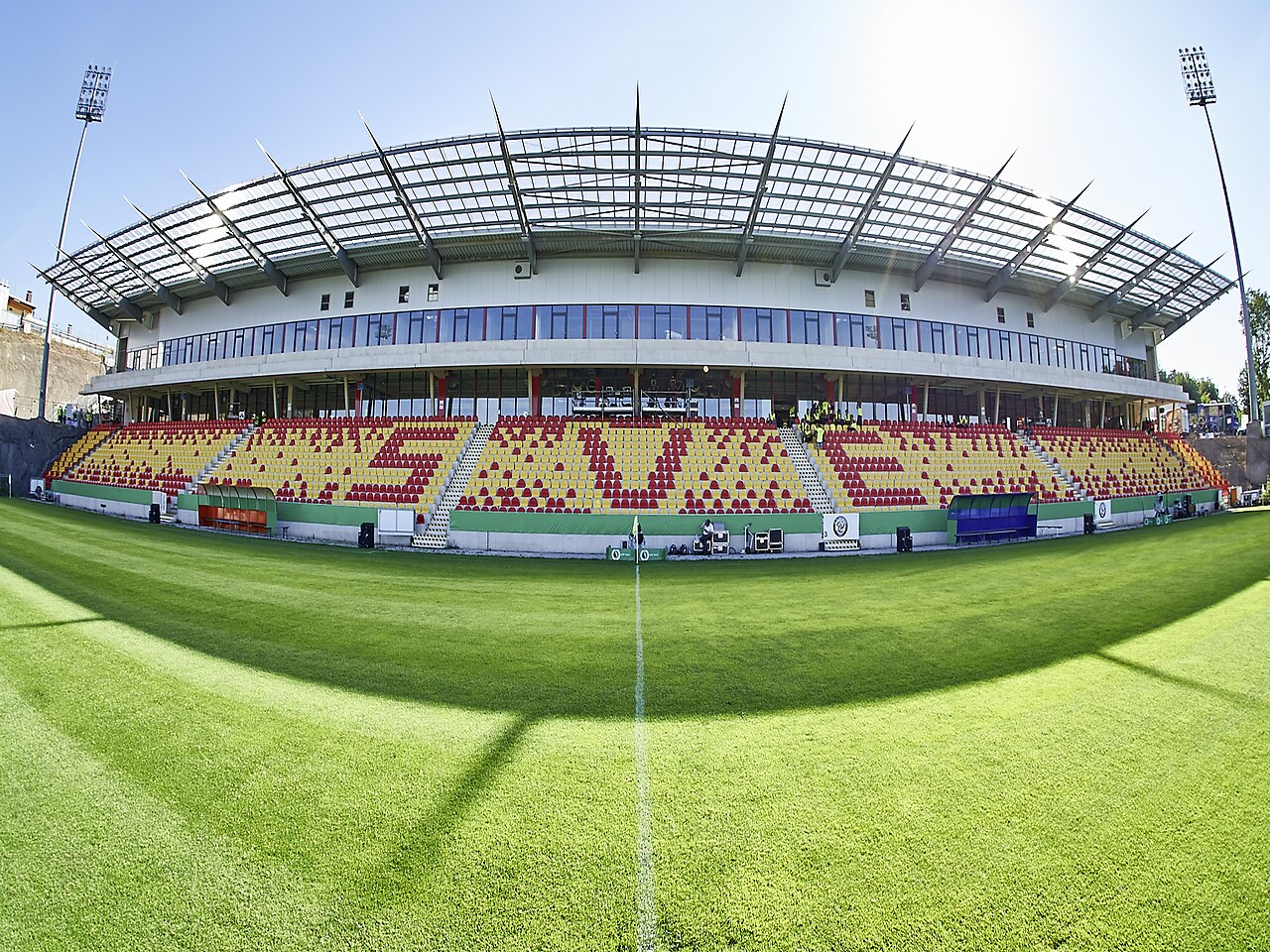

The smallest place ever to reach the Bundesliga
Every league has a fairytale. This one is unusually extreme.
Spiesen-Elversberg is a municipality in Saarland with around thirteen thousand inhabitants. Not a city with a small club — a small town, in Germany's smallest state, next to the French border. The club climbed out of the fourth tier, won the 3. Liga in 2022–23, and finished runners-up in the 2. Bundesliga on 17 May 2026 to go up again. They are the fifty-ninth club to play in the Bundesliga since it began in 1963.
Put it against the rest of this series. Bayern draw on a metropolitan area of two and a half million. Dortmund fill 81,365 seats every fortnight. Elversberg's entire municipality would not fill the Signal Iduna Park's standing terrace — and the whole town could not fill its own ground twice over.
Go this season. This series has said go now about several grounds and usually meant it loosely. Here it is literal: the stadium is being enlarged to meet Bundesliga rules and the work finishes in 2027. Whatever happens to the club, the ten-thousand-capacity version of this ground exists for one season only.
The stadium, and the tree it is named after
The Waldstadion an der Kaiserlinde — the forest stadium at the Kaiser's lime tree — takes its name from a linden planted on 15 April 1913 to mark twenty-five years of Kaiser Wilhelm II's reign. The tree is still there. The stadium grew up beside it.
Promotion brought a problem the club could not solve in a summer. DFL rules set a minimum capacity of 15,000 for the Bundesliga. The Kaiserlinde holds 10,000.
Work has been running since July 2024 — a new west stand first, then the wider expansion — but completion is scheduled for spring 2027, which is after this season ends. So Elversberg are playing a full Bundesliga campaign in a ground two thirds of the required size, and all seventeen home fixtures are at the Kaiserlinde rather than being moved to Saarbrücken or anywhere else.
The practical consequence is the whole point of visiting. Ten thousand places is smaller than any other ground in the division by a factor of two, and less than an eighth of Dortmund. You will be closer to Bundesliga football here than anywhere else in Germany.
Capacity figures in circulation vary wildly because sources date from different stages of the building work. For this season the number that matters is ten thousand; check it again for 2027–28.
Tickets
The German pattern applies — no document demanded, a queue behind season-ticket holders and members, general sale a few weeks out — but the arithmetic here is brutal.
Ten thousand places, in the Bundesliga. Bayern, Dortmund, Schalke and Leverkusen each have travelling followings that would swallow the away allocation many times over, and the home demand is the whole of Saarland plus every neutral in Europe who has read the same facts you just have. This is, on the arithmetic, the hardest ticket in the Bundesliga this season — harder than Dortmund, because Dortmund has eight times the seats.
Plan around the release date rather than hoping. If you cannot get a home fixture, the club's away games at the big grounds are a far easier way to see this team.
Where away fans go
Visiting supporters get the share German league rules require, which in a ten-thousand ground is a substantial slice of the whole — and it is nowhere near what the bigger clubs would normally sell. Arrangements are set per fixture and shift depending on who is visiting: accommodating Bayern or Schalke at a stadium built for the third division is a different exercise every time. Confirm yours rather than relying on anything written in advance, this page included.
Eating and drinking at the ground
Small-ground catering, which frequently beats the corporate version: Bratwurst and Currywurst off a grill, and Saarland's own contribution, Schwenker — marinated pork cooked over a wood fire on a swinging grill. If it is being cooked outside the ground, eat that rather than anything else.
Beer at full strength, and payment likely by stadium card as elsewhere in Germany. Cups carry a Pfand deposit.
Saarland before the match
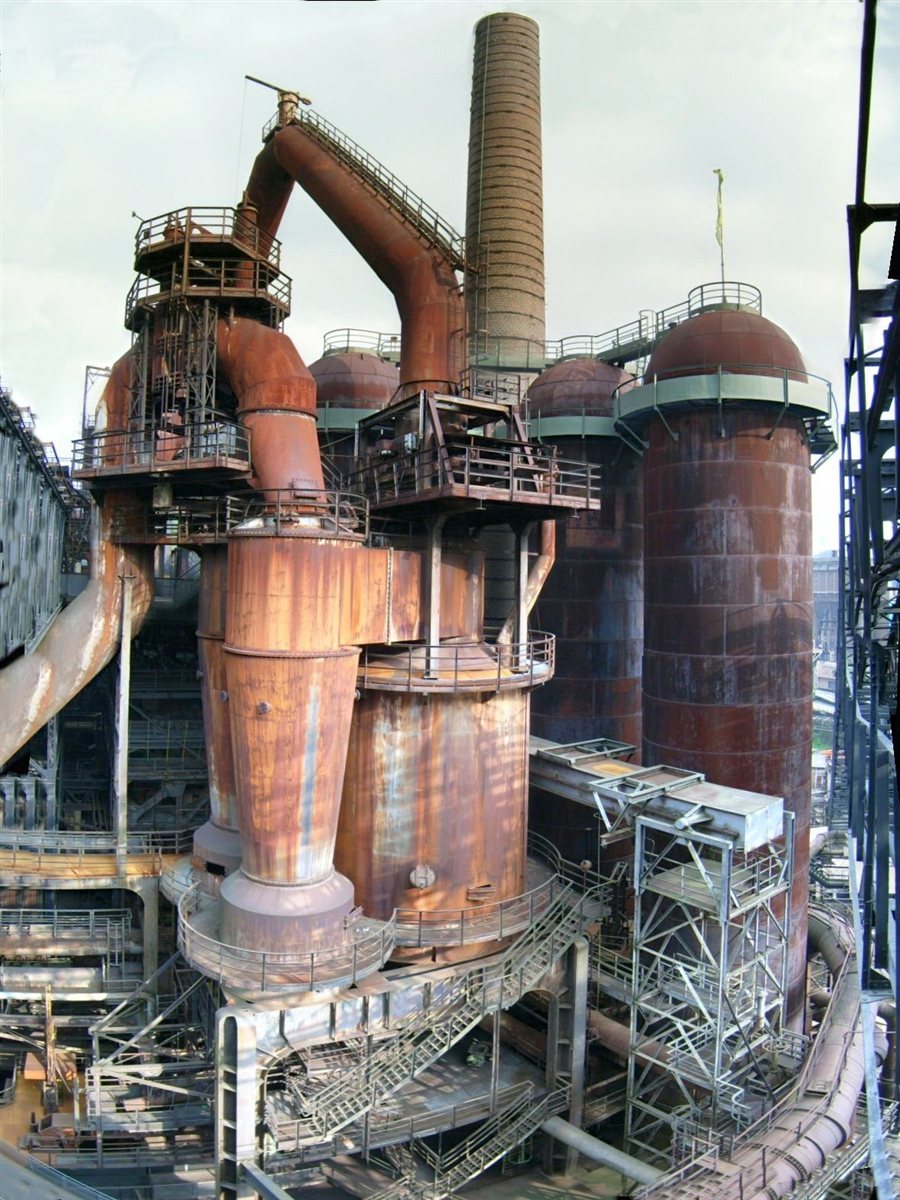

What to see
Saarland is Germany's smallest state, was French twice in the twentieth century, and is comprehensively ignored by visitors. It has two sights of genuine international rank:
- The Völklinger Hütte — a complete ironworks, shut down in 1986 and left standing exactly as it was, and the first industrial monument of the era to be listed by UNESCO as World Heritage. You climb through blast furnaces, walk the charging platform and stand inside the blowing hall. It is the equal of Zollverein in the Ruhr and Dolní Vítkovice in Ostrava, and less visited than either.
- The Saarschleife — the loop where the Saar turns almost back on itself through wooded hills, seen from a treetop walkway. The postcard of the region.
- Saarbrücken — the state capital, half an hour away, with a baroque centre and a Franco-German feel that exists nowhere else in the country.
- France — Metz is around an hour, Luxembourg a little more. This is the easiest German ground to combine with two other countries.
What to eat and drink
Saarland cooking is German with a French accent and takes eating seriously:
- Schwenkbraten — the marinated pork off the swinging grill. A Schwenker is both the grill and the person operating it, and the distinction is a local joke.
- Dibbelabbes — a grated potato and bacon dish baked in a pot until crusted.
- Lyoner — the regional sausage, eaten cold in a roll or fried; Saarlanders are attached to it in a way outsiders find funny.
- Beer and Crémant — Saarland drinks both, and the French border is close enough that the wine list will show it.
Common questions
Is it really the smallest place ever in the Bundesliga?
Yes — around thirteen thousand inhabitants, which makes Spiesen-Elversberg comfortably the smallest municipality ever represented in the German top flight.
How can a 10,000 ground host Bundesliga football?
Because the alternative was worse. The DFL minimum is 15,000 and the expansion does not finish until spring 2027, so the club is playing the season in the ground it has. All seventeen home fixtures are at the Kaiserlinde — nothing has been moved to Saarbrücken.
How likely am I to get a ticket?
Honestly: not very. Ten thousand places against Bundesliga demand is the worst ratio in the league. Find the release date, be ready on it, and have a second fixture in mind.
How does a town of 13,000 sustain a Bundesliga club?
It does not, on its own — the catchment is the whole of Saarland and the French border region, and the club has been carefully run rather than suddenly funded. But the honest answer is that nobody knows whether it is sustainable, which is precisely why it is worth seeing now.
Is it worth going out of my way for?
It is the most distinctive entry available in Germany right now, and the one least likely to still look like this in two years. If you collect grounds rather than fixtures, this is the season.
Thirteen thousand people, ten thousand seats, and a Bundesliga season in a stadium named after a lime tree. Add the Kaiserlinde to your bucket list before the builders finish.