 Groundhopper
Start free
Groundhopper
Start free
1. FC Heidenheim stadium guide — Voith-Arena, Heidenheim
Fifteen thousand places on a wooded hillside below a castle, and the same manager since 2007 — the longest tenure in the history of German football.
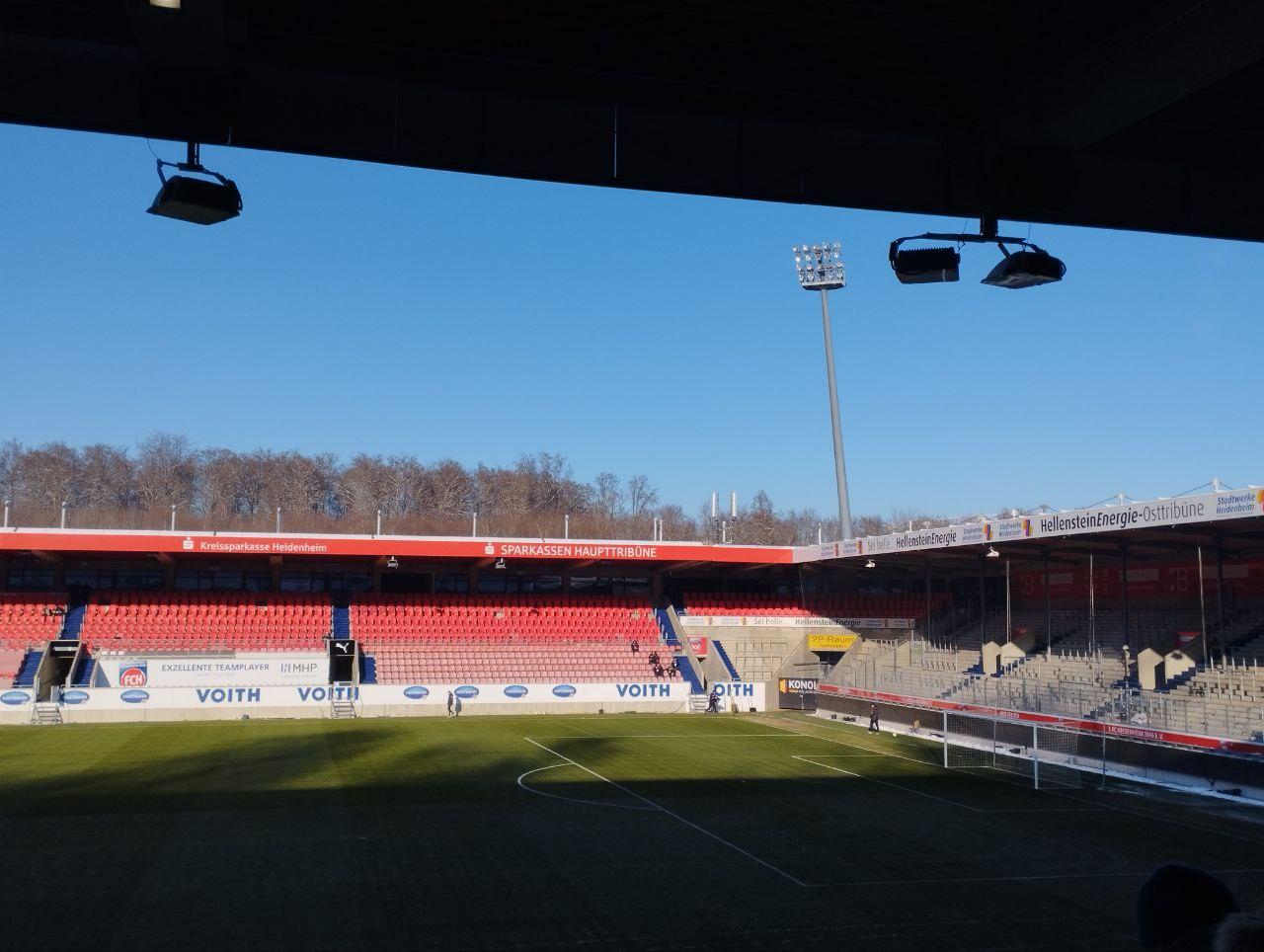

One man, since 2007
German football sacks managers as briskly as anywhere. The average top-flight tenure is measured in months.
Frank Schmidt took charge of Heidenheim on 17 September 2007, when the club was in the fifth tier. He was still in charge when they reached the second division, and still in charge when they reached the Bundesliga. On 17 September 2023 — sixteen years to the day — Heidenheim won their first ever Bundesliga match, and Schmidt set the record as the longest-serving manager German football has had.
That is the whole story of this club, and it is a genuinely unusual one. There is no wealthy backer here of the Hoffenheim or Leipzig kind. There is a small town, a stable board, and a manager who was given time on a scale that essentially no longer exists in the professional game.
If you collect grounds for the stories attached to them rather than for the architecture, this is one of the better ones in Germany.
A company town where the company does not own the club
The ground is called the Voith-Arena after Voith, the engineering firm founded in Heidenheim in 1867, still headquartered here and still the town's dominant employer. A small German town, one large family firm, and the firm's name on the stadium.
It would be easy to file that alongside Leverkusen and Wolfsburg, and it is worth being precise about why it does not belong there. At Leverkusen, Bayer holds a written exemption from the 50+1 rule. At Wolfsburg, Volkswagen owns the club outright. At Heidenheim the company is a sponsor and the members own the club, exactly as at Union Berlin or Freiburg.
The distinction matters because it is easy to look at a stadium name and assume ownership. In German football the name on the roof tells you who is paying for the advertising, and nothing at all about who controls the club. Bochum has had six names and has never been owned by any of them.
Getting there
- By train: Heidenheim an der Brenz is on the line between Aalen and Ulm. It is not on a fast route, so allow more time than the distance suggests.
- From Stuttgart: around an hour and a half. From Ulm, under an hour. Ulm is the better base of the two for a short trip.
- On foot: the ground is a walk from the station and up a slope. It sits on the Schlossberg, below Hellenstein Castle.
- Match ticket and transport: as at most German grounds, the ticket covers local transport on the day.
Tickets
The German pattern: no document demanded, season-ticket holders and members first, general sale some weeks out. Buy from the club.
Fifteen thousand places is the licensing minimum and there is not much of it. Against that, Heidenheim is a small town without a national following, so demand is mostly local plus whoever is visiting. Treat it as moderately difficult: obtainable with planning, impossible if a big travelling support is in town and you have left it late.
Where away fans go
Visiting supporters get the share German league rules require, which in a fifteen-thousand ground is a meaningful slice of the whole. Arrangements are set per fixture, so confirm yours. Neutrals should take a side stand.
The ground itself
Fifteen thousand places, built up in stages as the club climbed, on a slope with woodland behind one side. It is small, tidy, football-specific and completely without pretension.
The setting is the thing. Very few professional grounds in Europe sit on a wooded hillside beneath a medieval castle, and the walk up to it does more for the afternoon than any amount of architecture would.
Put it in the small-ground category with Paderborn, Osnabrück and Elversberg. These are the fixtures where you are genuinely close to the football, and they are the ones people remember.
Eating and drinking at the ground
Swabian catering, which is a distinct cuisine and better than the German average: Bratwurst and Currywurst as everywhere, but ask for Maultaschen or a Seele — the long, salted, caraway-crusted Swabian bread roll.
Beer is full strength and local. Payment by stadium card: load it on arrival, cash out afterwards. Cups carry a Pfand deposit.
Heidenheim and the Swabian Alb before the match
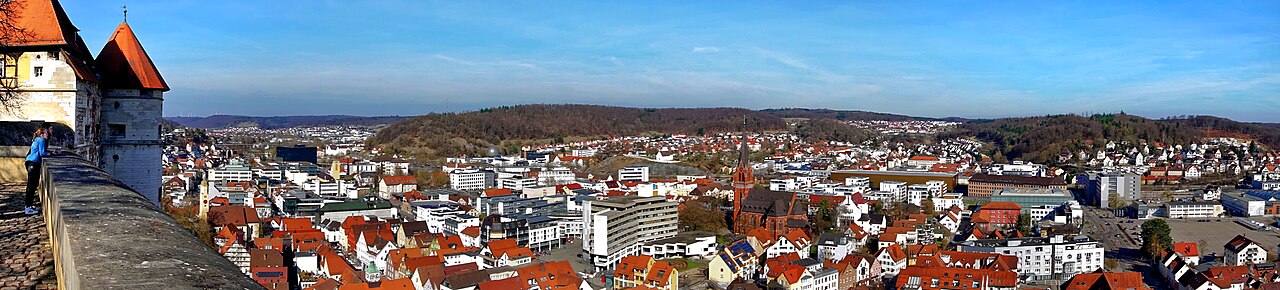

What to see
- Schloss Hellenstein — the castle on the hill directly above the stadium, with a view over the town and the Brenz valley. Twenty minutes on foot from the ground and the obvious thing to do before kick-off.
- The Swabian Alb — the limestone plateau the town sits on, full of caves, springs and walking trails.
- The Lonetal caves — a short drive away, and on the UNESCO list. The oldest known figurative art in the world was found in these caves, including the Lion Man and a mammoth-ivory figure around forty thousand years old. The finds are displayed in Ulm and Blaubeuren.
- Ulm — under an hour, with the tallest church steeple in the world at 161 metres. If you are making a weekend of it, stay there.
What to eat and drink
Swabian cooking is one of Germany's best regional kitchens:
- Maultaschen — large filled pasta parcels, either in broth or fried with onions. The regional dish.
- Spätzle and Kässpätzle — the soft egg noodles, plain alongside a roast or baked with cheese and fried onions.
- Zwiebelrostbraten — steak with fried onions and a dark sauce, over spätzle.
- Most — the local cider, drunk here rather than beer more often than outsiders expect.
Common questions
Is the manager record real?
Yes. Frank Schmidt has been in charge since September 2007 and holds the record for the longest managerial tenure in German football. He took the club from the fifth tier to the Bundesliga.
Is it worth travelling for?
If you want a small, honest ground in a good landscape with a story attached, yes. If you want noise and spectacle, choose Dresden or St. Pauli instead. Be clear with yourself which trip you are taking.
Where should I stay?
Ulm. It is under an hour away, it is a considerably better evening, and the cathedral steeple is worth the detour on its own.
How does it compare with Elversberg?
They are the two small-town stories in German football and they belong together on a list. Elversberg is smaller and currently more remarkable; Heidenheim has the longer record of staying up.
Fifteen thousand places on a wooded hillside under a castle, and the same manager since 2007. Add the Voith-Arena to your bucket list and stay in Ulm.