 Groundhopper
Start free
Groundhopper
Start free
VfB Stuttgart stadium guide — MHPArena, Stuttgart
Sixty thousand seats with the Mercedes museum next door, vineyards above the city — and a home terrace you will not be admitted to in visiting colours.

Getting there
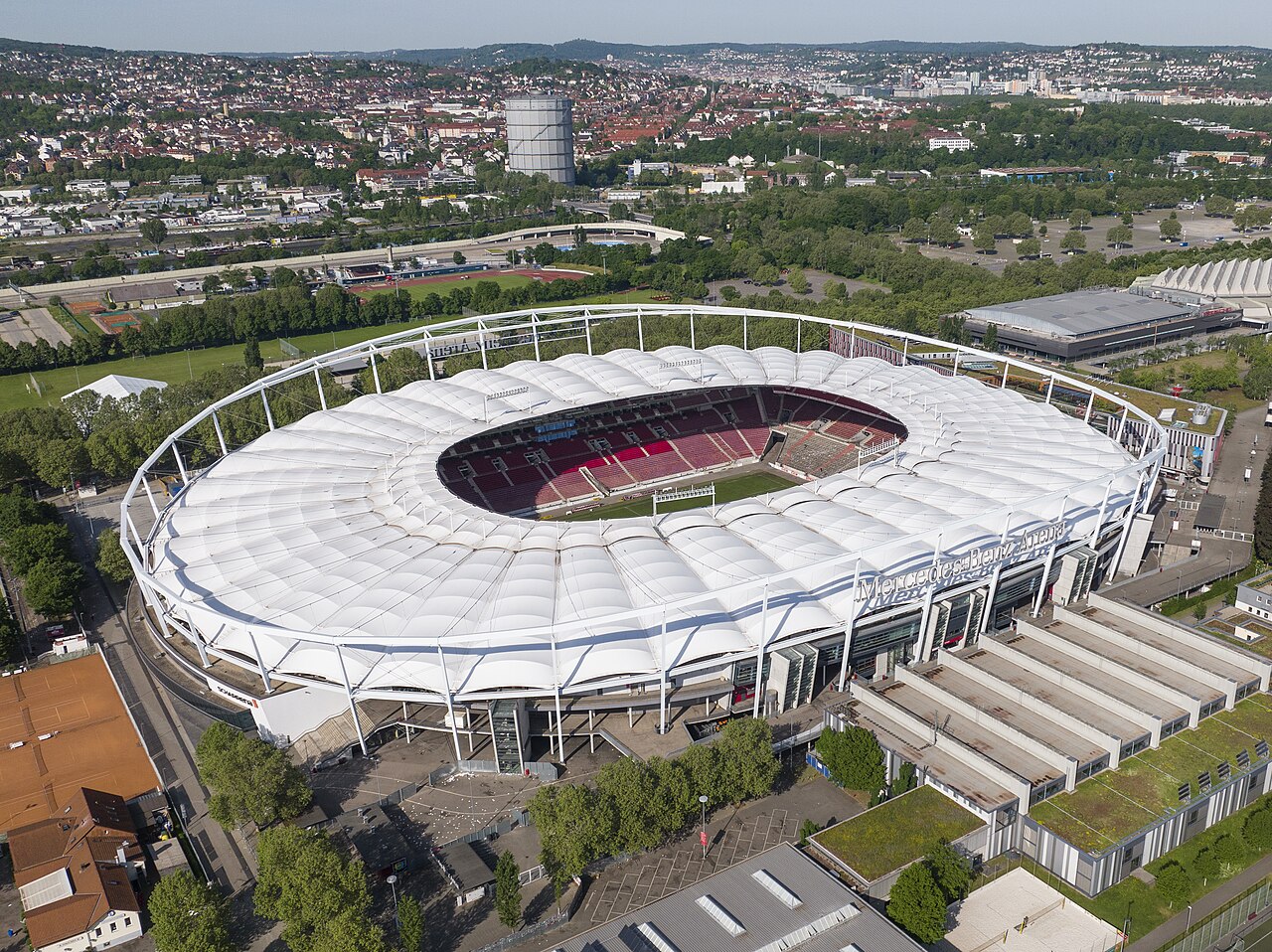
The ground sits in Bad Cannstatt, across the Neckar from the city centre, in a cluster of venues that includes the arena, the Mercedes museum and the festival ground.
- By S-Bahn: to Neckarpark, a short walk from the stadium.
- By U-Bahn: several lines serve the Neckarpark and Mercedesstraße stops.
- Match ticket and transport: as at most German grounds, your ticket covers local public transport on the day within the relevant zone. Check the fine print for your fixture.
- From Poland: a long way south-west. Stuttgart has an international airport and good rail links; combine it with Munich rather than treating it as a single trip.
Tickets
The German pattern: nobody asks for a document, but you are behind season-ticket holders and members in the queue, and general sale opens some weeks before the fixture. Buy from the club.
Sixty thousand places is a lot of capacity and ordinary fixtures are frequently obtainable. Bayern and Dortmund are not, and neither is a match with the title at stake in the closing weeks.
Where away fans sit — and where you must not go
Visiting supporters are allocated the corner of the Untertürkheimer Kurve nearest the EnBW-Tribüne: blocks 61 and 62 in the lower tier and 68 to 70 above.
The rule that catches people out is at the other end. The Cannstatter Kurve is the home terrace, and entry wearing visiting-team clothing is not permitted. This is not a suggestion or a matter of stewards' discretion; you will be stopped.
If you are a neutral, buy a side stand. If you are following an away team, stay in your allocation.
The ground itself
There has been a stadium on this site since the 1930s, and it has been rebuilt repeatedly — most recently to remove the running track and bring the stands to the touchline, which transformed it as a football ground. It holds around 60,000 across four tiers, all covered.
The commercial name has changed more than once. Older supporters say Neckarstadion; recent visitors may know it by a car manufacturer's name. All of them mean this building.
The Cannstatter Kurve is the standing home end and generates the noise. VfB are a club with five German championships and a large, demanding support in one of the wealthiest regions in Europe, and the crowd behaves accordingly — enthusiastic when things go well, audibly unimpressed when they do not.
A note on German stadium names
Stuttgart is a good place to explain something that confuses visitors across this whole country. German grounds change commercial names frequently, and supporters mostly refuse to use them.
This stadium has been the Neckarstadion, then a car manufacturer's arena, and is now named after a software company. Frankfurt's is officially a bank's park and universally called the Waldstadion. Dortmund's carries an insurer's name and is called the Westfalenstadion by everybody in the ground. Schalke's has a brewery on the roof and is at least called that in practice.
The practical advice: learn the traditional name as well as the current one. If you ask for directions using a sponsor's name that changed two years ago, you may get a blank look; if you use the old name, you will not. Sources of different vintages will disagree, and they are usually all describing the same building.
Eating and drinking at the ground
Bratwurst, Currywurst, pretzels and full-strength beer — and, this being Swabia, you may well find Maultaschen on the menu as well, which is worth taking over the sausage.
Payment by stadium card: load it on the way in and cash out afterwards. Cups carry a Pfand deposit refunded on return.
Stuttgart before the match

What to see
Stuttgart is a car city in a bowl of vineyards, which is a stranger combination than it sounds:
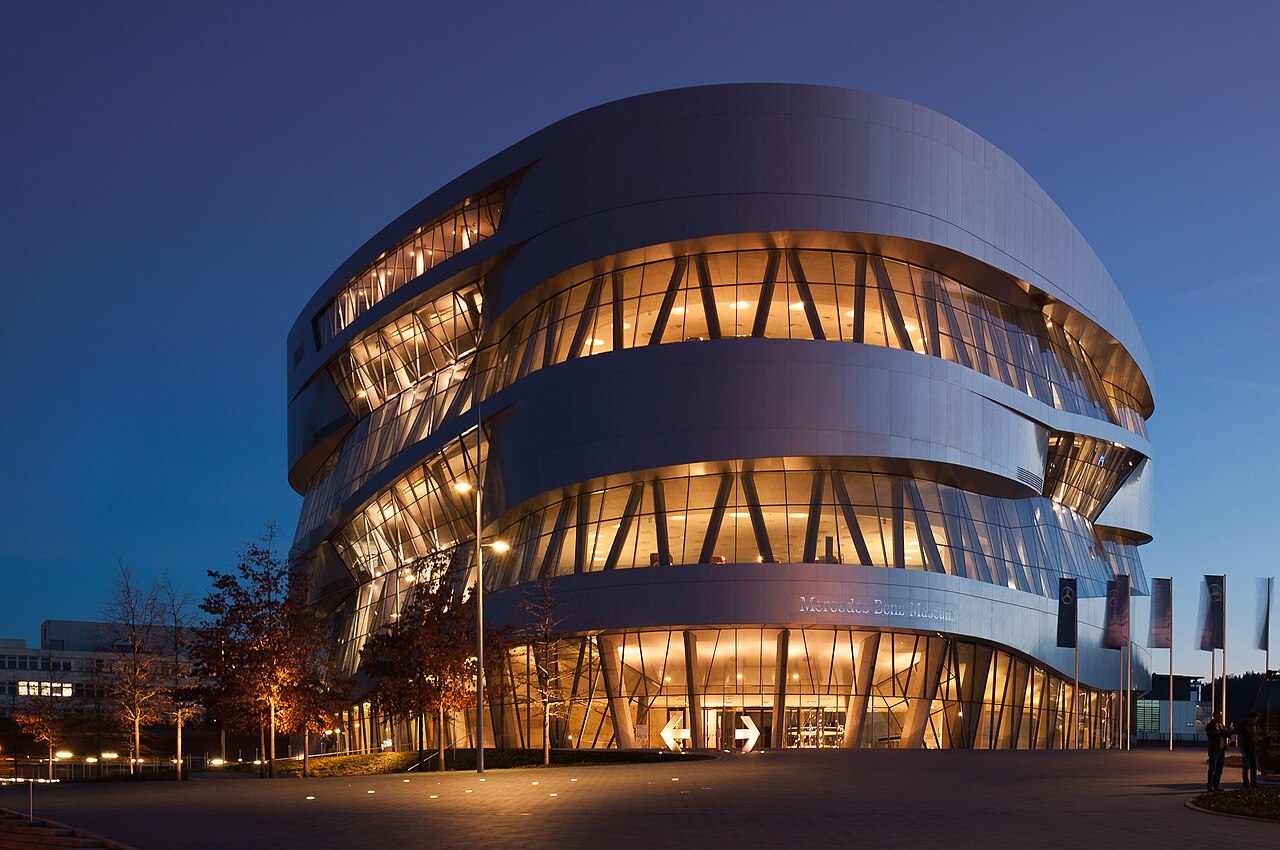
- The Mercedes-Benz Museum — a few minutes' walk from the stadium, in a double-helix building you descend through chronologically from the first automobile onwards. Even if cars bore you, the building is worth the ticket.
- The Porsche Museum — on the other side of the city at Zuffenhausen, and the natural pairing.
- The vineyards — Stuttgart has working vineyards inside the city limits, on slopes above the centre. Walk up through them for the view.
- Wilhelma — a combined zoo and botanical garden in a Moorish-revival palace complex, and one of the most visited attractions in the country.
Timing note: the Cannstatter Volksfest, the second-largest beer festival in Germany after Munich's, takes place on the festival ground beside the stadium in late September and early October. Accommodation is scarce and expensive during it.
What to eat and drink
Swabian cooking is one of the best regional kitchens in Germany and is nothing like Bavarian:
- Maultaschen — large filled pasta parcels, served in broth or fried with egg. The story is that monks invented them to hide meat during Lent, which is why they are also called Herrgottsbscheißerle — roughly, "little God-cheaters".
- Käsespätzle — the local egg noodles layered with cheese and fried onions.
- Zwiebelrostbraten — steak with a mound of fried onions and gravy, with spätzle underneath.
- Trollinger — the local red wine, drunk here in enormous quantities and almost nowhere else. Try it in a Besenwirtschaft, a temporary tavern a grower opens in their own premises for a few weeks a year.
Common questions
What happens if I wear away colours in the Cannstatter Kurve?
You are refused entry. Buy into your own allocation or a side stand.
Is the Mercedes museum really next to the ground?
Minutes away on foot. It is the easiest museum-and-match combination in German football.
How does Stuttgart combine with other grounds?
Munich is a couple of hours by train, Freiburg a similar distance west, and Hoffenheim and Karlsruhe are closer still. Southern Germany works well as a route.
A sixty-thousand-seat ground with a car museum next door and vineyards above the city. Add the MHPArena to your bucket list and build a southern German route around it.