 Groundhopper
Start free
Groundhopper
Start free
Greuther Fürth stadium guide — Sportpark Ronhof, Fürth
Three German championships in the 1910s and 1920s, a ground named after a person rather than a company, and a second Franconian stadium ten kilometres up the U-Bahn.

Champions when it mattered, forgotten since
Before the Bundesliga, before the war, before almost anything most people associate with German football, Fürth were one of the best sides in the country. Three national championships — 1914, 1926 and 1929 — put them in company that now consists mostly of clubs far larger than this one.
They have spent the modern era in the second division with brief visits above it. A town of a hundred and thirty thousand with a sixteen-thousand ground is not going to compete with Munich, and nobody here pretends otherwise.
What that leaves is a small, well-run club with a serious history, in a town that is worth an afternoon on its own, ten minutes from a much bigger ground. As a groundhopping proposition that is close to ideal.
The Frankenderby
Fürth against 1. FC Nürnberg is one of the oldest derbies in German football and one of the most genuinely hostile. The two grounds are about ten kilometres apart and the U-Bahn runs between them.
Practically, for a visitor:
- The derby is a hard ticket and will not reach general sale in useful quantity.
- It is heavily policed and is the wrong fixture for a relaxed first visit.
- Any other home match is straightforward, and the two clubs are close enough that a weekend can take in both grounds if the fixture list cooperates.
That last point is the useful one. Nuremberg and Fürth together are the most efficient two-ground pairing in Bavaria, and one of the best anywhere in this series.
Getting there
- By U-Bahn: the Nuremberg underground runs to Fürth, and the ground is a short ride or walk from there. You can be at one stadium and then the other inside half an hour.
- By train: Fürth is minutes from Nuremberg Hauptbahnhof on the main line.
- From Munich: about an hour to Nuremberg, then a few minutes more.
- Match ticket and transport: as at most German grounds, the ticket covers local transport on the day.
Tickets
The German pattern: no document demanded, season-ticket holders and members first, general sale some weeks out. Buy from the club.
Sixteen thousand places, a modest local support and no national following make most fixtures straightforward. This is one of the easier grounds in the division to get into.
The derby is the exception, and it is a large exception.
Where away fans go
Visiting supporters get the share German league rules require, which in a sixteen-thousand ground is a real proportion of the whole. Arrangements are set per fixture, so confirm yours. Neutrals should take a side stand.
The ground itself
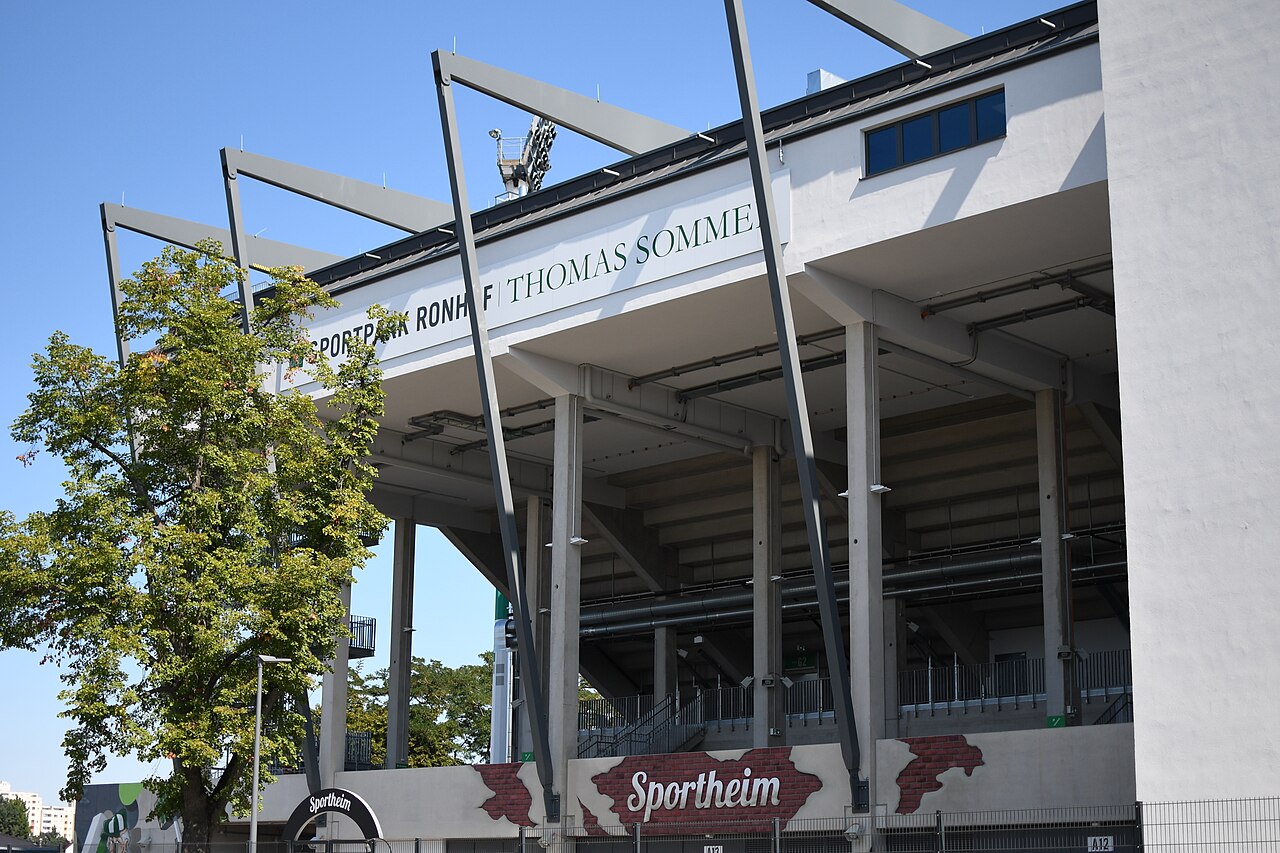
The Ronhof has been the club's home since 1910 and has been rebuilt in pieces around that history rather than replaced. Sixteen thousand places, four stands, football-specific, no running track, and noticeably tight.
The full name includes Thomas Sommer, a long-serving club official, which puts it in the small group of German grounds named after a person rather than a company — with Kaiserslautern's Fritz Walter, Dresden's Rudolf Harbig and Nuremberg's Max Morlock. In a series where most grounds are named after banks and insurers, that is worth noticing.
Eating and drinking at the ground
Franconian catering, which is a serious advantage. Order Nürnberger Rostbratwürste — the small finger-sized grilled sausages, three in a roll — and do not mention where you got them if you are wearing Fürth colours.
Beer is Franconian and full strength, from a region with more breweries per head than anywhere on earth. Payment by stadium card: load it on arrival, cash out afterwards. Cups carry a Pfand deposit.
Fürth before the match
The town that survived
Nuremberg was bombed almost flat and its old town is a careful reconstruction. Fürth, ten kilometres away, came through comparatively lightly — and as a result has a very large number of listed buildings, mostly nineteenth-century, standing in their original streets.
Walking Fürth after walking Nuremberg is genuinely instructive. One is a rebuilt idea of a German town; the other is what was actually there.

What to see
- The old town and the Gustavstraße — the surviving core, and where to eat and drink before a match.
- The Jewish Museum of Franconia — Fürth had one of the largest and most important Jewish communities in southern Germany, with a history running back centuries. The museum sits in a former Jewish family home, and the old Jewish cemetery is nearby. It is the most substantial thing in the town.
- The Ludwigsbahn — the first railway in Germany ran from Nuremberg to Fürth in 1835. A replica of the locomotive Adler exists and the route is marked; the transport museum is at the Nuremberg end.
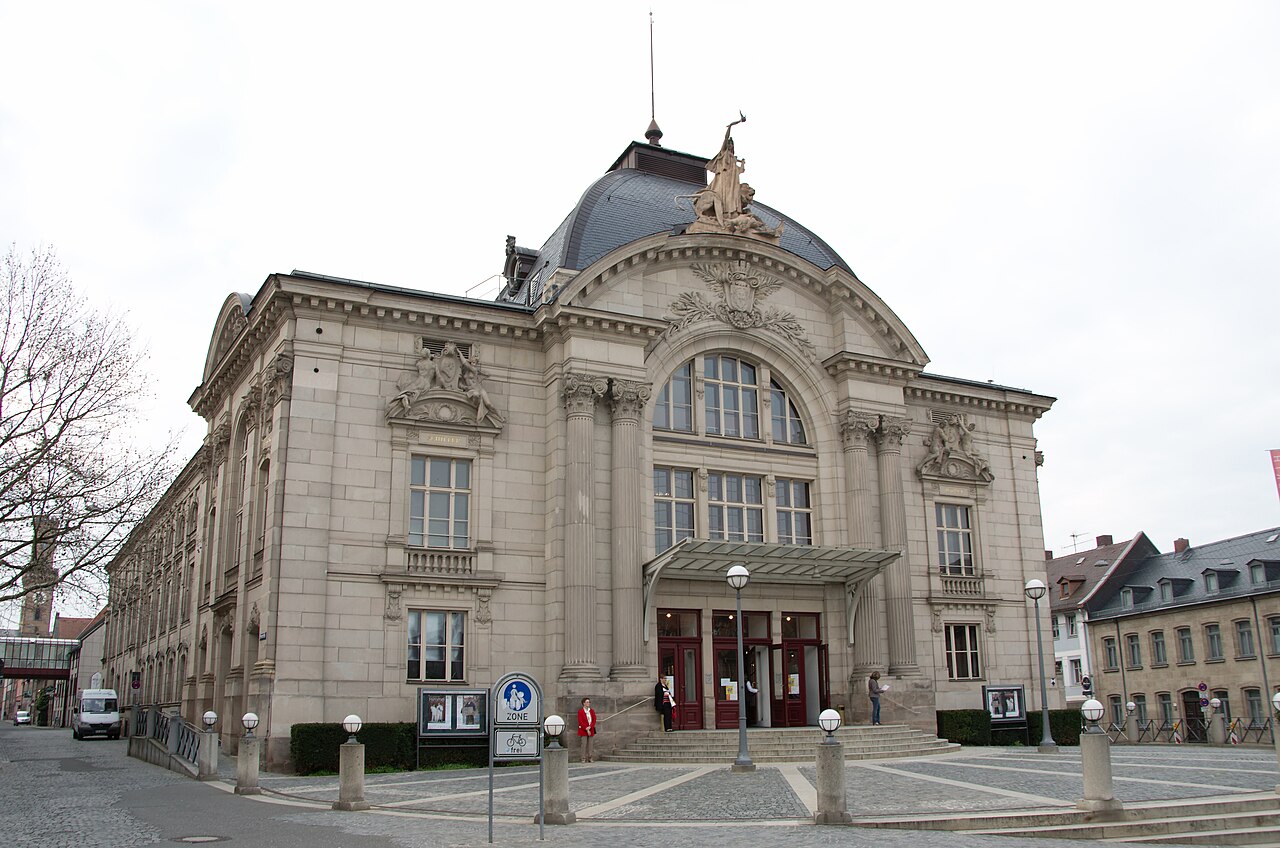
- The Stadttheater — an ornate late-nineteenth-century theatre, and the best single building in the town.
What to eat and drink
- Drei im Weggla — three Franconian sausages in a roll, from a stall.
- Schäufele — roast pork shoulder with crackling, dumplings and dark gravy.
- Karpfen — fried carp, a Franconian speciality traditionally eaten in months containing an "r".
- Kellerbier and Rauchbier — the unfiltered and smoked Franconian styles. Bamberg, an hour north, is the centre of the smoked-beer world.
Common questions
Is Fürth part of Nuremberg?
Absolutely not, and saying so is a good way to end a conversation. They are separate cities that have grown into each other, connected by the U-Bahn, and the distinction is taken seriously on both sides.
Can I really do both grounds in one trip?
Yes, and it is the reason to come here. Check both fixture lists together; ten kilometres and one underground line separate them.
How hard is a ticket?
Easy, except for the derby, which is very hard.
Is the town worth time?
More than most people expect. If you are in the area for Nuremberg, give Fürth two hours and walk the old streets — they are the ones that were not rebuilt.
Three championships from the 1910s and 1920s, sixteen thousand places, and a second Franconian ground ten kilometres up the U-Bahn. Add the Ronhof to your bucket list and do Nuremberg the same weekend.