 Groundhopper
Start free
Groundhopper
Start free
Bayern Munich stadium guide — Allianz Arena, Munich
Seventy-five thousand people under a shell that glows red, sixteen minutes from Marienplatz — and the hardest ticket in this series. What actually works.

The hardest ticket in this series, and why
Across this series the obstacle has changed by country. In Poland it is a national identification number the purchase form demands. In Czechia there is no obstacle at all. In Germany the obstacle is a queue — and at Bayern the queue is the longest in the country.
German clubs are owned by their members under the 50+1 rule, and Bayern's membership runs to several hundred thousand people. Tickets are released in waves: season-ticket holders, then members, then whatever remains. For an ordinary league fixture something usually remains. For Der Klassiker against Dortmund, for a Champions League knockout tie, or for a match against a club bringing a huge away following, what remains approaches zero.
What to actually do:
- Buy from fcbayern.com. It is the only reliably valid route and the cheapest by a distance.
- Find the release date and be there on it. There is no ticket window to visit and no queue to stand in physically. Everything happens online, on a schedule.
- Pick your fixture strategically. A midweek league match against a mid-table side is a realistic target. A Klassiker is not.
- Be careful with resale. Unofficial resale is widespread, expensive, and carries a real risk of an invalid ticket. If you use it, understand what you are accepting.
The consolation is that when you do get in, German football is astonishingly cheap for what it is. The standing places at the south end cost a fraction of what an equivalent seat costs in England or Spain.
Getting there
- By U-Bahn: line U6 to Fröttmaning — about sixteen minutes from Marienplatz. From the Hauptbahnhof, change to the U6 at Odeonsplatz.
- From the station to the ground: follow the Esplanade, a raised walkway of roughly a kilometre, ten to fifteen minutes on foot. On matchdays you simply follow the crowd.
- Frequency: the U6 runs every few minutes on event days and gets very full close to kick-off. Allow more time than the timetable suggests.
- Away supporters are directed from Fröttmaning across the Fröttmaninger Heide and over the footbridge to their own entrance. Follow the signs rather than the general crowd.
Turnstiles open two hours before kick-off and the security and ticket checks take time. Arrive early; there is nothing to be gained by arriving late here.
The ground itself
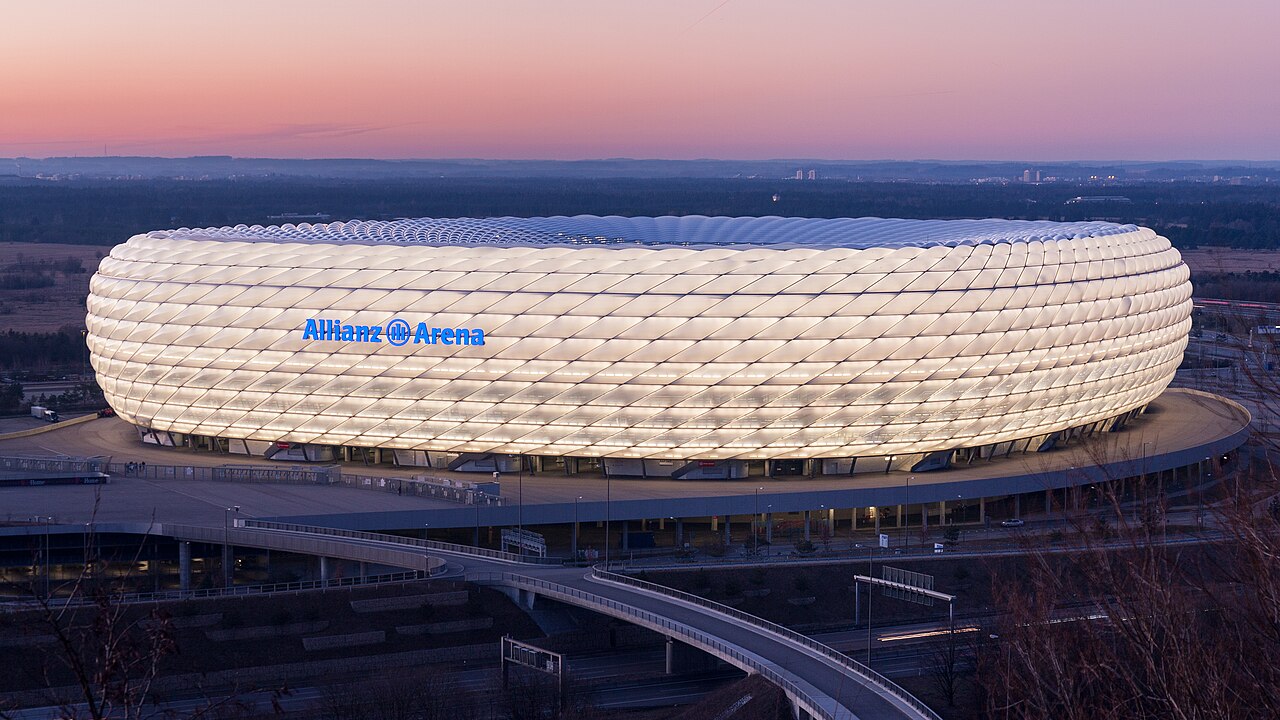
The Allianz Arena opened in 2005 and is wrapped in inflated ETFE panels that light up after dark — red for Bayern, and other colours for other occasions. Approaching it across the Esplanade at dusk, with the shell glowing above the heath, is one of the genuinely spectacular arrivals in European football, and it is worth timing your journey for.
Inside it is a steep three-tier bowl for 75,000, fully covered, with excellent sightlines from almost everywhere. The south end is the home terrace and the loudest part of the ground.
Be honest with yourself about what a Bayern league match is likely to be. The club wins most weeks by a distance, and a comfortable home victory against a mid-table side does not generate the noise that a terrace at Union Berlin or Schalke generates on an ordinary Saturday. You come here for the scale, the building and the occasion — not necessarily for the atmosphere.
Eating and drinking at the ground
Weisswurst, Bratwurst, pretzels the size of a plate, and beer by the half-litre at full strength.
Payment is by stadium card — load it at a kiosk when you arrive and cash out the balance afterwards. Cups carry a Pfand deposit refunded on return.
Munich before the match
.jpg)
What to see
- Marienplatz — the central square, with the Glockenspiel on the new town hall performing at fixed times each day.
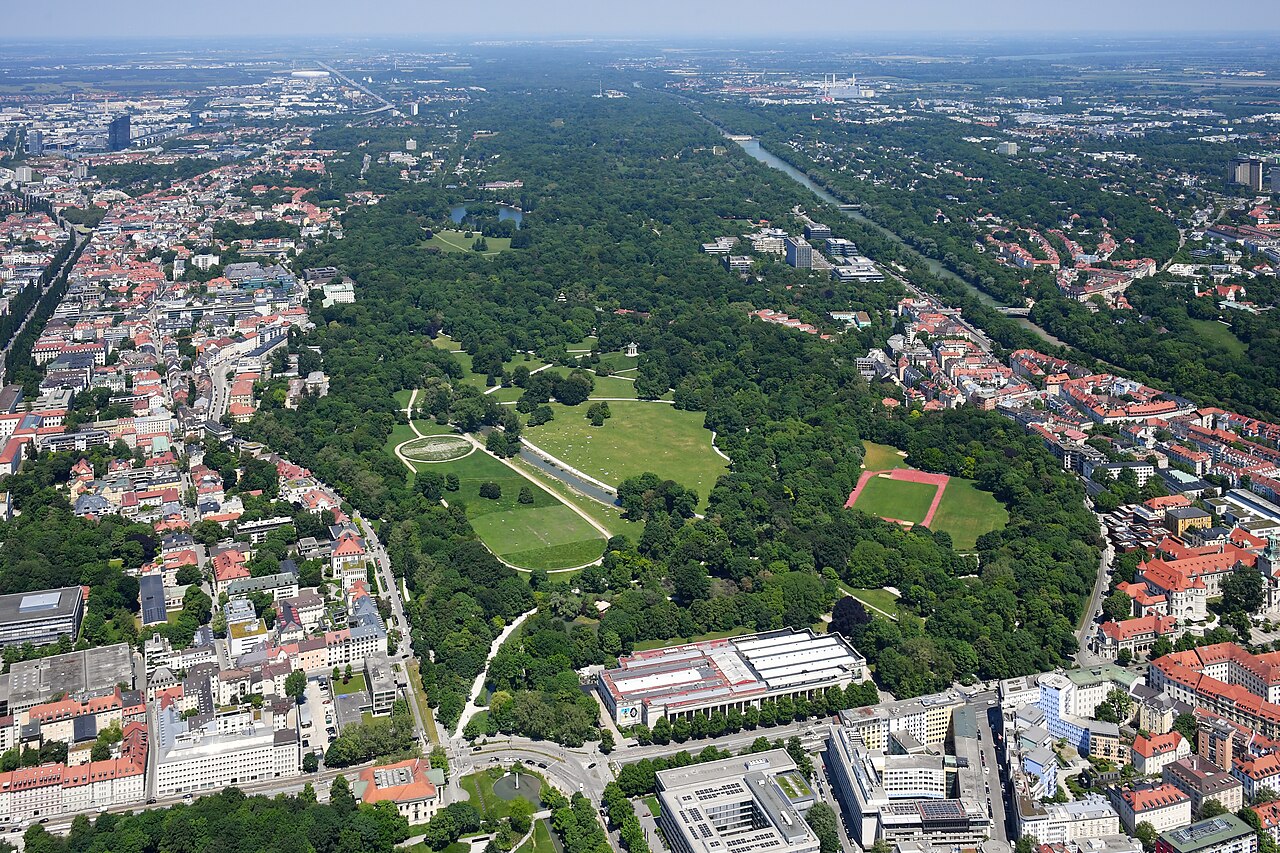
- The Englischer Garten — larger than Central Park, with beer gardens under the trees and, at the Eisbach, a standing wave where people surf in the middle of a landlocked city all year round. Go and watch; it is extraordinary.
- Viktualienmarkt — the food market beside Marienplatz, with a beer garden in the middle of it.
- The Olympiapark — the 1972 Olympic site, with Frei Otto's tented roof and the stadium Bayern used before 2005. Worth an hour if you collect grounds, and a sober memorial to the 1972 attack.
- The Residenz — the Wittelsbach palace in the middle of the city, far larger inside than it appears from the street.
One warning worth stating plainly: Oktoberfest runs from late September into the first days of October. Accommodation in Munich during it is scarce and expensive, and the city is extremely busy. Either plan around it deliberately or avoid it entirely.
What to eat and drink
- Weisswurst — white veal sausage with sweet mustard and a pretzel, eaten by tradition before noon. You will be told this. Take it seriously enough to do it once.
- Schweinshaxe — roast pork knuckle with crackling and a dumpling.
- Obatzda — a beer-garden cheese spread with paprika and onion, eaten with pretzels.
- A Maß — a litre of beer, which is the standard measure in a beer garden. Bavarian beer gardens traditionally allow you to bring your own food and buy only the drink.
Common questions
Which fixture should I target?
A league match against a mid-table opponent, ideally midweek. That is where availability is.
Is the stadium tour worth it if I cannot get a match?
Yes — the arena and the club museum are open on non-matchdays and it is a reasonable substitute for a ticket you could not get. It is not the same thing and this guide will not pretend it is.
Standing or seated?
Standing at the south end is cheaper and louder. Seats are easier to obtain.
Seventy-five thousand people under a shell that glows red, sixteen minutes from Marienplatz. Add the Allianz Arena to your bucket list and watch for the release date.