 Groundhopper
Start free
Groundhopper
Start free
1. FC Nürnberg stadium guide — Max-Morlock-Stadion, Nuremberg
Fifty thousand seats, nine German championships, a ground the supporters named themselves — and the former Nazi party rally grounds next door, preserved and explained.
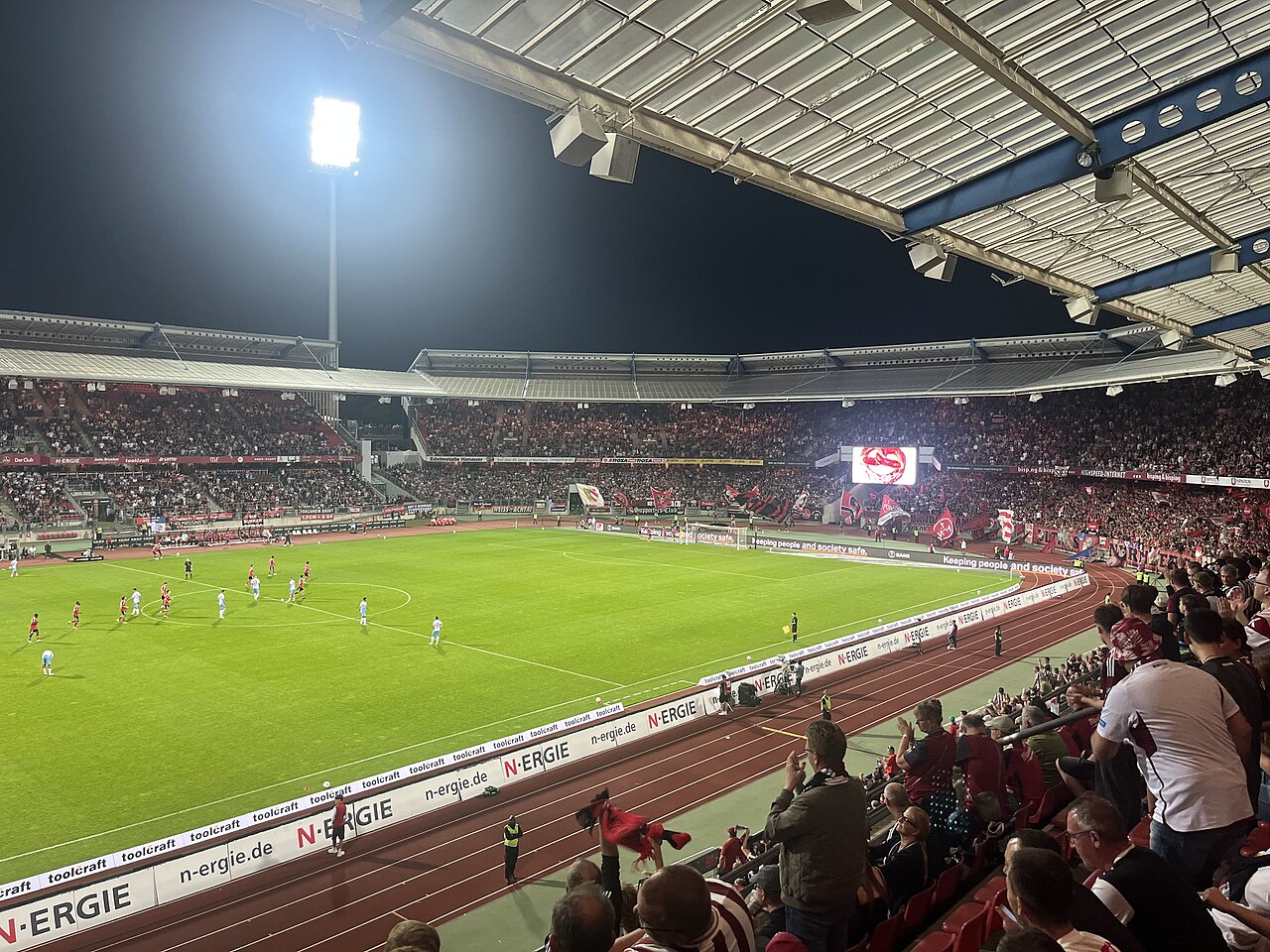

The ground the fans named themselves
Every other German stadium in this series carries the name of whoever paid for it, and several have carried three or four. Nuremberg's is different, and the story is short.
In 2006 the ground was sold to a sponsor. The supporters declined to use the new name and adopted their own instead: Max-Morlock-Stadion, after Max Morlock, one of the greatest players in the club's history and a member of the West Germany side that won the 1954 World Cup. The name stuck, then became official.
It is worth knowing because it tells you what kind of club this is. 1. FC Nürnberg won nine German championships and held the record for decades before Bayern passed them. They have since spent long stretches in the second division, going up and down often enough that Germans call them the classic yo-yo club. The crowd remembers the nine titles. The league table usually does not.
Getting there
- S-Bahn and tram: the stadium sits in the Dutzendteich area south-east of the centre, with its own station and tram links; matchday services run from the Hauptbahnhof.
- On foot: around half an hour from the old town if you want to walk in past the lakes, which is the better approach.
- From Munich: about an hour by fast train, making this an easy add-on to a Bavarian trip — though see the note on Franconia below before you call it that out loud.
- Match ticket and transport: as at most German grounds, the ticket covers local transport on the day.
Tickets
The German pattern: no document demanded, season-ticket holders and members first, general sale some weeks out. Buy from the club.
Fifty thousand places in the second division makes this one of the easier large grounds to get into, in the same category as Hertha and Kaiserslautern. Derby fixtures against Fürth and any match with promotion riding on it are the exceptions.
Part of the ground is terrace, and as everywhere in Germany it is cheaper and louder than the seats. Choose deliberately.
Where away fans go
Visiting supporters get the allocation German league rules require, in their own section. Arrangements are set per fixture, so confirm yours. Neutrals should sit along the side rather than behind a goal, for the reason in the next section.
The ground itself
A wide bowl with a running track, which is the single most important practical fact about visiting. The club dropped the pitch by 1.30 metres during the 2002 rebuild specifically to improve sightlines, and it helped, but a track is a track: behind the goals you are a long way back.
This is the second ground in the German series with that problem and the third in the whole series — Berlin's Olympiastadion and Baník Ostrava are the others. The remedy is the same at all three. Pay a little more for a side stand and sit higher rather than lower.
Eating and drinking at the ground
You are in Franconia, and the catering is better for it. The thing to order is Nürnberger Rostbratwürste — short, thin, finger-sized grilled sausages, protected by origin like champagne, and traditionally served drei im Weggla: three in a roll, with mustard. Do not accept a large sausage here; that would be somebody else's.
Beer is Franconian and full strength, and Franconia has more breweries per head than anywhere on earth. Payment by stadium card: load it on arrival, cash out afterwards. Cups carry a Pfand deposit.
Nuremberg before the match
The site the stadium stands on
This needs stating plainly rather than skirted. The stadium is part of the Reichsparteitagsgelände, the four square kilometres laid out for the Nazi party rallies of the 1930s. The Zeppelinfeld and its grandstand are next door. Albert Speer's Große Straße, a two-kilometre parade axis, runs across the site.
Germany neither demolished this nor tidied it away. The grounds are open, signed and explained, and the Dokumentationszentrum Reichsparteitagsgelände occupies the north wing of the unfinished Kongresshalle a few minutes from the stadium. A new permanent exhibition, Nuremberg and the Party Rallies, opened there in trial operation on 22 May 2026, so what you see is current rather than decades old.
If you are travelling to a football match here, give this two hours before kick-off. It is the most substantial thing you will do all day, and it is fifty metres from the turnstiles.

What else to see
- Memorium Nuremberg Trials — Courtroom 600, where the major war crimes trials were held from 1945. Still a working court, open to visitors when not sitting.
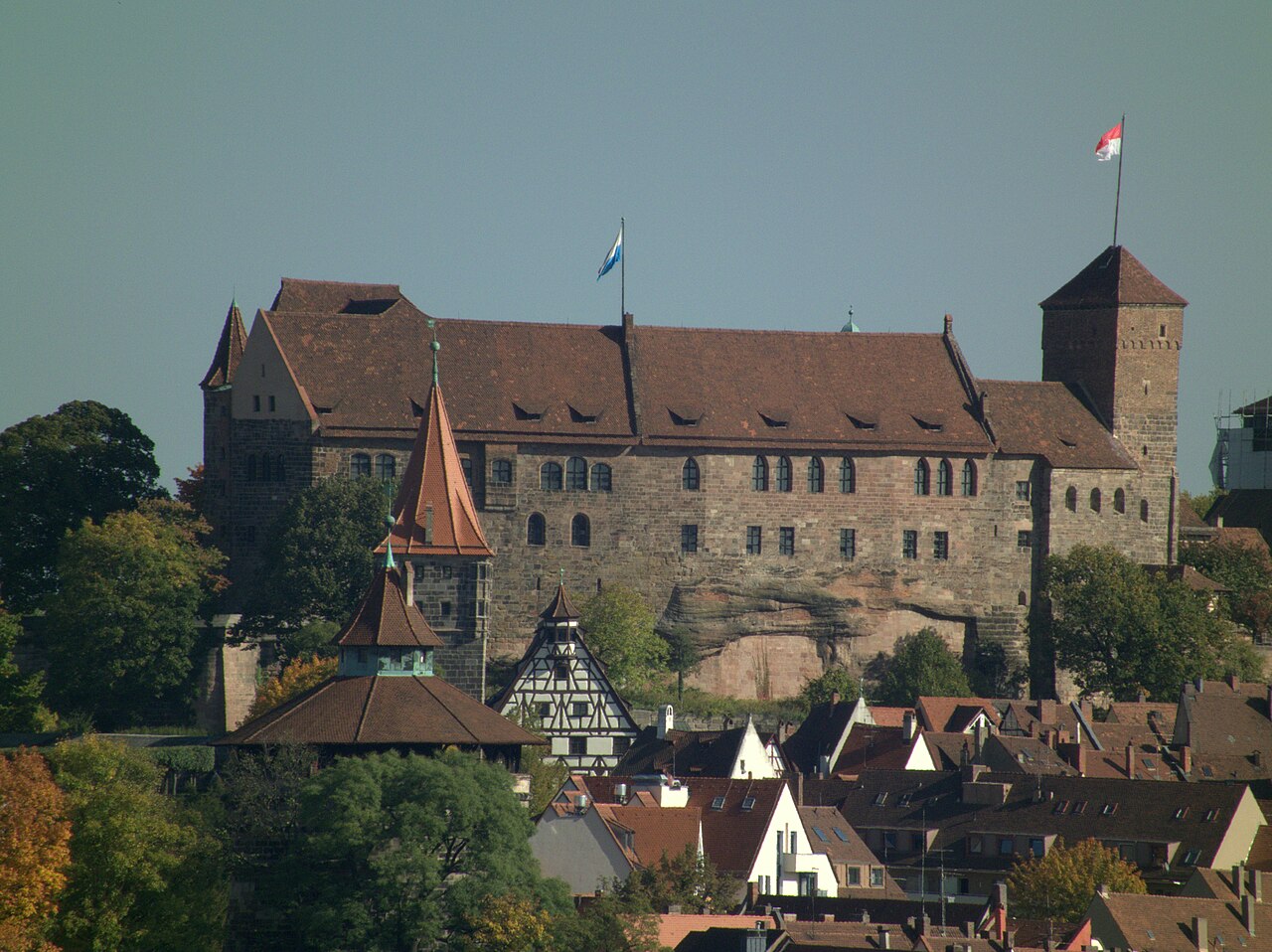
- The Kaiserburg — the imperial castle above the old town, with the walls and towers below it. The best view in the city.
- Albrecht Dürer's house — the artist lived and worked here; the building survived and is a museum.
- The Germanisches Nationalmuseum — the largest museum of German cultural history, and far better than the name promises.
- The Christkindlesmarkt — if your fixture falls in December, this is the most famous Christmas market in Germany, in the main square.
What to eat and drink
- Drei im Weggla — three Nuremberg sausages in a roll, from a stall. The correct lunch, and it costs very little.
- Schäufele — roast pork shoulder with crackling, potato dumplings and dark gravy. The Franconian Sunday plate.
- Lebkuchen — Nuremberg gingerbread, made here since the Middle Ages and sold year-round, not only at Christmas.
- Rauchbier and Kellerbier — Franconian beer styles worth crossing a country for. Bamberg, an hour north, is the smoked-beer capital.
Common questions
Is Nuremberg in Bavaria?
Administratively yes, culturally no. This is Franconia, it has its own dialect, beer culture and food, and calling a Nuremberger a Bavarian is a reliable way to start a conversation you did not intend. The football rivalry with Munich carries the same charge.
Is visiting the rally grounds appropriate before a football match?
It is what the city expects. The site is preserved and explained precisely so that people walk it and understand what happened there. Treat it as a memorial site rather than a curiosity and you will be doing exactly what is intended.
How bad is the running track?
Noticeable. Side stand, higher up. The same advice as Berlin and Ostrava.
What about the derby with Fürth?
The Frankenderby is one of the oldest and most hostile fixtures in German football, and the two clubs are ten kilometres apart. If both are at home across a weekend, that is two grounds and one hotel — but the derby itself is a hard ticket.
Fifty thousand seats, nine championships, and a stadium named by its own supporters. Add the Max-Morlock-Stadion to your bucket list and give the documentation centre two hours first.