 Groundhopper
Start free
Groundhopper
Start free
FC Augsburg stadium guide — WWK Arena, Augsburg
A geothermally heated stadium forty minutes from Munich, in a Roman city where the world's oldest social housing has charged the same rent since 1521.

Getting there
- By tram: the ground is served directly from the city centre, and the journey takes around twenty minutes.
- From Munich: roughly forty minutes by train. Augsburg is comfortably a day trip from Munich, and the obvious second Bavarian ground.
- Match ticket and transport: as at most German grounds, the ticket covers local transport on the day.
Tickets
The German pattern: no document demanded, a queue behind season-ticket holders and members, and general sale opening some weeks before the match. Buy from the club.
Augsburg are a mid-sized club in a mid-sized city with thirty thousand places, and ordinary league fixtures are usually obtainable. The exception is the fixture below.
The Bavarian derby that is not really a derby
Augsburg against Bayern Munich is the closest thing the Bundesliga has to a Bavarian derby by geography — forty minutes apart — and Augsburg supporters treat it with rather more intensity than Munich does.
Practically: that fixture sells out and will not reach general sale in any useful quantity. Any other home match is a realistic target.
Where away fans go
Visiting supporters have their own section with the allocation German league rules require, part of it standing. Arrangements are set per fixture, so confirm yours. Neutrals should take a side stand.
The ground itself
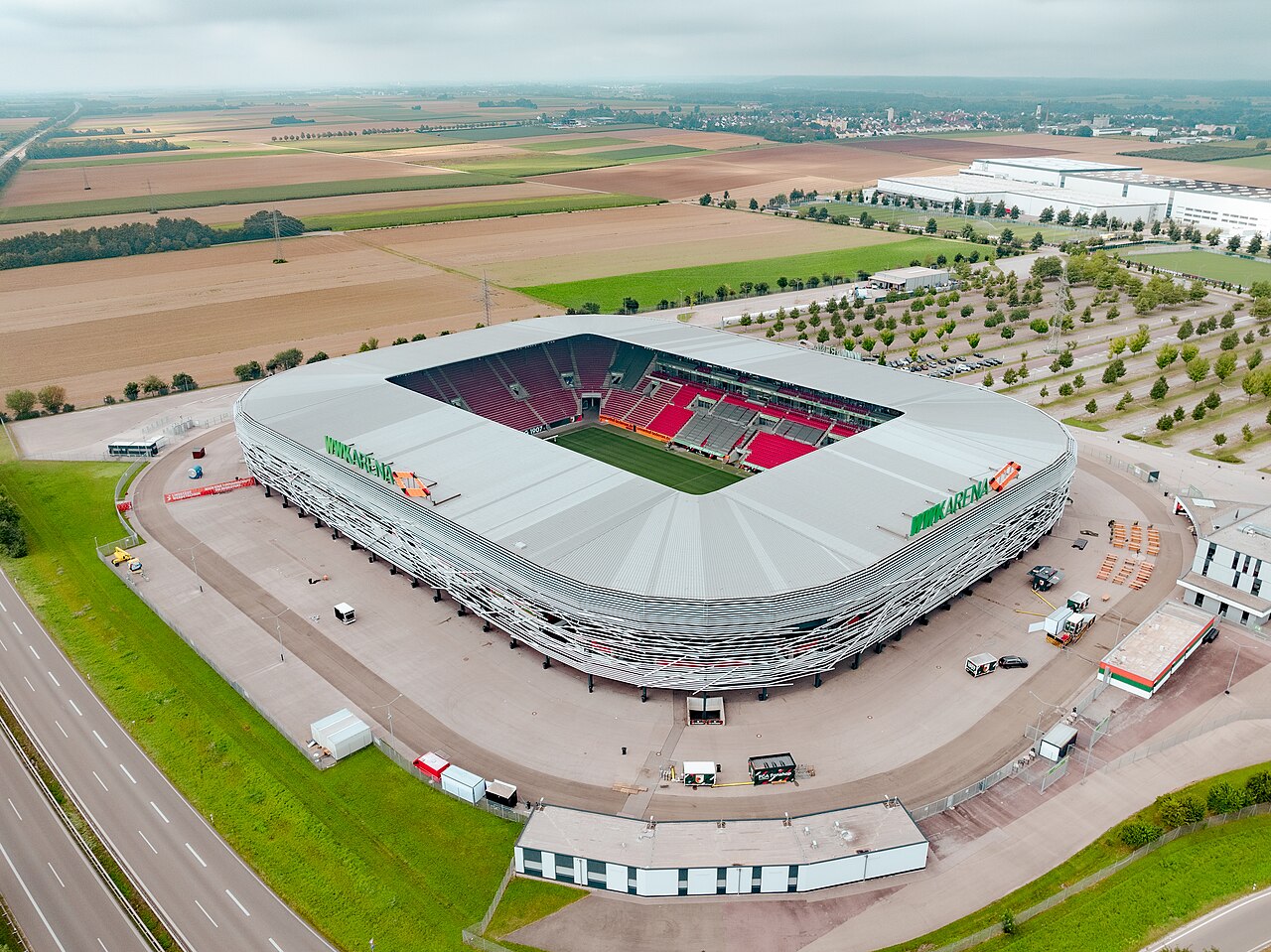
The WWK Arena opened in 2009, purpose-built for football with no running track, four covered stands and just over thirty thousand places including a substantial terrace.
Its distinguishing feature is not visible from the stands. The stadium was designed to be heated geothermally, drawing warmth from deep below the site rather than burning anything, and it was presented at the time as the first climate-neutral stadium in the Bundesliga. Alongside Freiburg's solar roof and Bremen's panelled facade, it is part of a genuine German pattern that most European leagues have not matched.
A club that arrived late and stayed
Augsburg is one of the oldest cities in Germany and one of the newest clubs in the Bundesliga. Founded in 1907, FC Augsburg spent more than a century without ever reaching the top division, working through the regional and second-tier leagues while every other Bavarian club of any size came and went above them.
They finally went up in 2011 — and then did the harder thing, which was to stay. More than a decade of continuous Bundesliga football has followed, on one of the smaller budgets in the division, without a wealthy backer and without a 50+1 exemption.
That is worth stating because this series has now covered several clubs that arrived in the top flight through money: Leipzig, Hoffenheim, Leverkusen in its own way. Augsburg arrived by being competently run for a hundred years and then getting good. It is the least glamorous route and by some distance the rarest.
The practical effect for a visitor is a crowd that has not forgotten what the lower divisions were like, in a stadium that was built for a club that had only just arrived.
Eating and drinking at the ground
Bavarian catering, which means it is better than the German average: Weisswurst, Bratwurst, pretzels the size of a plate, and beer by the half-litre at full strength.
Payment by stadium card: load it on arrival, cash out afterwards. Cups carry a Pfand deposit refunded on return.
Augsburg before the match

What to see
Augsburg is over two thousand years old and is comprehensively overshadowed by Munich, which is the visitor's opportunity:
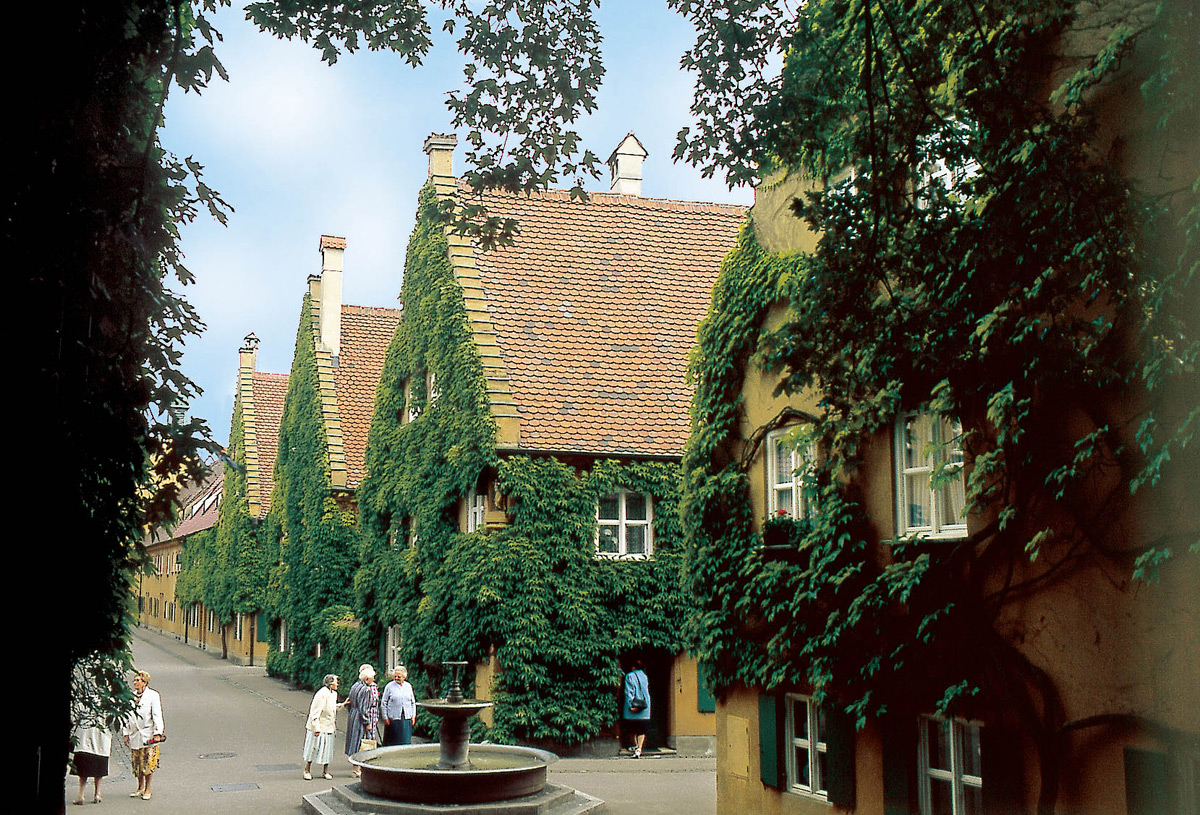
- The Fuggerei — founded in 1521 by Jakob Fugger, the banker who financed emperors, as housing for Augsburg's needy citizens. It is still in use, still charges the original annual rent — one Rhenish guilder, now reckoned at 88 cents a year — and residents are still asked to pray daily for the founder's family. Five hundred years of unbroken operation makes it the oldest social housing in the world, and you can walk through it.
- The water management system — Augsburg's canals, water towers and fountains, built from the fourteenth century onwards, are on the UNESCO World Heritage list. The city has more bridges than Venice, which is the kind of fact locals enjoy deploying.
- The Rathaus and the Goldener Saal — a Renaissance town hall with a gilded ceremonial hall, rebuilt after the war.
- The Roman museum and the cathedral — the city was founded as Augusta Vindelicorum under Augustus, and the layers are still visible.
What to eat and drink
Swabian-Bavarian cooking, sitting on the border between the two:
- Zwiebelrostbraten — steak with fried onions and spätzle.
- Maultaschen — filled pasta parcels, Swabian and everywhere here.
- Weisswurst with sweet mustard and a pretzel, before noon by tradition.
- Augsburger — the local sausage, coarser than a Weisswurst and eaten grilled.
Common questions
Is this a good pairing with Munich?
The best in Bavaria — forty minutes apart. If Bayern and Augsburg are both at home across a weekend, that is 105,000 seats and one hotel booking.
Is the Fuggerei really still working?
Yes. Same rent since 1521, same conditions, still occupied. It is one of the more remarkable things in Germany and almost nobody outside the country has heard of it.
How hard is a ticket?
Straightforward for most fixtures — this is one of the more obtainable Bundesliga tickets and a sensible choice for a first German match. Impossible for Bayern, and difficult for Dortmund.
A geothermally heated stadium, a Roman city, and five hundred years of eighty-eight-cent rent. Add the WWK Arena to your bucket list and pair it with Munich.