 Groundhopper
Start free
Groundhopper
Start free
Baník Ostrava stadium guide — Městský stadion Vítkovice, Ostrava
The Czech half of the same coalfield as Polish Silesia, two hours from Katowice. Easier tickets, stronger beer, and a running track around the pitch.

The other half of the coalfield
If you have read the Silesian guides in this series, Ostrava is the missing piece. The Upper Silesian coal basin does not stop at the border: it runs from Katowice and Zabrze south-west into Czechia, and Ostrava is its Czech capital. Same coal, same steel, same red-brick company housing, different country and a different league.
From Katowice the journey is a couple of hours; from Zabrze or Gliwice it is shorter still. For a groundhopper working through Polish Silesia, adding a Czech ground is a train ride rather than an expedition — and it comes with the ticketing advantages described below.
Tickets: much easier than across the border
Czech clubs do not run a mandatory supporter-card scheme for ordinary league fixtures, and you are not asked for a national identification number to buy. There is no equivalent of the Polish PESEL obstacle. Buy online, or at the ground; pay by card or in cash.
Prices are low even by Czech standards here. This is not a ground where a visitor needs to plan weeks ahead for an ordinary fixture — though a match against Sparta or Slavia is a different proposition and Baník's support is large enough to fill the place.
Getting there
The stadium is at Závodní 3077/135 in Ostrava-Vítkovice, south-east of the centre.
- From Ostrava main station: tram 2 runs every ten minutes to Sport Aréna — fifteen stops, about twenty-two minutes.
- By car: parking is available at the Ostravar Aréna, roughly 300 metres away, with access from Závodní.
- From Poland: Ostrava is well connected by rail to Katowice and beyond, and Ostrava's airport serves the region on both sides of the border.
Where away fans sit
Visiting supporters are housed in sectors C1 to C3 on the northern stand, an allocation of 858 seats. As everywhere, arrangements are set per fixture according to the policing category of the match — confirm your specific game.
Neutrals should ask for a side stand.
The ground and the crowd
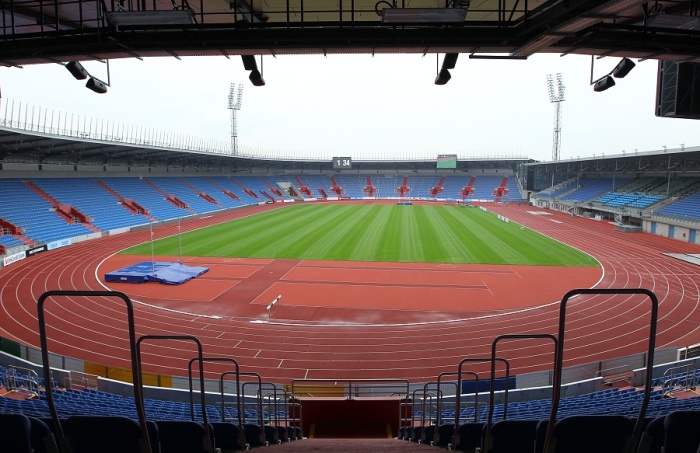
Baník moved into the Vítkovice municipal stadium permanently before the 2015–16 season, after a major renovation. It holds 15,123 and sits inside a wider sports complex.
Be clear about one thing before you buy: this is an athletics stadium. There is a full running track between the stands and the pitch, so you sit further from the football than at any other ground in this series. The venue hosts the Zlatá tretra, one of the leading international athletics meetings, which is why the track is there and why it is not going anywhere.
If you have been to English or German grounds built tight to the touchline, adjust your expectations of the view. If you have been to older continental stadiums, you already know the compromise.
The reason to come is not the architecture, and it is not the sightlines. Baník have one of the most organised and committed supporter cultures in Czech football — choreographed displays, sustained singing, and an identity welded to the city's mining history in a way that is increasingly rare. This is a working-class club in a working-class city and the stand sounds like it.
Pick a fixture that matters if you can. A full Vítkovice is a considerably better afternoon than a half-empty one, and the difference here is larger than at most grounds.
Eating and drinking at the ground
Czech stadium catering: klobása off the grill, langoš, and full-strength lager — Czech law does not cap stadium beer at 3.5% the way Polish law does, which visitors crossing from Poland notice immediately.
- Cheap inside as well as outside.
- Some grounds use a token or card system at the kiosks. Check the signage on the way in.
Ostrava before the match
.jpg)
What to see
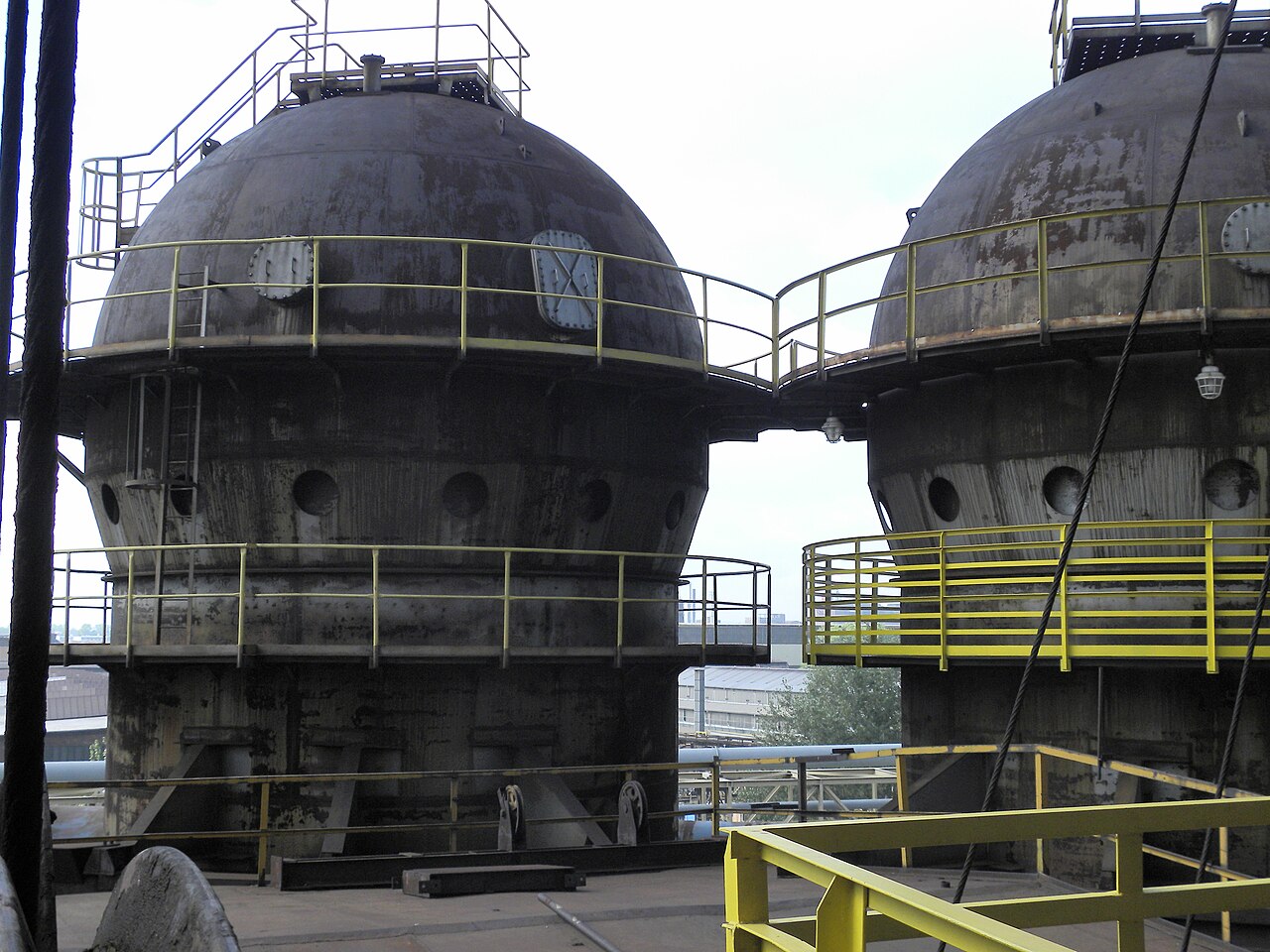
- Dolní Vítkovice — and this is not an optional extra. A vast former ironworks in the middle of the city, with blast furnaces, gas holders and pipe runs preserved and converted into galleries, concert spaces and a science centre. You can climb the furnace. Locals say that visiting Ostrava without seeing it is like visiting Prague and skipping the castle, and they are right. Allow half a day.
- The Landek mining museum — a former colliery on the edge of the city with an underground tour, north-west of the centre.
- Stodolní — a single street with a famous concentration of bars and clubs. Ostrava's nightlife reputation in Czechia rests almost entirely on it.
- Masarykovo náměstí — the main square, and the place to eat before you travel out to the ground.
The comparison worth making: Zabrze has the Guido mine, Katowice has Nikiszowiec and the Silesian Museum, Ostrava has Dolní Vítkovice. Three cities, one coalfield, three different ways of turning industry into something to visit.
What to eat and drink
Czech pub cooking, in a region that eats seriously:
- Svíčková na smetaně — beef in cream sauce with bread dumplings and cranberries.
- Guláš with dumplings, and smažený sýr — fried cheese with tartare sauce.
- Utopenec and nakládaný hermelín — pickled sausage and pickled soft cheese, the things Czechs eat while drinking.
On beer, this is Radegast country — the brewery is in the Beskydy mountains south of the city and the lager is the regional default. Traditional pubs around Masarykovo náměstí serve it fresh; ask for tankové pivo where a pub advertises it.
Common questions
Can I do Ostrava from a Polish Silesian trip?
That is the best reason to come. A couple of hours from Katowice by train, no border formalities inside the Schengen area, and a second country on the list for the price of a day.
Is the ticketing really easier than Poland?
Yes. No supporter card, no national identification number, no ticket-window requirement for an ordinary fixture. If Polish ticketing has frustrated you, this is the antidote.
Do I need a different currency?
Yes, and it catches people out on this route. Czechia uses the Czech koruna, not the euro and not the złoty. Cards work almost everywhere, but if you are crossing from Poland for the day, do not assume the cash in your pocket is any use.
Which fixture should I pick?
One that fills the ground. The support is the attraction here, and it needs an occasion.
One coalfield, two countries, and a train ride between them. Add Ostrava to your bucket list and hang it off a Silesian weekend.