 Groundhopper
Start free
Groundhopper
Start free
Górnik Zabrze stadium guide — Arena Zabrze, Zabrze
Arena Zabrze for a visiting fan: getting there from Katowice, buying tickets without a PESEL, a ground mid-rebuild, and the best two-match weekend in Poland.
,_Silesian_Voivodeship,_Poland,_August_2025.jpg)
Why Silesia, and not just Zabrze
Most groundhopping guides treat a club in isolation. That is the wrong frame here. Zabrze is part of a conurbation of well over two million people in which senior clubs sit within twenty or thirty minutes of each other by train and tram. Chorzów, Bytom, Gliwice, Katowice and Sosnowiec are all within easy reach of the same hotel room.
If you are planning a weekend rather than a single match, build it here. Kick-off times across the Polish league system are routinely staggered across Friday, Saturday and Sunday, and the travel time between two Silesian grounds is frequently shorter than the walk from a city centre to one ground elsewhere in Europe. This is the one region of Poland where a treble is genuinely comfortable rather than a logistical stunt.
Getting there
The stadium is at ul. Roosevelta 81, Zabrze, in the middle of the town rather than out on a bypass.
- From Zabrze main station: about thirty minutes on foot, or bus 32 to the Stadion Zabrze stop, roughly seven minutes.
- From Katowice: trains run about hourly and take around twenty minutes. Many visitors base themselves in Katowice, which has far more accommodation and a considerably livelier evening, and treat Zabrze as a short hop.
- By car: the A1 and A4 motorways both pass close by, and three airports — Katowice-Pyrzowice, Kraków-Balice and Ostrava across the Czech border — are each within about an hour.
Tickets: what actually works for a foreigner
Górnik sell through their own online system, the club shop at the stadium, a shop in the Galeria Zabrze shopping centre and Kolporter press agencies around the region.
As everywhere in Poland, the online route assumes a PESEL — the Polish national identification number — and a personalised supporter account. Without one, the reliable method is the same as at every other Polish ground: buy in person, and bring your passport. The club shop at the stadium is the simplest option, and the Galeria Zabrze outlet is a usable fallback if you arrive during shopping hours rather than matchday hours.
Prices vary considerably by fixture category — a routine league game and a visit from one of the big clubs are not priced the same, and published figures date quickly. Check the specific match on the club's site rather than budgeting from a number you read somewhere.
Ordinary fixtures do not sell out. Silesian derbies do, and they are also the matches for which away allocations are most tightly controlled.
Where to sit
Away allocations and the operating sectors change with the state of the rebuild and with the policing category of the fixture, so confirm the sector for your specific match rather than relying on a previous season's arrangement. If you are a neutral, ask for a side stand and say you are a visiting supporter with no allegiance — this is a normal request and the club is used to it.
The ground itself
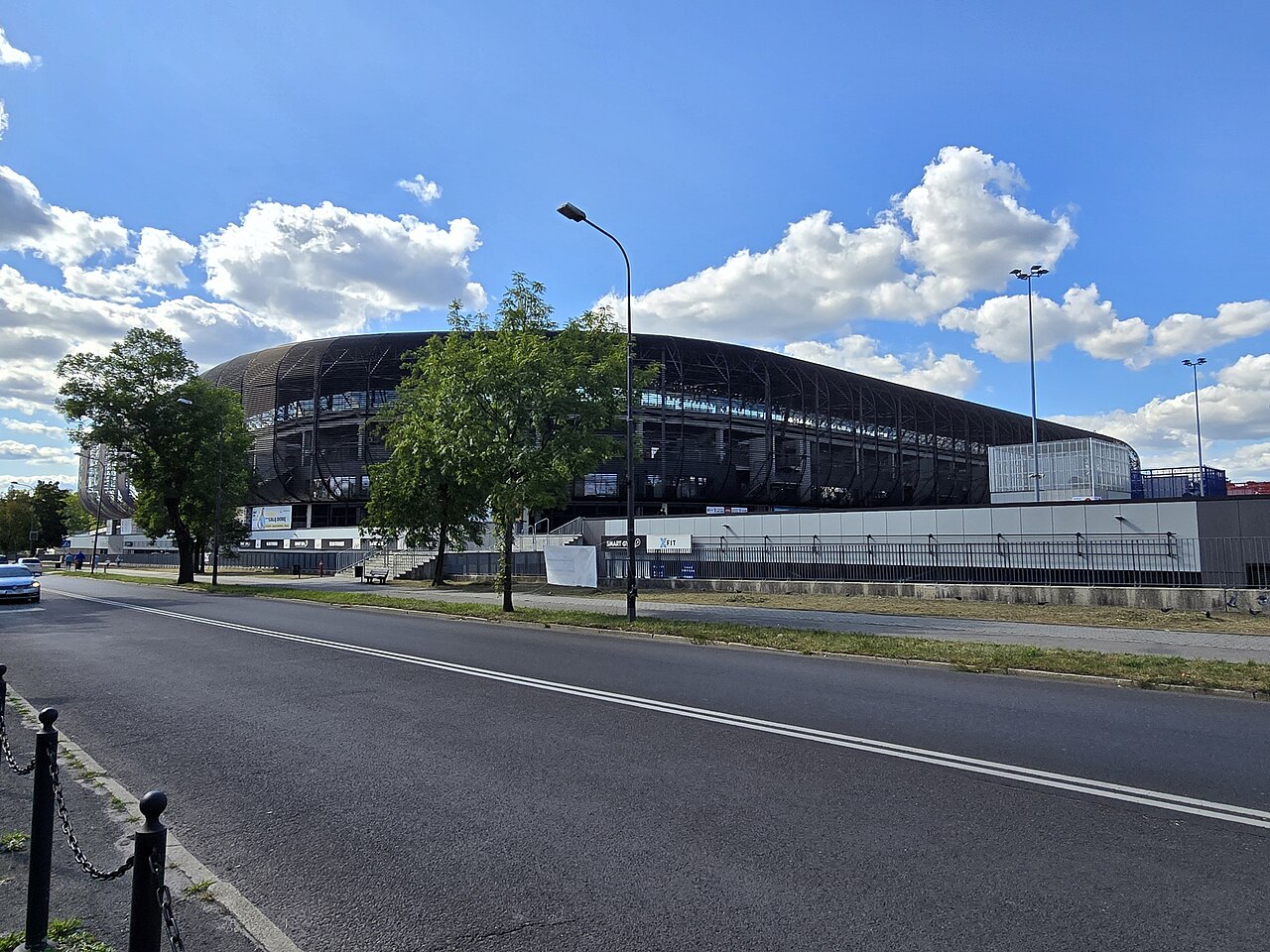
Football has been played on this site since 2 September 1934. The modern ground is the result of a reconstruction that began in 2011: three stands were demolished and rebuilt, opening in early 2016, while the old main stand was left standing for lack of money. A second phase to replace it began in 2023.
That history has a practical consequence: the capacity has been a moving number for a decade. Figures between roughly 24,000 and 28,000 are in circulation depending on which stands were open when the source was written, with a completed ground intended to hold about 31,900. If the exact figure matters to you, check it for the season you are visiting rather than trusting any single reference.
The half-old, half-new arrangement is not a flaw for a groundhopper. A ground caught mid-rebuild shows you something a finished stadium does not, and grounds in this condition do not stay in it forever.
Why this club is worth the detour
Górnik — the name means miner — won fourteen Polish championships, every one of them between 1957 and 1988, in an era when Upper Silesian coal money and Silesian players made this one of the strongest sides in the Eastern bloc.
In 1970 they reached the final of the European Cup Winners' Cup, losing 2–1 to Manchester City in Vienna. No Polish club has gone further in a major European competition since. Włodzimierz Lubański and Ernest Pohl, whose name the stadium carried, belong to that period.
None of this is visible in the league table now, and that is rather the point. Grounds like this are where the history of a country's football actually lives.
Matchday, and what is nearby
Zabrze is a working industrial town rather than a tourist destination, and the area immediately around the ground is not a strip of matchday bars. Eat in Katowice or Gliwice before you travel over, or in Zabrze's centre, which is a walkable distance from the stadium.
Check prohibited-item rules before you set out. Polish grounds enforce them, and a bag that was fine at a stadium at home may not come through the gate here.
One local recommendation that has nothing to do with football and is worth the trip on its own: Zabrze's historic coal mine complex is open to visitors and is among the best industrial heritage sites in Central Europe. If you are building a weekend rather than a day, it fills the morning properly.
Eating at the ground
The Arena Zabrze menu is the Polish stadium standard: kiełbasa grilled and served in a roll with mustard, zapiekanka, hot dogs, chips. Cheap, hot, and appropriate for a Silesian evening in February.
- Beer tops out at 3.5% ABV — that is the legal ceiling for mass events in Poland, not a decision of the club. Availability also depends on the security category of the fixture.
- Cashless. Bring a card; assume the kiosks will not take cash.
The real eating here happens off the ground, and in this region that is a genuine reason to come.
Silesia before the match
What to see
Zabrze has one attraction of European rank and it is underground.

- Guido Mine — a coal mine that worked from 1855 to 1996, now open to visitors down to 320 metres, the deepest tourist route in Europe. You go down in the original cage, walk original tunnels, and ride an underground mining train. Not a reconstruction and not a museum with a mine attached.
- Queen Louise Adit — the same museum's second site, with a 1,130-metre underground boat trip along a historic drainage canal, the longest of its kind in Europe.
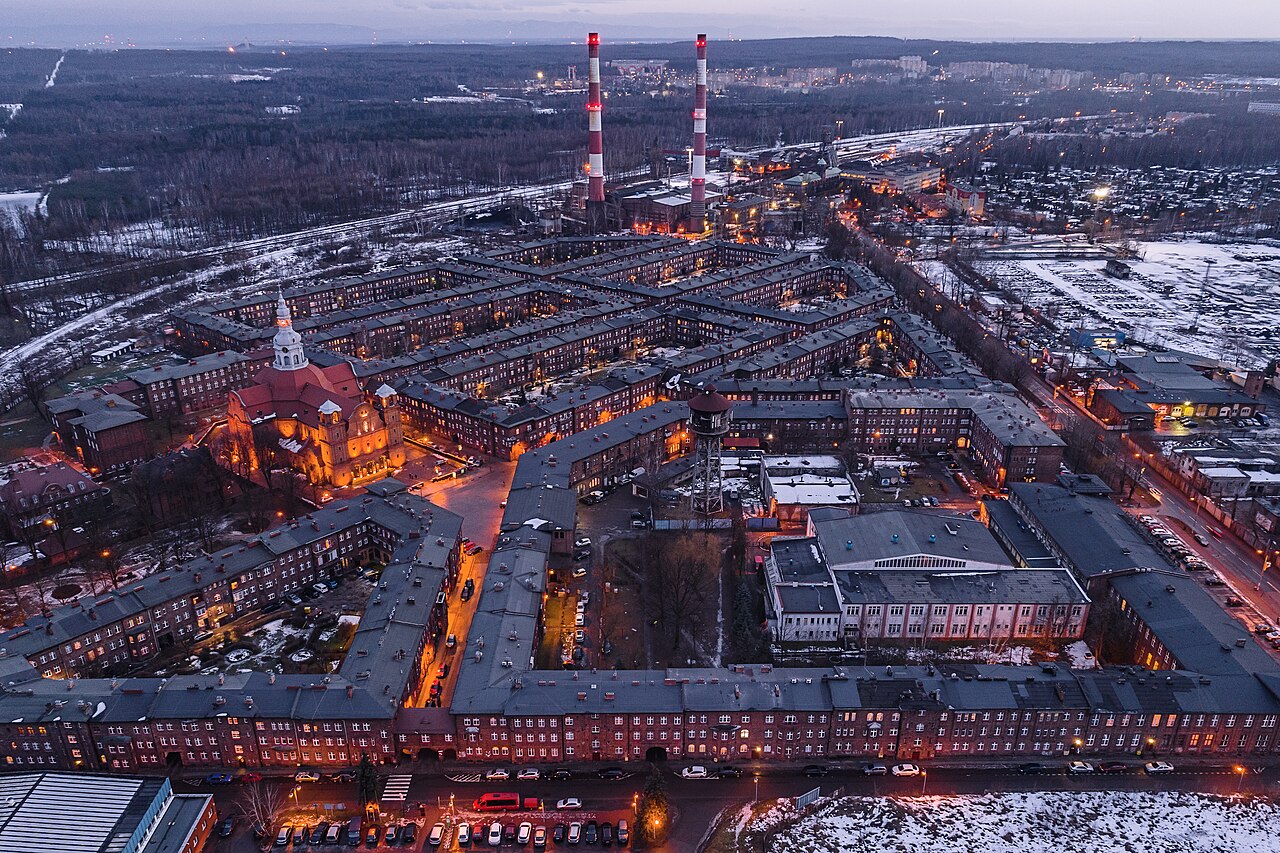
- Nikiszowiec, in nearby Katowice — a miners' housing estate of red-brick courtyards built by the same company that sank the pits, still lived in, and one of the most photographed places in Poland.
- The Silesian Museum in Katowice, built into the shafts of a closed colliery, with the galleries underground and the winding tower above.
Book the mines ahead. They run guided descents on fixed times, not walk-in.
What to eat, and where
Silesian cooking is a distinct regional kitchen, not a variation on Polish food, and Sunday dinner is its centrepiece. Order it as a set:
- Rolada — a beef roulade rolled around bacon, onion, pickled cucumber and mustard, then braised for hours.
- Kluski śląskie — round potato dumplings with a dimple pressed into the middle to hold the sauce. Miners' food: cheap, filling and heavy on calories, which was the point.
- Modra kapusta — red cabbage cooked down with onion, bacon, apple and vinegar.
Those three on one plate are the regional dish, and any decent restaurant in the conurbation will serve them together. Also worth trying: żurek served inside a bread bowl, and krupniok, the local blood sausage with barley.
For where: the eating is better in Katowice than Zabrze, which is another argument for basing yourself there. Śląska Prohibicja and Chata z Zalipia both do the regional canon properly and have been doing it for years. If you would rather pick from a vetted list, the regional authority runs a Śląskie Smaki culinary trail of certified restaurants across the voivodeship — the current list lives at slaskiesmaki.pl, which is a more durable recommendation than any single address.
Common questions
Should I stay in Zabrze or Katowice?
Katowice, unless you have a specific reason not to. It has far more accommodation, a much better evening, and direct connections to every other ground in the conurbation. Zabrze is twenty minutes away.
How many grounds can I realistically do in a weekend here?
Two comfortably, three if the kick-off times fall well across Friday to Sunday. The constraint is the fixture list, not the travel — which is the opposite of most of Europe.
Is the ground finished?
Not entirely, and it has not been for over a decade. Check the current state before you go if seeing a completed stadium matters to you. If it does not, this is a more interesting ground to visit now than it will be afterwards.
Silesia is the one region in Poland where two grounds in a day is easy rather than ambitious. Add Zabrze to your bucket list and plan the rest of the weekend around it.