 Groundhopper
Start free
Groundhopper
Start free
GKS Katowice stadium guide — Arena Katowice, Katowice
The newest ground in Polish football: Arena Katowice opened in 2025 with a Silesian derby and a full house. How to get there, and what to see in the city.
.jpg)
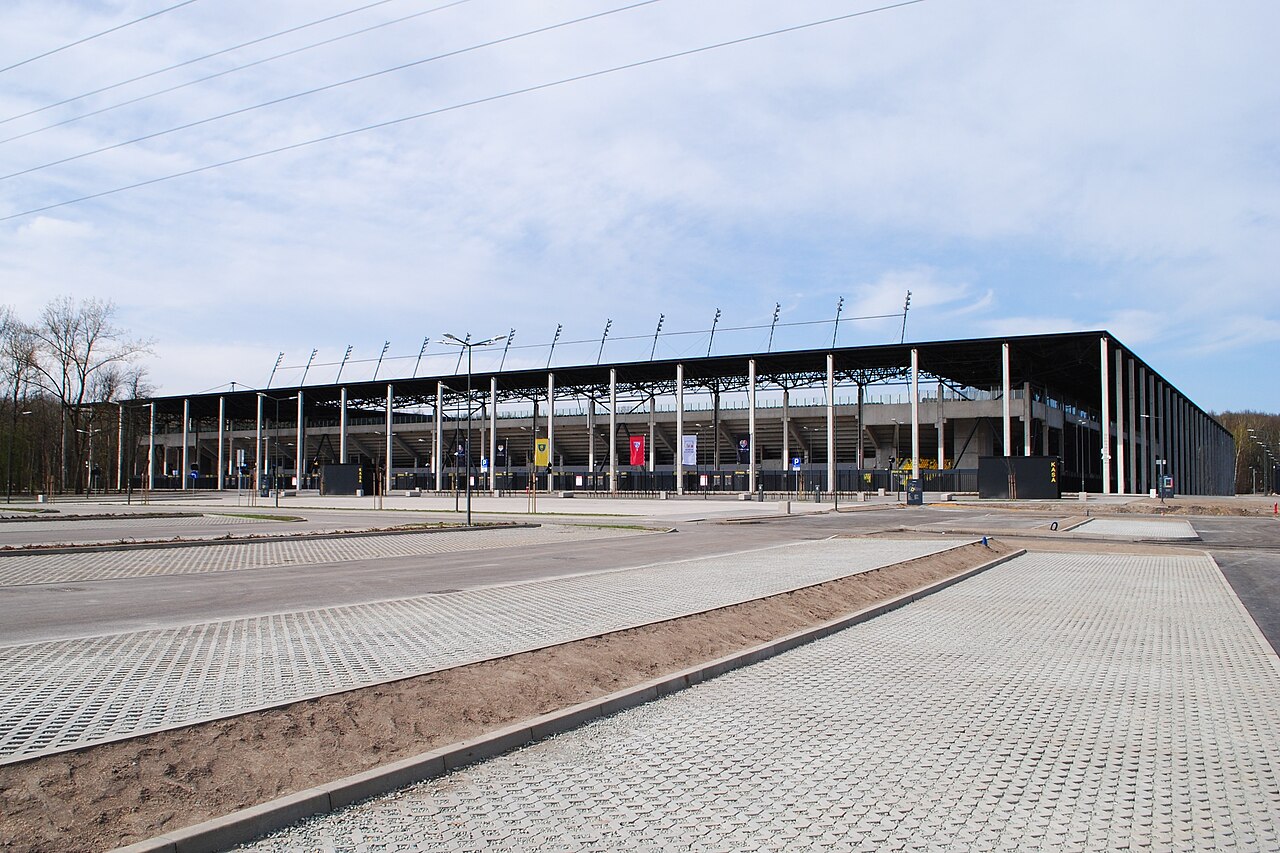
The newest ground in the country
Most stadium guides describe something that has been standing for decades. This one has barely been used.
The Arena Katowice was built between 2021 and 2025 at a cost of around 268 million złoty, on a site just south of the club's previous ground. It is a single-tier bowl — four covered stands, no upper deck, everyone close to the pitch — which is an increasingly unfashionable choice and a very good one for atmosphere. It sits inside a wider sports complex that also includes a 3,000-capacity indoor arena.
For a groundhopper the appeal is straightforward: this is a ground that almost nobody outside Poland has ticked yet. Grounds do not stay new, and the queue of visitors who have been here is currently very short.
Getting there
Katowice is the transport hub of the whole conurbation, which makes this the easiest Silesian ground to reach and the obvious base for a weekend in the region.
- By train: Katowice's main station is a national hub with direct services from Warsaw, Kraków, Wrocław and Gdańsk, and local trains across the conurbation every few minutes.
- By air: Katowice-Pyrzowice is a major low-cost airport, and Kraków-Balice is around an hour away by road.
- Locally: trams and buses cover the city densely; check the current line for the stadium, since the ground moved site in 2025 and older directions point at the wrong place.
Buy and validate a transport ticket before boarding. Inspections happen and visitors are not excused.
Tickets: what actually works for a foreigner
The Polish system applies: personalised tickets tied to an account, with the online purchase form built around a PESEL — the Polish national identification number. Where the form will not accept a foreign document, the purchase stops at the last field.
Bring your passport and buy in person. Photographic identification is what the ticket window needs, and you are not required to hold a supporter card as a foreign visitor.
A new 15,000-seat stadium in a city that waited a long time for it fills more easily than the capacity suggests. Silesian derbies — against Górnik Zabrze, Piast Gliwice or Ruch Chorzów in the cup — are a different proposition entirely, and so are European nights. Buy ahead for those.
Where away fans sit
Away allocations at a stadium this new are still settling, and they are set per fixture according to the policing category of the match in any case. Confirm the sector for your specific game rather than relying on anything you read in advance, including this. If you are attending as a neutral, say so when buying and ask for a side stand.
Eating at the ground
The Polish stadium standard: kiełbasa grilled and served in a roll with mustard, zapiekanka, hot dogs, chips. A new build usually means more outlets and shorter queues than you get at an older ground.
- Beer is capped at 3.5% ABV by Polish law on mass events, and availability depends on the security category of the fixture.
- Bring a card. Assume cashless.
Katowice before the match

What to see
Katowice spent a century as a coal and steel city and the last twenty years turning that into something else. The result is one of the most interesting cityscapes in Poland:
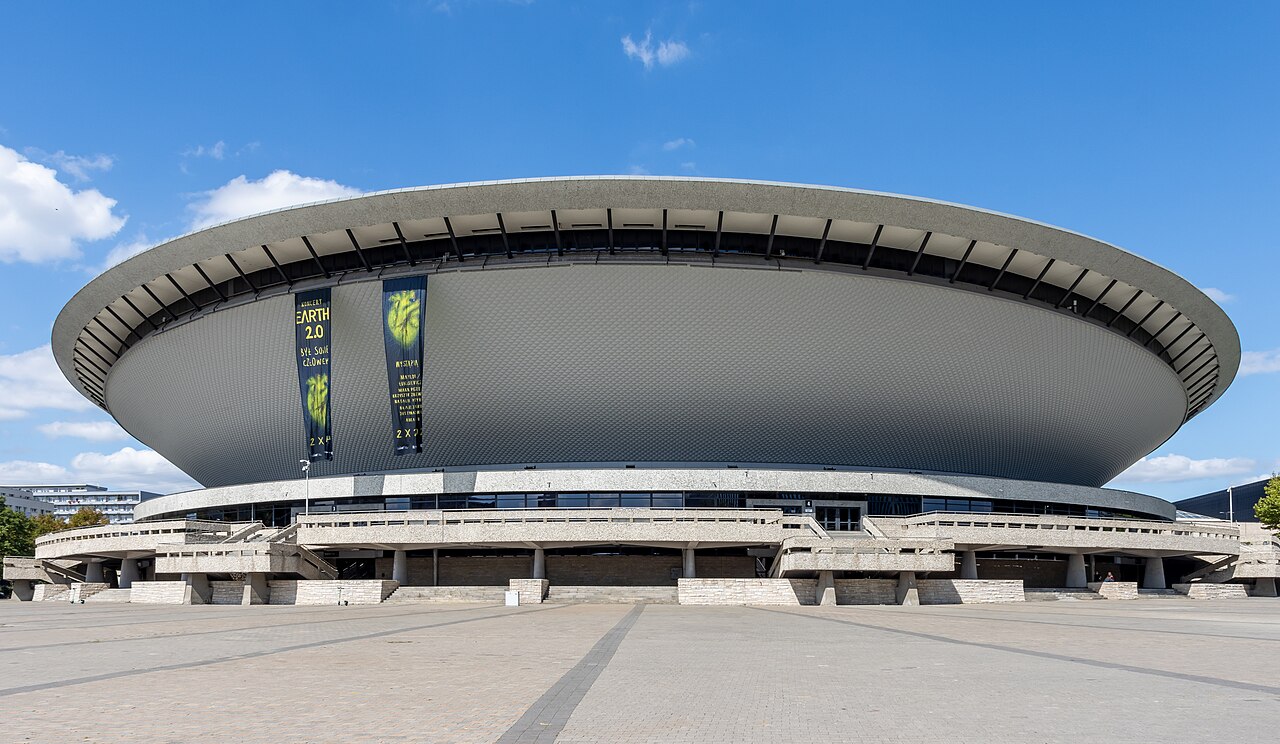
- Spodek — a flying-saucer-shaped arena from 1971, still in use, and the building the city is recognised by. It looks like nothing else in Europe.
- The Culture Zone — the Silesian Museum, the NOSPR concert hall and the international congress centre, all built on the site of a closed colliery. The museum's galleries are underground, in the shafts; the winding tower still stands above them.
- The modernist centre — interwar Katowice built in concrete and glass, including one of the first steel-framed skyscrapers in Europe. A walking route rather than a single building.
- Nikiszowiec — the red-brick miners' estate on the eastern edge of the city, still lived in, and the most photographed place in the region.
What to eat, and where
Silesian cooking is a distinct regional kitchen and Katowice is the best place in the region to eat it. The Sunday plate — rolada, kluski śląskie and modra kapusta — is the regional dish, and any decent restaurant here serves the three together.
Beyond that, two things worth ordering specifically:
- Krupniok — Silesian blood sausage with barley, sold in market halls and grilled at street stalls. Better than that description suggests.
- Żurek served in a hollowed loaf — sour rye soup with sausage and egg, the standard Silesian winter lunch.
The regional authority runs a Śląskie Smaki trail of certified restaurants across the voivodeship; the current list at slaskiesmaki.pl is a more durable recommendation than any single address.
Common questions
Is Katowice a good base for the region?
The best. Górnik Zabrze is twenty minutes by train, Piast Gliwice about half an hour, and Częstochowa a little over an hour. This is where to put the hotel.
How many Silesian grounds can I do in a weekend?
Two comfortably, three when the kick-off times fall well across Friday to Sunday. The constraint is the fixture list, not the travel — which is the opposite of most of Europe.
What else can I tick around here besides the top division?
A good deal, and this is the argument for staying more than one night. Ruch Chorzów are one of the most decorated clubs in Polish history and play a short ride away; Zagłębie Sosnowiec, Polonia Bytom and Rozwój Katowice are all within the conurbation. None of them are currently in the Ekstraklasa, and none of that matters if you count grounds rather than divisions. Check the lower-league fixture lists as well as the top one — that is where the Friday and Sunday kick-offs come from.
Is the old GKS ground still there?
The club moved to the new arena in 2025. If you find directions or photographs of a different stadium, they are describing the previous site just to the north.
Silesia is the one region in Poland where two grounds in a day is easy rather than ambitious. Add the Arena Katowice to your bucket list and build the weekend around it.