 Groundhopper
Start free
Groundhopper
Start free
Zagłębie Lubin stadium guide — KGHM Zagłębie Arena, Lubin
A club owned by a copper company, in a town built on copper, with a stadium the company paid for. An hour from Wrocław, which is how to do it.
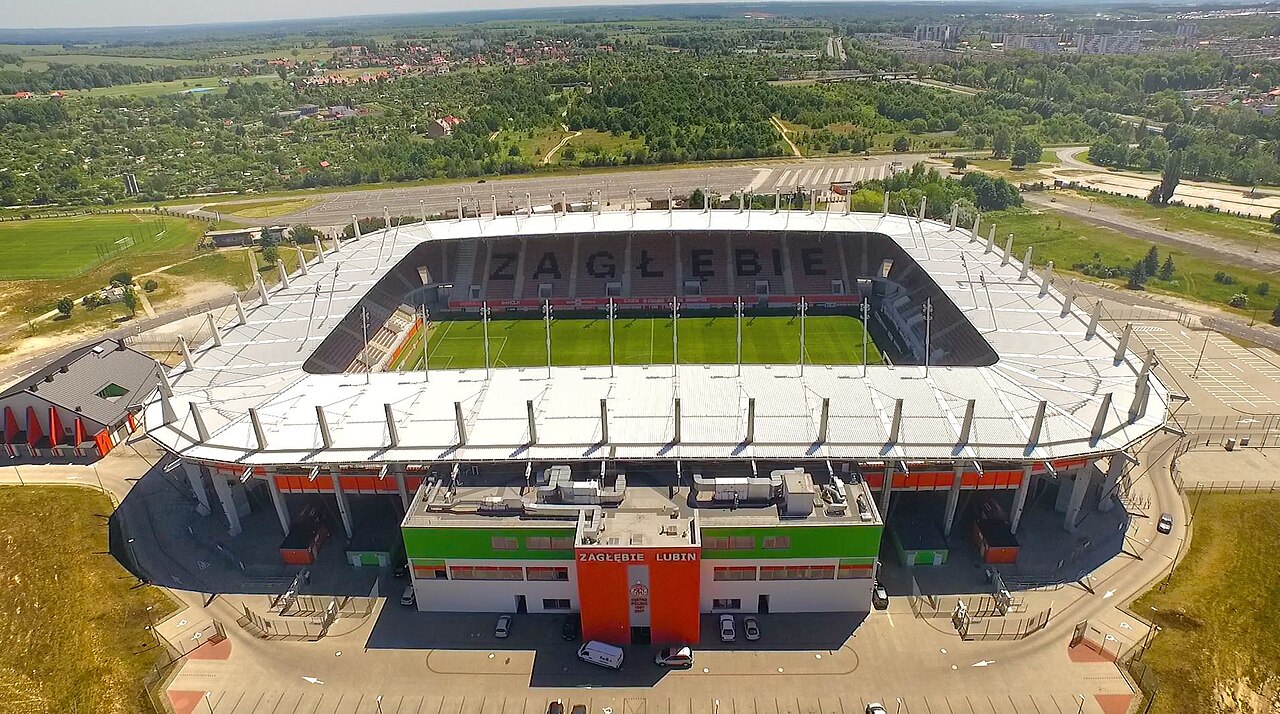

A company town, and a company ground
Lubin was a village of a few thousand people until copper was found under Lower Silesia in the 1950s. What stands there now was built around the mines.
KGHM Polska Miedź, one of the largest copper producers in the world, owns the football club and funded this stadium — around 130 million złoty, on the site of the old ground, built in two phases so the team could keep playing through it. The first official match in the new stadium was on 14 March 2009.
Clubs owned by a single industrial employer are a disappearing category in European football, and this is one of the clearest surviving examples. Zagłębie have been champions of Poland twice, first in 1991 and again in 2007, which for a town this size is a considerable record.
Getting there
Lubin is about an hour north-west of Wrocław and that is the sensible way to do it: stay in Wrocław, travel over for the match.
- By train: services run from Wrocław, with some stopping at Lubin station, a short walk from the ground.
- By bus in town: lines 5, 6, 7, 100, 103, 105 and 112 serve the stadium.
Buy and validate a transport ticket before boarding. Inspections happen and visitors are not excused.
Tickets: what actually works for a foreigner
The Polish system applies: personalised tickets tied to an account, with the online purchase form built around a PESEL — the Polish national identification number. Where the form will not take a foreign document, the purchase stops at the last field.
Bring your passport and buy in person. Photographic identification is what the ticket window needs, and you are not required to hold a supporter card as a foreign visitor.
Prices for an ordinary league fixture have run at around 30 złoty behind a goal and 45 for a seat along the side — treat that as the price level rather than a quotation. Sixteen thousand seats in a town of under seventy thousand people means ordinary fixtures are obtainable.
Where away fans sit
The away end holds 990 seats, which is a real allocation rather than a token corner. As everywhere, the arrangement is set per fixture according to the policing category of the match, so confirm your specific game.
Neutrals should ask for a side stand.
The ground itself
Sixteen thousand seats, four stands, built new between 2007 and 2009 on the footprint of the old ground. It is a clean, complete, unspectacular modern stadium — and the interesting thing about it is not the architecture but the fact that a town of this size has one at all.
Expect empty seats at an ordinary fixture. The crowd is drawn from a small population and the capacity was built for ambition rather than average attendance.
Eating at the ground
The Polish stadium standard: kiełbasa grilled and served in a roll with mustard, zapiekanka, hot dogs, chips.
- Beer is capped at 3.5% ABV by Polish law on mass events, and availability depends on the security category of the fixture.
- Bring a card. Assume cashless.
Lubin is a small town with limited choice. If you are basing yourself in Wrocław, eat there.
Lower Silesia before the match
What to see
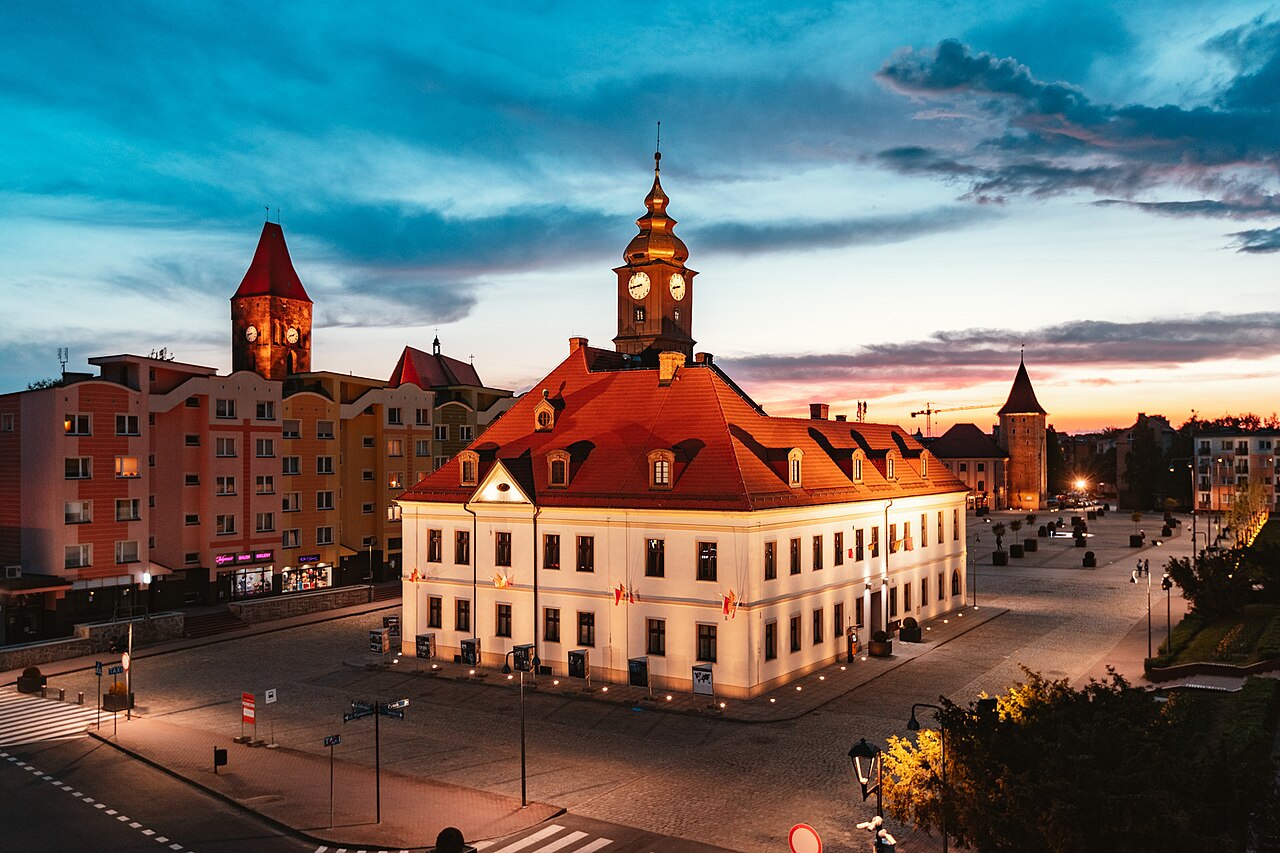
Lubin has a small restored historic core — a town hall, a church tower, a fragment of the old defences — sitting inside a town that copper rebuilt around it. It is a pleasant hour rather than a day. The region around it is where the time goes:
.jpg)
- Wrocław — an hour away, one of the best cities in Poland, and the obvious base for this trip.
- Legnica — twenty minutes south, with a Piast castle and a cathedral, and a Soviet garrison history that shaped the town until 1993.
- The copper landscape itself — headframes, spoil heaps and company housing across the Legnica-Głogów district. If you find industrial regions interesting, this is one, and almost nobody visits it as one.
- Głogów and the Oder valley — north of Lubin, worth the detour if you are driving.
What to eat, and where
Lower Silesia was resettled almost entirely after 1945, so there is no distinct regional kitchen here the way there is in Upper Silesia or Podlasie. What you get is mainstream Polish cooking, done well:
- Żurek — sour rye soup with sausage and egg.
- Kotlet schabowy with potatoes and mizeria — the standard plate and the honest test of any Polish kitchen.
- Pierogi ruskie — potato and curd cheese, the benchmark filling.
In Lubin the choice is limited and functional. In Wrocław it is not — and the milk bars there are the cheapest good meal in the region.
Common questions
Should I stay in Lubin?
Only if you have a reason to. Wrocław is an hour away, has vastly more to do, and connects to the rest of Poland properly.
Can I combine it with Śląsk Wrocław?
Yes, and that is the natural pairing: two Lower Silesian grounds within an hour of each other and one hotel booking. Check whether the fixture list puts both at home across a weekend.
Why does a town this size have two championships?
Because the money did not come from the town. The 1991 title arrived at the end of the communist period, when industrial enterprises funded their clubs directly; the 2007 title came under company ownership in the market era. Both are the same story told twice — a mining firm deciding that it wanted a football team that won things. Very few clubs in Europe can point to championships won under two entirely different economic systems by the same mechanism.
Is the copper thing actually visible?
At the ground, yes — the company name is on it. In the town, yes. It is the reason Lubin exists in its current form.
A company town's ground is a specific kind of entry, and worth recording as one. Add Lubin to your bucket list and pair it with Wrocław.