 Groundhopper
Start free
Groundhopper
Start free
Wisła Płock stadium guide — Stadion Kazimierza Górskiego, Płock
Named after Kazimierz Górski, the manager who took Poland to third at the 1974 World Cup. Above the city, two Piast rulers are buried in the cathedral.
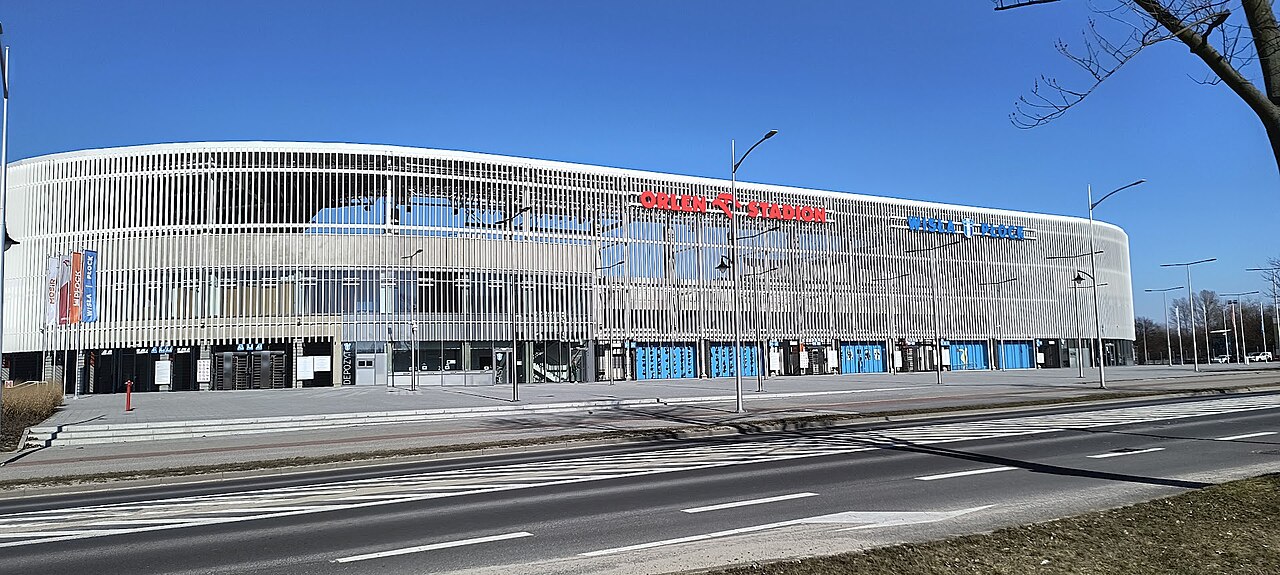

Named after the coach of the millennium
Polish grounds are usually named after kings, marshals or local club officials. This one is named after Kazimierz Górski, and in Polish football that is not a neutral choice.
Górski managed the national team from 1970 to 1976. In that time Poland won Olympic gold in 1972, finished third at the 1974 World Cup and took Olympic silver in 1976 — the strongest period in the country's football history by a distance. Across 73 matches in charge he won 45. He is routinely called the best manager Poland has ever had, and there is not much argument about it.
For a visiting groundhopper that makes this a more interesting ticket than the league table suggests. You are not just at a mid-table fixture; you are at the stadium the country chose to name after that team's manager.
Getting there
Płock sits on the Vistula about a hundred kilometres north-west of Warsaw.
- From Warsaw: around two hours by bus, which is generally the better option here — Płock is off the main rail lines and the coach connection is more direct than the train.
- By car: straightforward from Warsaw or Toruń, and the obvious choice if you are combining it with anything else in Mazovia.
- Locally: city buses serve the ground; the centre is walkable.
Check the return connection before an evening kick-off. Płock is not a city with a service every twenty minutes late at night.
Tickets: what actually works for a foreigner
The Polish system applies: personalised tickets tied to an account, with the online purchase form built around a PESEL — the Polish national identification number. Without one the purchase generally stops at the last field.
Bring your passport and buy in person. Photographic identification is what the ticket window needs, and a foreign visitor is not required to hold a supporter card.
Fifteen thousand seats in a city of around 115,000 means ordinary fixtures are obtainable without difficulty.
Where away fans sit
Allocations are set per fixture according to the policing category of the match. Confirm the sector for your specific game rather than assuming, and if you are attending as a neutral, say so when buying and ask for a side stand.
The ground itself
There has been a stadium on this site since 1973. What stands there now is the product of a reconstruction carried out between 2020 and 2023: four stands, all seated, 15,004 places, football only.
It is one of the newest completed grounds in the league and among the tidiest. Like several stadiums in this series it is larger than the club's average crowd, so pick a fixture that will fill it if atmosphere is what you came for.
Eating at the ground
The Polish stadium standard: kiełbasa grilled and served in a roll with mustard, zapiekanka, hot dogs, chips.
- Beer is capped at 3.5% ABV by Polish law on mass events, and availability depends on the security category of the fixture.
- Bring a card. Assume cashless.
Płock before the match
What to see
Płock is older than Warsaw's importance and briefly outranked it. That history sits on one hill above the river.
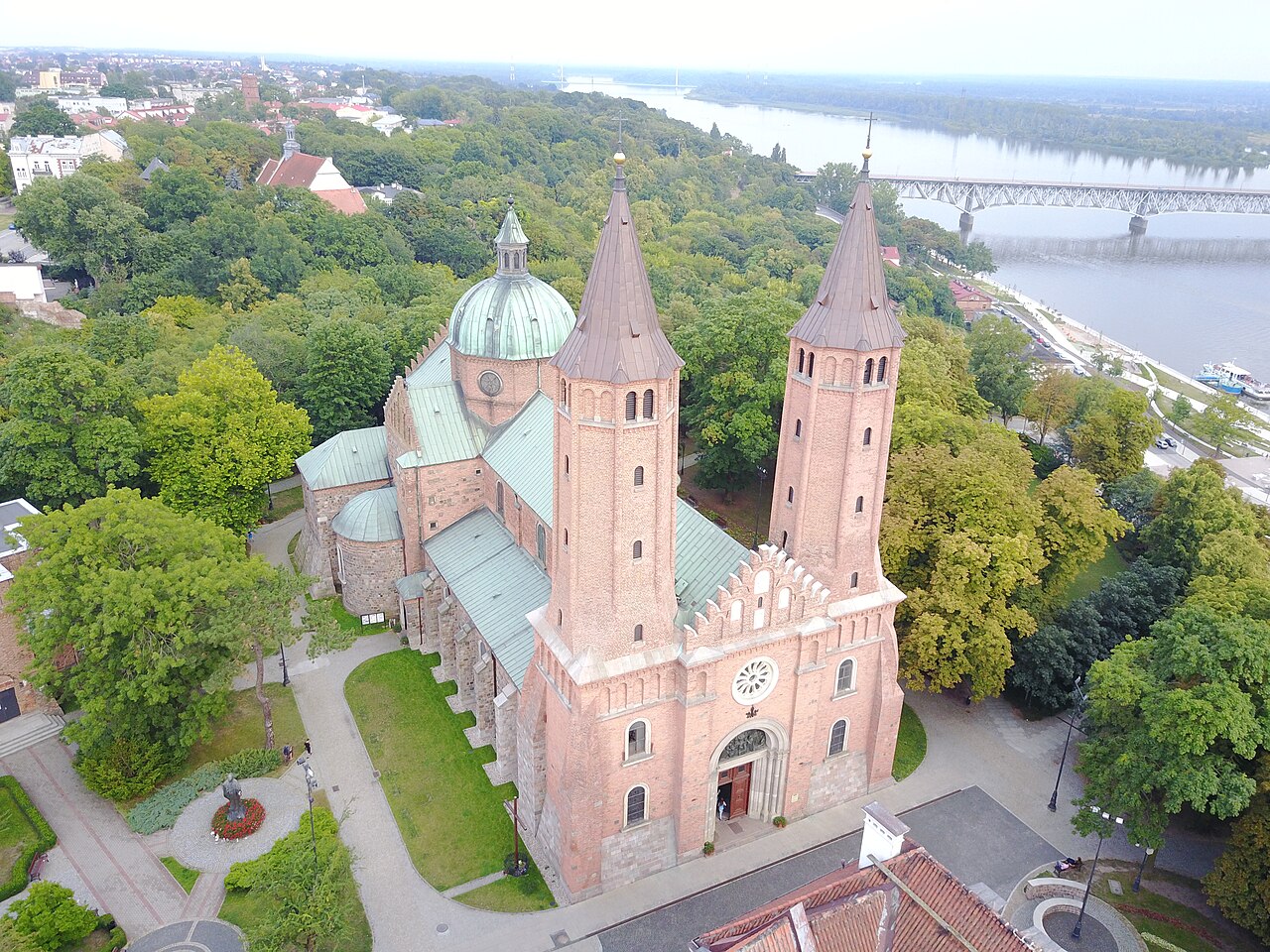

- Tumskie Hill — the cathedral, the remains of the ducal castle and the former Benedictine abbey, all on a bluff over the Vistula. The view from the escarpment along the river is the best in Mazovia.
- The cathedral — twelfth-century in origin, and the burial place of Władysław Herman and Bolesław Krzywousty, rulers of Poland from the Piast dynasty. In the eleventh and twelfth centuries Płock was one of the seats of Polish power; Warsaw at that point was not yet a town of any consequence.
- The Mazovian Museum — holder of one of the most important collections of Art Nouveau and Art Deco in Poland, which is an unexpected thing to find here.
- The Vistula boulevards — below the hill, and the reason to arrive in daylight.
The other thing you will notice is the refinery on the edge of town: Płock is the centre of the Polish petrochemical industry, which is also who sponsors the football club. As at Lubin, the industry and the team are the same story.
What to eat, and where
Mazovian cooking is mainstream Polish, done straight:
- Żurek — sour rye soup with sausage and egg.
- Pierogi — ruskie, meat, or cabbage and mushroom.
- Placki ziemniaczane — potato pancakes with sour cream.
- Freshwater fish — you are on the Vistula, and the better kitchens use it.
The restaurants cluster around Stary Rynek and the streets running down towards Tumskie Hill, which is where you want to be before kick-off anyway.
Common questions
Is this the last ground I need for the Ekstraklasa?
Possibly. There are eighteen clubs in the division but only seventeen grounds, because Wieczysta Kraków share Wisła Kraków's stadium. If you have done the other sixteen, Płock completes the set — and it is a considerably better place to finish than the fixture list suggests.
Train or bus from Warsaw?
Bus, generally. Płock is awkwardly placed for the rail network and the coach is more direct.
Who was Kazimierz Górski, in one line?
The manager of the Poland side that won Olympic gold in 1972 and finished third at the 1974 World Cup — the best team the country has had.
What else is within reach?
Toruń is roughly an hour and a half north-west — a UNESCO-listed medieval town that escaped wartime destruction almost intact, and one of the most attractive places in Poland. If you are driving, the two make an obvious pair. Warsaw is two hours the other way, so Płock also works as a detour on the road north rather than an out-and-back trip.
Does the city justify the trip?
Tumskie Hill does. An hour on that escarpment with the Vistula below is worth the journey independently of the football.
A ground named after the man who built Poland's greatest team deserves a proper entry in the record. Add Płock to your bucket list and go up the hill first.