 Groundhopper
Start free
Groundhopper
Start free
Radomiak Radom stadium guide — Stadion Braci Czachorów, Radom
A ground named after four brothers, a rebuild that took six years, and a city where the road to Solidarity started in June 1976.
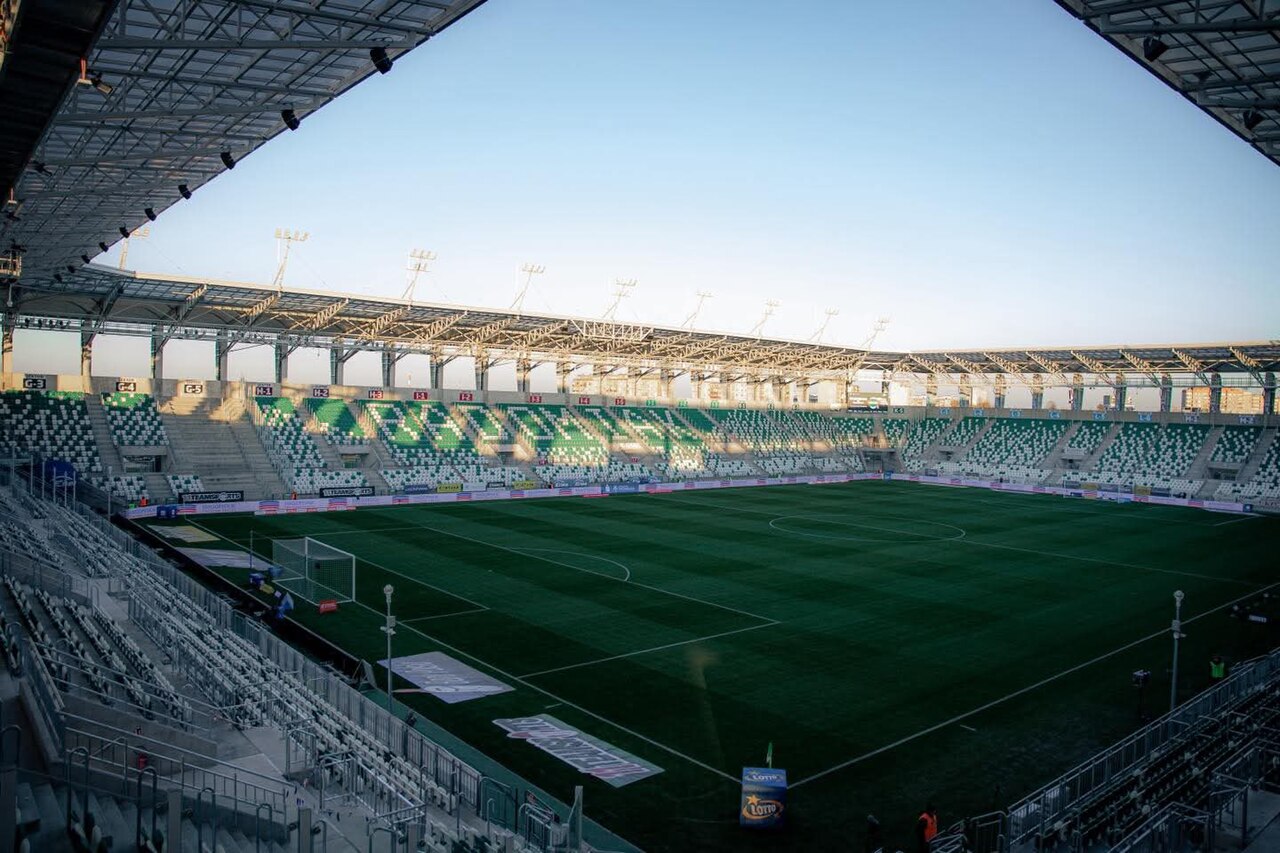

A ground named after four brothers
Most stadiums in Poland carry the name of a national figure: a marshal, a king, a saint. This one is named after the Czachor brothers — Marian, Jerzy, Aleksander and Ryszard — who played for Radomiak and then ran it.
That tells you what kind of club this is. Radomiak spent decades outside the top division and came back to it in 2021 after more than forty years away, carried by a support that never matched the league the team was playing in.
The rebuild, and why the capacity numbers move
Reconstruction began in May 2017 and did not finish for six years. The first phase delivered 8,840 seats; the completed ground reopened in August 2023 for a home match against Cracovia.
The stadium is generally listed at 13,982, and reached its full 14,440 for the first time on 29 November 2025 against Górnik Zabrze. If you see both figures quoted, both are correct — one is the standard configuration and one is what the ground holds when everything is open.
Getting there
- From Warsaw: around an hour and a half by train, running regularly. This is comfortably a day trip from the capital.
- From Kielce or Kraków: Radom sits on the route south, which makes it a possible stop rather than a separate journey.
- Locally: city buses serve the ground from the centre and the station.
Buy and validate a transport ticket before boarding. Inspections happen and visitors are not excused.
Tickets: what actually works for a foreigner
The Polish system applies: personalised tickets tied to an account, with the online purchase form built around a PESEL — the Polish national identification number. Without one the purchase generally stops at the last field.
Bring your passport and buy in person. Photographic identification is what the ticket window needs, and you are not required to hold a supporter card as a foreign visitor.
Fourteen thousand seats and a support that fills more of them than the league position suggests means this is not a ground to leave until the last minute for a significant fixture.
Where away fans sit
Allocations are set per fixture according to the policing category of the match, so confirm the sector for your specific game rather than relying on a previous season's arrangement. If you are attending as a neutral, say so when buying and ask for a side stand.
Eating at the ground
The Polish stadium standard: kiełbasa grilled and served in a roll with mustard, zapiekanka, hot dogs, chips.
- Beer is capped at 3.5% ABV by Polish law on mass events, and availability depends on the security category of the fixture.
- Bring a card. Assume cashless.
Radom before the match
What to see
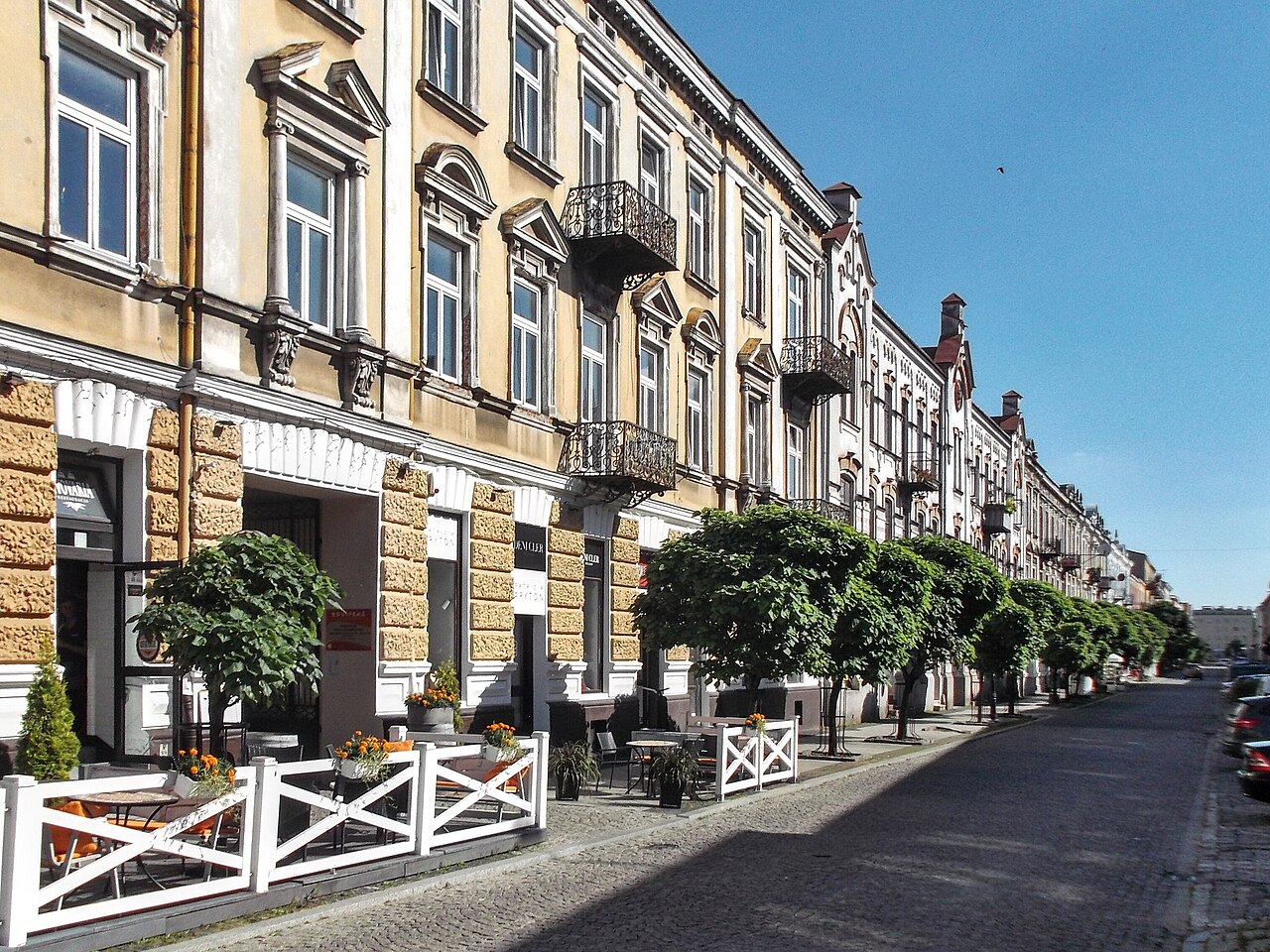
Radom is an industrial city that most guidebooks skip in a sentence, which undersells it — the nineteenth-century streets in the centre are handsome and largely intact. It has several things worth your morning, and one of them is genuinely important.
.jpg)
- June 1976. When the government announced sudden increases in food prices — meat by seventy per cent, sugar doubled — around twenty thousand people came onto the streets of Radom on 25 June 1976. The protest was put down hard, but the price rises were withdrawn, and the reprisals that followed prompted the founding of the Workers' Defence Committee, KOR, which fed directly into what became Solidarity four years later. Radom is one of the places where the end of communist Poland begins, and the city marks it.
- The Radom Village Museum — an open-air museum on the south-western edge of the city with more than sixty historic wooden buildings, the oldest a sixteenth-century church moved here from Wolanów.
- The old town and market square — the church of St John the Baptist, founded by Casimir the Great, and burghers' houses from the sixteenth and seventeenth centuries.
- The air show. Radom hosts one of the largest air shows in this part of Europe, held every other year on the last weekend of August and drawing well over two hundred thousand people. If your trip falls in that window, book accommodation early or stay in Warsaw.
What to eat, and where
Radom is in Mazovia and the cooking is mainstream Polish rather than regional:
- Żurek — sour rye soup with sausage and egg.
- Pierogi — ruskie, meat, or cabbage and mushroom.
- Kotlet schabowy with potatoes and mizeria — the standard plate.
The choice concentrates around the market square and ul. Żeromskiego, the main street. For the cheapest honest meal in any Polish city, find a bar mleczny.
Common questions
Is Radom worth a trip on its own?
For the football, as part of a route rather than alone. For June 1976, yes — it is a significant place in modern European history and almost nobody goes there for it.
Why did a six-year rebuild take six years?
Because it was done in stages around a club that kept playing, and because the money arrived in stages too. The first phase opened with 8,840 seats while the rest was still a building site — which is how Radomiak came to be promoted to the Ekstraklasa in 2021 and play top-flight football in a half-finished stadium. If you visited between 2021 and 2023 you saw a genuinely unusual thing. The completed ground is more comfortable and less interesting.
Can I do it from Warsaw in a day?
Easily. An hour and a half each way, and the ground is inside the city.
Is the support worth seeing?
It is the reason to come. Radomiak spent more than forty years outside the top division and the crowds never left — which is a specific and increasingly rare thing in European football, and much more interesting than the stadium itself.
What if the air show is on?
Accommodation in Radom disappears that weekend. Stay in Warsaw and travel in, or move the trip.
The grounds nobody writes about are frequently the ones worth recording. Add Radom to your bucket list and make a day of it from Warsaw.