 Groundhopper
Start free
Groundhopper
Start free
Legia Warsaw stadium guide — Stadion Wojska Polskiego, Warsaw
Stadion Wojska Polskiego for a visiting fan: how to reach it, why you cannot buy a ticket online without a PESEL, where away fans sit, and what to expect.
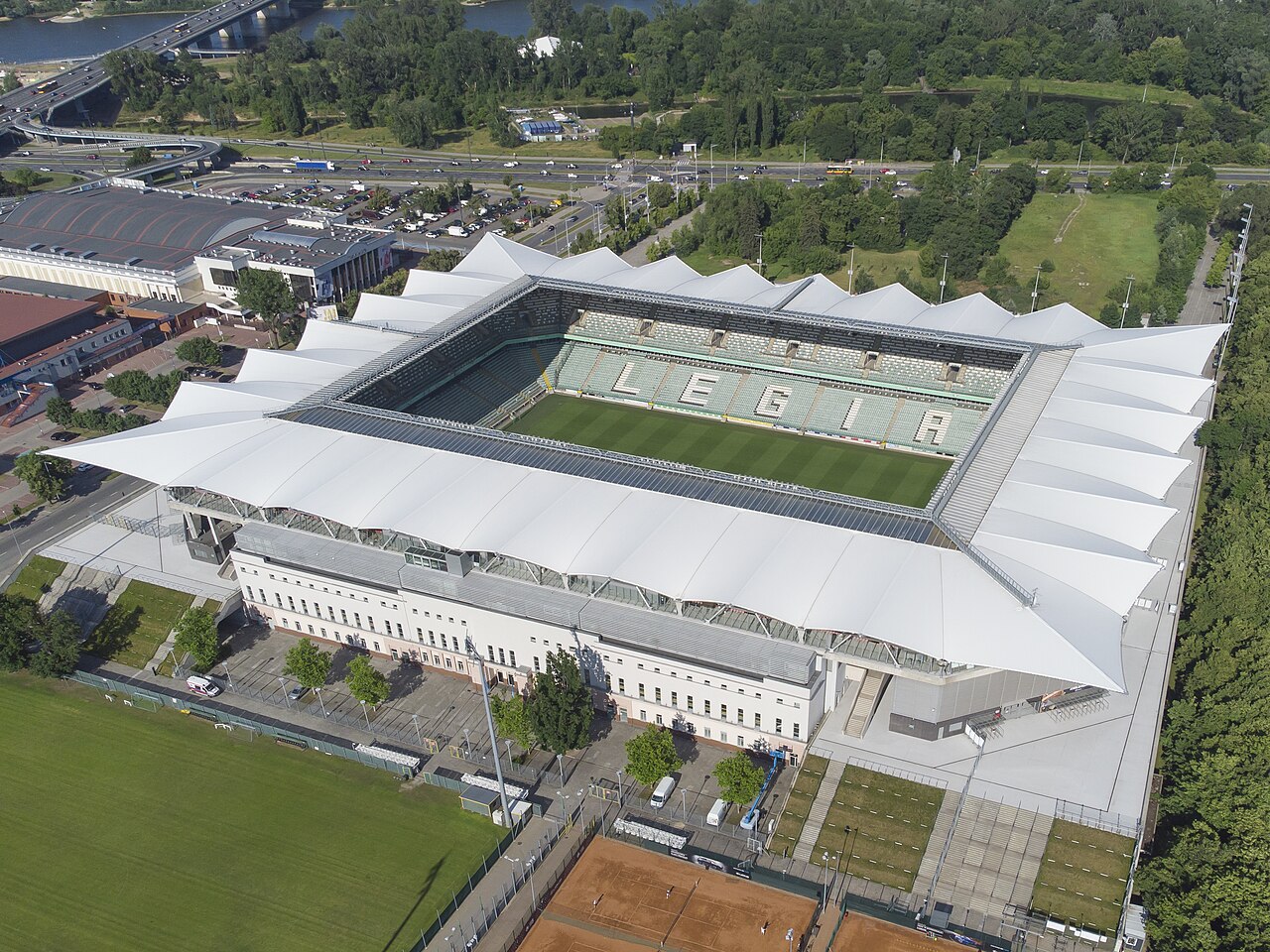

Getting there
The stadium sits about three kilometres south of Warsaw's central station, on the edge of Łazienki Park. That is walkable in roughly forty minutes through pleasant streets, and most visitors staying in the centre walk at least one direction.
If you would rather not, bus 107 runs from Jasna, beside Świętokrzyska metro station, roughly every fifteen minutes. It is eight stops and fifteen to twenty minutes to Legia-Stadion on Łazienkowska, which puts you at the ground. Several other bus routes serve Łazienkowska; the stadium is signposted and impossible to miss once you are on that street.
Warsaw's public transport requires a validated ticket bought before boarding, from a machine at the stop or on board where fitted. Ticket inspections happen and visitors are not excused.
Tickets: what actually works for a foreigner
This is the section that decides whether your trip happens, so read it before booking anything else.
Polish football operates on personalised tickets. The club's online ticket system asks for a PESEL — the Polish national identification number — and will not complete a purchase without one. If you do not have a PESEL, the official website is effectively closed to you. This surprises visitors more than any other aspect of Polish football, because everything about the page looks like it should work right up until the final field.
What does work: buying in person at the stadium ticket office with your passport. Foreign nationals are able to buy on production of photographic identification, and you are not required to hold a supporter card to do it. A passport is the safest document to bring; some visitors report driving licences being accepted, but a passport removes the argument.
The ticket office at Łazienkowska has historically opened Monday to Friday 11:00–19:00, Saturday 10:00–17:00 and Sunday 11:00–15:00, and from 08:00 on the day before a match and on matchday itself. Treat those hours as a strong indication rather than a guarantee and check the club's site for the specific fixture.
Two practical consequences. First, arrive in Warsaw with time to visit the ticket office before matchday if the fixture is likely to sell well — a European night or a match against Lech, Wisła or Widzew is not something to leave until an hour before kick-off. Second, buy the ticket before you commit to non-refundable travel. The ticket is the scarce item here, not the flight.
Where away fans sit
Visiting supporters are housed behind one of the goals, in blocks 121 and 122 on the lower tier and 221 and 222 above. The view is good: the stands are steep and close to the pitch, which is the best thing about the rebuild.
If you are a neutral rather than an away supporter, buy a seat in one of the side stands. Do not buy into the north stand — the Żyleta — unless you know what you are walking into. It is the home ultras end, it is the reason the ground sounds the way it does, and it is not a tourist viewing gallery.
The ground itself
Legia have played on this site since 1930. The current stadium was reconstructed between 2008 and 2011 into four two-level stands, all covered, all close to the pitch. Capacity is 31,103 seated, and the record attendance in the rebuilt ground is 30,787, set against Śląsk Wrocław in June 2013.
Its full name is Stadion Miejski Legii Warszawa im. Marszałka Józefa Piłsudskiego; almost nobody uses it. To supporters it is Łazienkowska, after the street, in the same way English grounds get called by their road.
What makes it worth the trip is not the architecture, which is competent rather than remarkable. It is the noise. The Żyleta is one of the most consistently loud stands in European club football, and a full house at Łazienkowska is a genuinely different experience from a mid-table fixture in a larger, quieter bowl elsewhere.
Matchday, and what is nearby
Get there early. Twenty minutes before kick-off is when you actually see the ground fill and hear the stand warm up, and it is also when the queues at the turnstiles are shortest.
Check the ground regulations before you travel, particularly on bags. Polish stadiums enforce prohibited-item rules seriously and a rucksack you carried around the city all day may not come in with you.
The immediate area around Łazienkowska is residential and green rather than commercial, so it is not a district full of matchday pubs. The practical approach is to eat and drink in the city centre or around Plac Zbawiciela and Mokotowska, both a manageable walk away, and to arrive at the ground with time to spare rather than looking for somewhere to sit near the turnstiles. Łazienki Park is directly alongside the stadium and is a far better place to spend a spare hour before a match than anywhere you will find within two streets of the gates.
Eating at the ground
Polish stadium catering is straightforward and cheap. The staple is kiełbasa off a grill, served in a bread roll with mustard, and it is genuinely good — this is one of the few countries where the default stadium food is something you would eat on purpose. Alongside it you will usually find zapiekanka (an open baguette with mushrooms and melted cheese), hot dogs, chips and pretzels.
Two things visitors get wrong:
- The beer is weak, by law. Polish legislation on mass events caps what can be sold inside a stadium at 3.5% ABV. Whether beer is sold at all depends on the ground and on the security category of the fixture, so do not build the afternoon around it.
- Bring a card. Polish grounds have moved to cashless service faster than most of Europe. Assume the kiosks will not take notes.
Prices inside are low by Western European standards, but the food is better in the city and you have a park next door to eat it in.
Warsaw before the match
Łazienkowska is one of the better-placed grounds in Europe for a visitor, because the whole day can be walked.
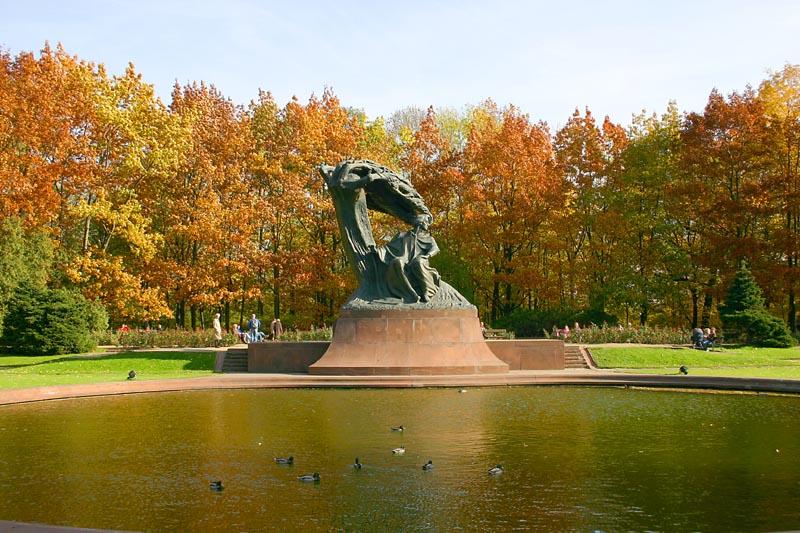

What to see
- Łazienki Park — directly beside the stadium. The palace sits on an island in the middle of a lake, there are peacocks, and from May to September there are free Chopin concerts at the monument on Sunday afternoons. Fifteen minutes' walk from the turnstiles.
- Powiśle and the Vistula boulevards — between the ground and the river, and the most enjoyable stretch of modern Warsaw. Walk the boulevards rather than taking the bus.
- The Old Town — rebuilt from photographs and paintings after 1945 and a UNESCO World Heritage site precisely because of that reconstruction. Knowing it is a replica makes it more interesting, not less.
- Palace of Culture and Science — Stalin's gift to Warsaw, still the tallest building in the country's skyline argument, with a viewing terrace on the 30th floor.
What to eat, and where
Warsaw's most useful institution for a visiting fan is the bar mleczny — the milk bar. These are subsidised canteens from the communist era: you queue at a counter, carry a tray to a shared table, and eat a full plate of home-style Polish cooking for a fraction of restaurant prices. Several survive and are still busy with locals rather than tourists. Prasowy, on Zajęcza in Powiśle, is the best-known survivor and sits between the ground and the river.
For something more comfortable, the food hall inside Elektrownia Powiśle — a converted power station — puts a dozen kitchens under one roof and is an easy stop on the walk in.
Dishes worth ordering rather than defaulting to pierogi:
- Pyzy — Warsaw's own potato dumplings, made from a mix of raw and boiled potato and usually stuffed with meat. Heavier than they look and exactly right before a cold evening.
- Żurek — sour rye soup with sausage and egg, the standard milk-bar starter.
- Placki ziemniaczane — potato pancakes, served either with sour cream or under a goulash.
- Wuzetka — a Warsaw chocolate cream cake named, according to local story, after the W-Z route it was sold along. Every decent bakery has one.
Common questions
Do I need a Polish supporter card?
Not as a foreign visitor buying in person. The card requirement is aimed at residents buying through the online system; a passport at the ticket window does the same job.
Can somebody buy the ticket for me?
Tickets are personalised, so a ticket bought in another person's name is not reliably usable. Buy your own, in your own name, with the document you will be carrying on matchday.
Will the match sell out?
Ordinary league fixtures usually do not. Derbies, European nights and matches against the other big Polish clubs frequently do. Judge the fixture, not the average.
Planning a Polish groundhopping weekend? Warsaw pairs naturally with Białystok or Łódź on the train, and the whole route is easier to hold in one place than across six browser tabs. Add Łazienkowska to your bucket list and plan the trip around it.