 Groundhopper
Start free
Groundhopper
Start free
VfL Osnabrück stadium guide — Stadion an der Bremer Brücke, Osnabrück
Three in five people in this ground are standing — close to ten thousand of them — and the room where the Thirty Years War was ended is five minutes away.
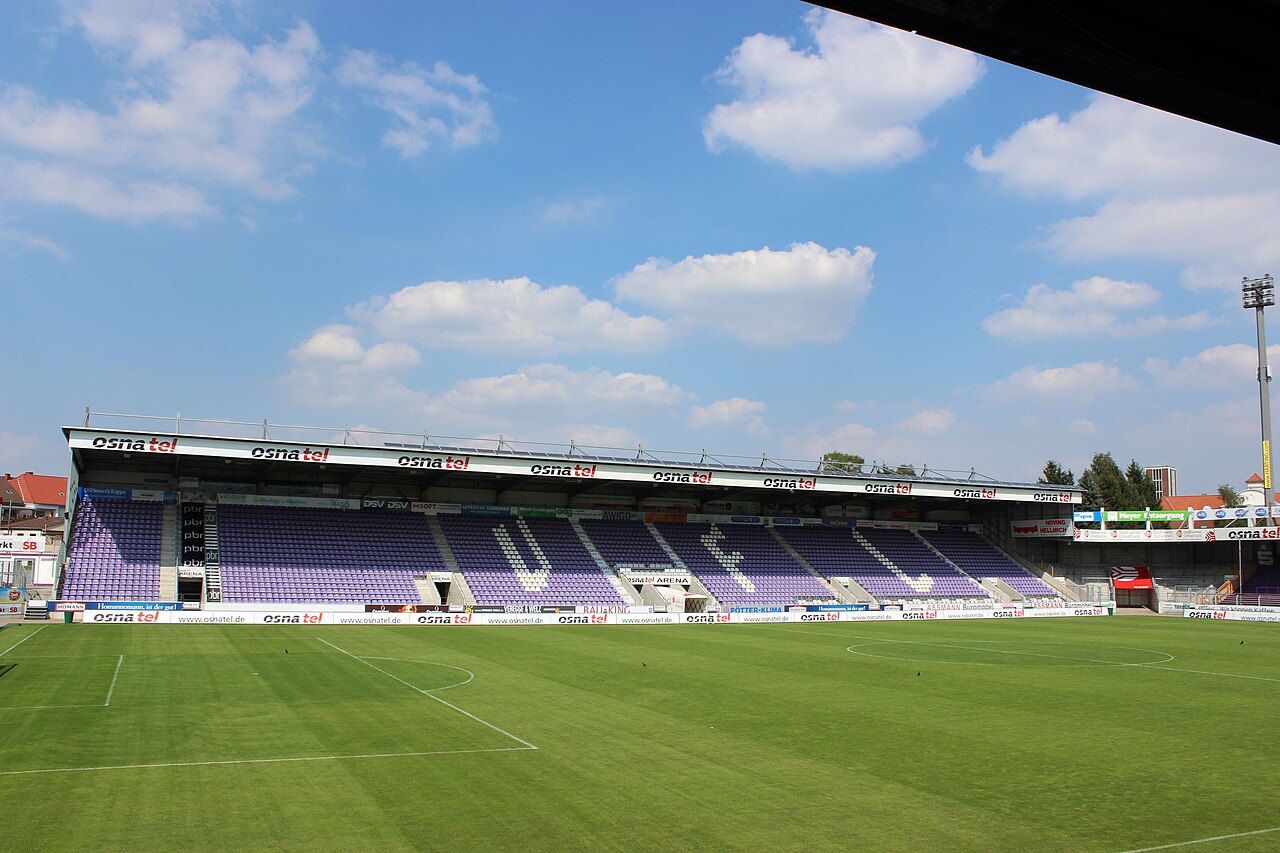

Ten thousand people standing up
Start with the split, because it is the whole reason to come. Of about 16,100 places at the Bremer Brücke, 6,192 are seats and close to ten thousand are terrace.
Very few grounds in professional European football are still arranged like that. St. Pauli manages a similar proportion; Cottbus does; almost nowhere else does, and outside Germany it is essentially extinct.
The consequence is a small ground that sounds like a much larger one. Osnabrück have a reputation in Germany for an atmosphere out of all proportion to their league position, and the arithmetic above is why.
Getting there
- By bus or on foot: the ground is in a residential district east of the centre, about half an hour's walk from the Hauptbahnhof, with matchday buses running.
- By train: Osnabrück is a junction on the Ruhr–Hamburg and Berlin–Amsterdam lines. Münster is half an hour, Bielefeld about the same, the Dutch border close.
- Pairing: Bielefeld and the Ruhr are both within easy reach, and this ground slots naturally into a route rather than needing a trip of its own.
- Match ticket and transport: as at most German grounds, the ticket covers local transport on the day.
Tickets
The German pattern: no document demanded, season-ticket holders and members first, general sale some weeks out. Buy from the club.
Sixteen thousand places against a committed local support makes this moderately difficult — similar to Kiel and Darmstadt. Plan a couple of weeks ahead, and take a terrace ticket. A seat here is the wrong purchase.
Where away fans go
Visiting supporters get the share German league rules require, part of it standing, in a ground where nobody is far from anybody. Arrangements are set per fixture, so confirm yours. Neutrals should take a side stand, or better, the terrace.
The ground itself
Opened in 1933, wedged into a residential street, and named after the railway bridge on the Osnabrück–Bremen line next to it. The North Stand was replaced with a modern roofed structure from 2008 and the work finished around 2011; the rest is older and looks it.
It is football-specific, it is small, it is loud, and it hosted the final of the 1989 European women's championship, which is more international history than most grounds this size can claim.
Put it with Bochum, Bielefeld and Darmstadt in the category of proper old German football grounds that have not been replaced. Then note that it has more terrace than any of them.
Eating and drinking at the ground
North-west German catering: Bratwurst, Currywurst, chips, and full-strength Pilsner. Ask for Pommes rot-weiß as in the Ruhr.
Payment by stadium card: load it on arrival, cash out afterwards. Cups carry a Pfand deposit refunded on return.
Osnabrück before the match
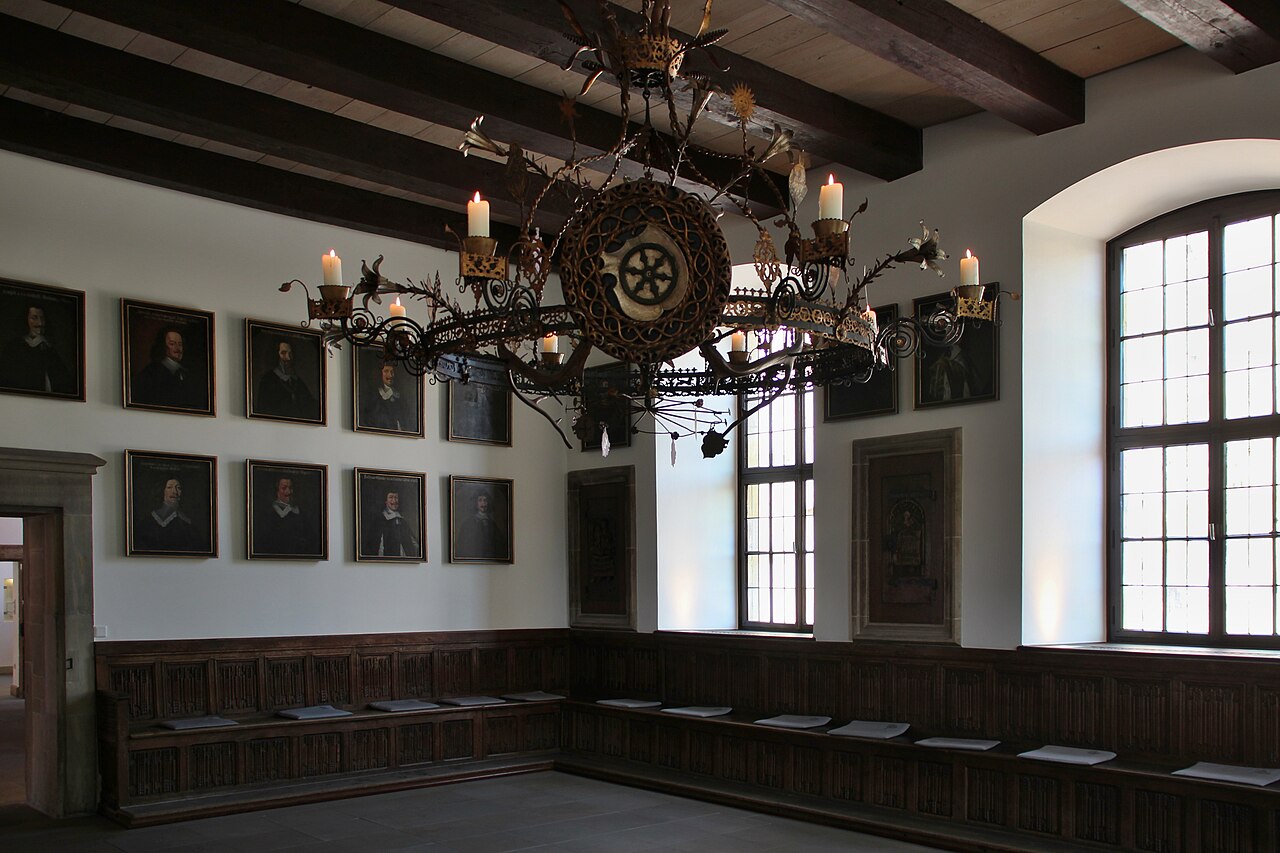

The city of peace
The Thirty Years' War killed a substantial share of the population of central Europe. It was ended by the Peace of Westphalia in 1648, negotiated simultaneously in two cities forty miles apart — Catholic delegates in Münster, Protestant and Swedish delegates here in Osnabrück — because the parties would not sit in the same room.
The peace was proclaimed from the steps of Osnabrück's town hall, and the Friedenssaal, the hall of peace where the negotiations happened, is still there with the portraits of the delegates on the walls. It is free to enter and takes fifteen minutes.
Historians generally treat that settlement as the start of the modern system of sovereign states. Standing in the room is a strange experience for the price of nothing, and it is five minutes from where you will be drinking afterwards.
What else to see
- The Felix Nussbaum Haus — a museum by Daniel Libeskind built for the work of Felix Nussbaum, a Jewish painter born in this city and murdered at Auschwitz in 1944. The building is deliberately disorienting: narrow, angled, with dead ends. It is the most powerful thing in Osnabrück.
- The Erich Maria Remarque Peace Centre — Remarque, who wrote All Quiet on the Western Front, was born here. A small centre covers his life and the book's reception, including its burning by the Nazis.
- The old town and the Dom — compact, walkable, with the cathedral and the Marienkirche a few minutes apart.
- The Teutoburg Forest — the ridge starts at the edge of the city, and the Varusschlacht museum at Kalkriese, where the Roman legions were destroyed in AD 9, is a short drive north.
What to eat and drink
- Westfälischer Schinken — beech-smoked ham on dark bread.
- Grünkohl mit Mettwurst — kale with sausage, in winter, as across the north.
- Pumpernickel — the genuine article, dense and black.
- Korn — the grain schnapps of this region, taken alongside a Pilsner rather than instead of one.
Common questions
Seat or terrace?
Terrace, without hesitation. Three in five people here are standing and that is where the ground works.
Is the atmosphere really that good?
For the size, yes — it is one of the reasons German fans rate this ground well above the club's league position. Small and mostly standing is a reliable formula.
What should I do with two hours beforehand?
The Friedenssaal and the Felix Nussbaum Haus. They are very different and both are short.
Why is it named after a bridge?
Because the railway bridge carrying the Osnabrück–Bremen line stands next to it, and the ground took the local name of the spot rather than inventing one. Ninety years later that name has outlasted every commercial alternative anyone has proposed.
What can I pair it with?
Bielefeld is half an hour or so, the Ruhr about an hour and a half, and the Dutch border is close if you want to add a ground across it. Münster, the other half of the 1648 peace negotiations, is thirty minutes south and makes the history above considerably more vivid.
Ten thousand standing places in a ground from 1933, and the room where the Thirty Years' War was ended five minutes away. Add the Bremer Brücke to your bucket list and hang Bielefeld off the same trip.