 Groundhopper
Start free
Groundhopper
Start free
SC Freiburg stadium guide — Europa-Park Stadion, Freiburg
6,200 solar panels covering the stadium's entire electricity demand, built beside an airfield in Germany's greenest city. Also the hardest ticket ratio in the league.
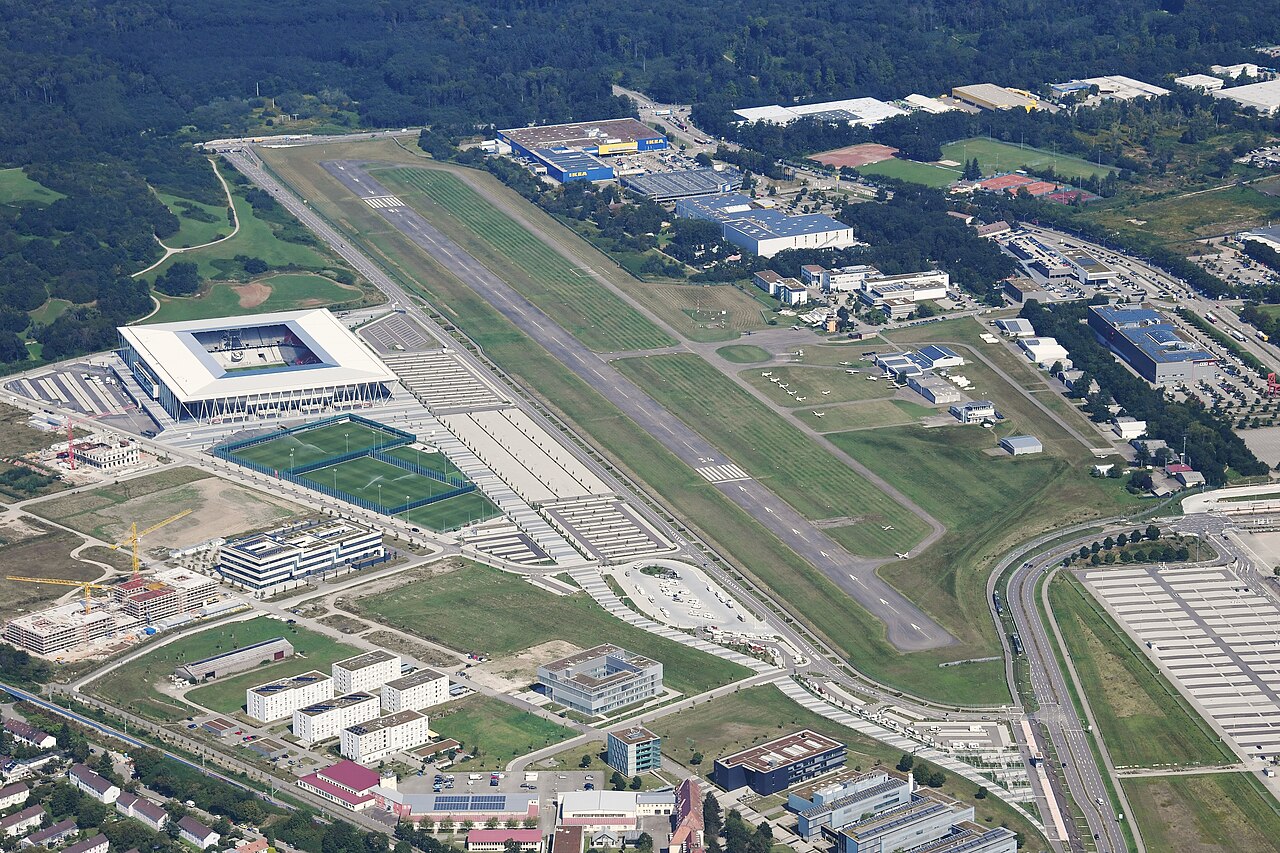

The stadium that powers itself
Most clubs that talk about sustainability have installed some panels and issued a press release. Freiburg built the whole thing around it.
The roof is effectively one large power station: 6,200 photovoltaic modules over fifteen thousand square metres, producing around 2.3 million kWh annually — enough to meet the stadium's own consumption. Heating for the building and the pitch comes from industrial waste heat next door, delivered CO₂-neutrally. Rainwater is recycled. There is parking for close to 4,000 bicycles, with charging points for e-bikes and electric cars, and the matchday ticket covers public transport.
Even the shape of the building has a reason: the ground stands beside Freiburg's airport, and the low, flat roof geometry is dictated by that proximity. The citizens of Freiburg voted for the site.
Freiburg is the city that has spent fifty years as Germany's environmental laboratory — solar research institutes, the Vauban car-reduced district, a green political tradition older than most of the country's. The stadium is that city expressed in concrete and silicon, and for a groundhopper it is a genuinely distinct thing to have seen.
Getting there
- By tram: the ground is connected directly to Freiburg's tram network, and the match ticket generally covers the journey.
- By bicycle: unusually, this is a serious option — there are around four thousand spaces. Freiburg is a cycling city and the club planned for it.
- By car: possible but deliberately discouraged, which is the point.
- From elsewhere: Freiburg sits in the far south-west corner of Germany, close to both France and Switzerland. Basel is under an hour away and has an international airport, which is frequently the easiest approach.
Tickets
The German pattern: no document demanded, but a queue behind season-ticket holders and members, with general sale opening some weeks before the match. Buy from the club.
This is the tightest ratio in the Bundesliga. Under thirty-five thousand places, a club that has punched above its weight for two decades, and a city that fills the ground. Treat every fixture here as difficult and find the sale date before you plan anything.
Around 36 per cent of the ground is standing, which is a high proportion — decide deliberately which you want.
Where away fans go
Visiting supporters have their own section with the allocation German league rules require. Arrangements are set per fixture, so confirm yours. Neutrals should take a side stand.
The ground itself
The stadium replaced the Dreisamstadion, a small, tight, much-loved ground in the middle of the city that had become far too small for a club regularly in Europe. The new one is a proper enclosed bowl for 34,700, close to the pitch, fully covered, and finished to a standard that belies the club's budget.
Freiburg's reputation in German football is for doing more with less — long-serving coaches, a serious academy, sustained top-flight football from a city of a quarter of a million. The ground fits the club.
Eating and drinking at the ground
Bratwurst, pretzels and full-strength beer, with the local Baden slant: expect Rote, the regional sausage, and wine alongside the beer, because this is a wine region first.
Payment by stadium card: load it on arrival, cash out afterwards. Cups carry a Pfand deposit.
Freiburg before the match

What to see
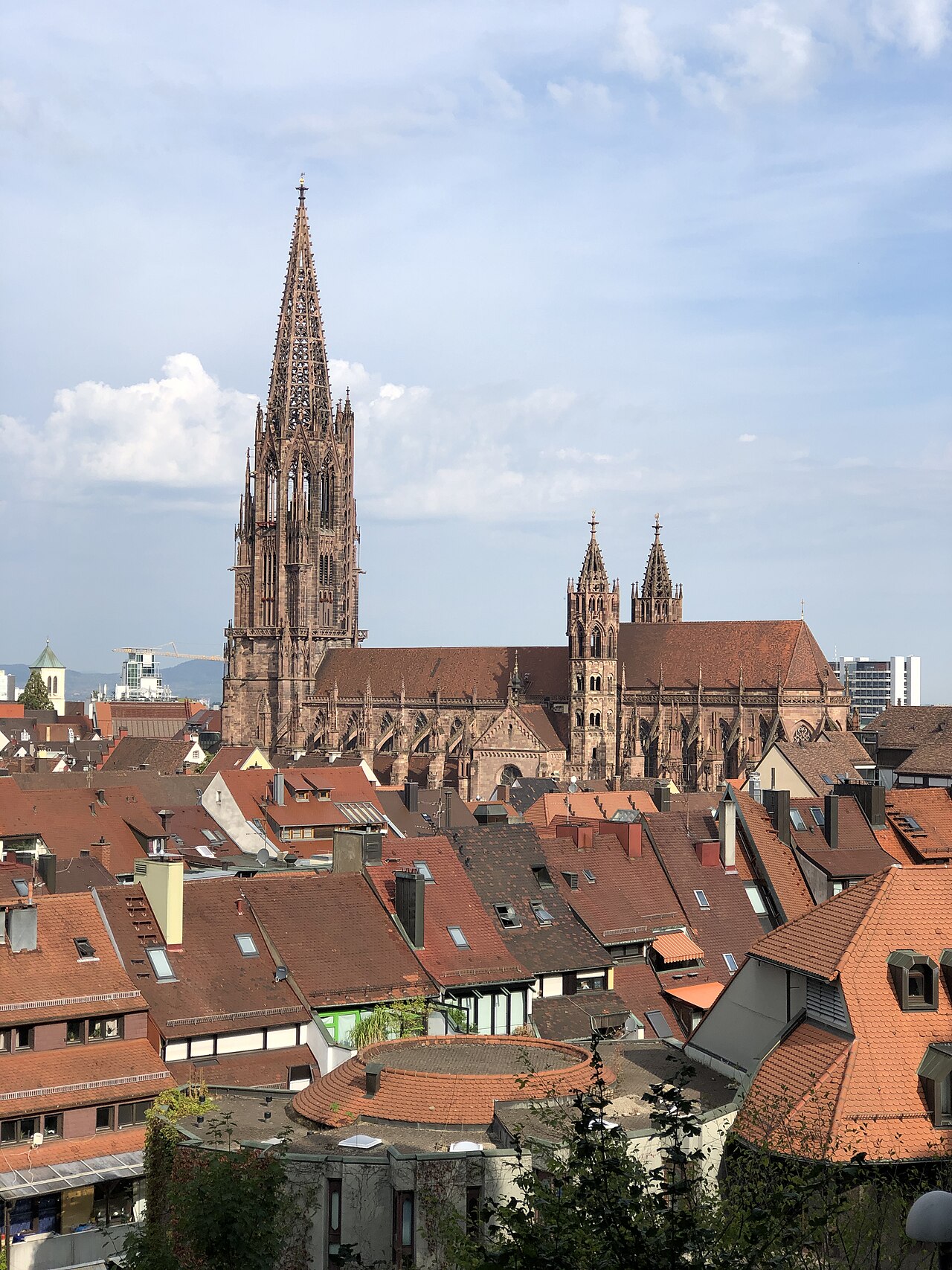
- The Münster — the cathedral, whose Gothic tower has been called the most beautiful in Christendom by people who ought to know. It survived the bombing that flattened the streets around it. Climb it.
- The Bächle — narrow water channels running along the streets of the old town, fed from the Dreisam, dating from the Middle Ages. Local lore says that if you step in one accidentally you will marry someone from Freiburg. Everybody steps in one.
- Schauinsland — the mountain above the city, reached by one of the longest cable-car loops in Germany, with the Black Forest and the Vosges visible from the top.
- Vauban — the car-reduced, solar-powered district on the edge of town, built on a former French barracks and studied by planners from all over the world.
What to eat and drink
Baden cooking is the most French of the German regional kitchens, and it knows it:
- Black Forest ham — smoked over fir, sliced thin, eaten with dark bread.
- Flammkuchen — thin dough with crème fraîche, onion and bacon, from just across the Rhine and thoroughly adopted here.
- Zwiebelkuchen with Neuer Wein — onion tart with the season's young wine, in autumn.
- Baden wine — this is one of Germany's warmest wine regions and the Spätburgunder is taken seriously. And yes, the Schwarzwälder Kirschtorte is from here, and is considerably better locally than the version the rest of the world makes.
Common questions
How hard is a ticket?
The hardest ratio in the league. Under thirty-five thousand places for a club that fills them. Find the sale date.
Is the solar thing actually visible?
From the air, spectacularly — the whole roof is panels. From inside the ground, less so, since you are underneath it. The club is happy to tell you about it either way, and the numbers hold up to checking.
What else is nearby?
Basel is under an hour, Strasbourg a little more, and Stuttgart a couple of hours north. This is the easiest German ground to combine with Switzerland or France.
A stadium that generates its own electricity, in the greenest city in Germany. Add the Europa-Park Stadion to your bucket list and go up Schauinsland first.