 Groundhopper
Start free
Groundhopper
Start free
Slavia Prague stadium guide — Fortuna Arena (Eden), Prague
The best modern ground in Czechia, eight minutes from Prague main station — and a ticketing system with none of the obstacles you meet in Poland.
.jpg)
Czech football is not Polish football, at the turnstile
If you have done any groundhopping in Poland you will have met the PESEL problem: a personalised ticketing system built around a national identification number, which stops a foreign purchase dead at the last field and forces you to the ticket window with a passport.
None of that applies here. Czech clubs do not operate a mandatory supporter-card scheme for ordinary league fixtures, you are not asked for identification to buy, and payment works in cash or by card. Online sales are open to anyone.
The practical effect is that a Czech ground can be a spontaneous decision. You can be in Prague on a Saturday, look at the fixture list over breakfast and be inside a stadium by kick-off. In Poland that is rarely true. It is the single biggest reason Czechia is the easier country to start groundhopping in.
Getting there
Eden sits in Vršovice, east of the centre, and the transport is dense.
- By train: from Praha hlavní nádraží to Nádraží Eden takes about eight minutes.
- By tram: the stop is Slavia on Vršovická. From the centre, metro line A to Náměstí Míru then tram 4, 22 or 24; or metro line C to I. P. Pavlova then tram 6.
Prague's transport is integrated and cheap, and ticket inspections are frequent. Validate before travelling.
Tickets
Two routes, both open to a visitor:
- Online, through the club's ticketing partner. Straightforward, and the way to do it for anything likely to sell.
- At the ticket office at the ground. General sale usually opens a couple of working days before the match, and the windows also open on matchday itself.
One specific tip worth knowing: if a match is sold out, the Gate 3 ticket office releases pre-sale returns about two hours before kick-off — and for those you will need cash. That is the one moment in Czech football where a card is not enough.
Where away fans sit
The away sector is in the south-eastern part of the ground, blocks 119–121, with a capacity of 1,024 including wheelchair spaces.
It is a small allocation for a ground this size, and Slavia are not relaxed about visiting supporters buying into home areas. If the away end sells out, assume you will not be sold an alternative. Neutrals should buy a side stand well in advance and behave like guests.
The ground itself
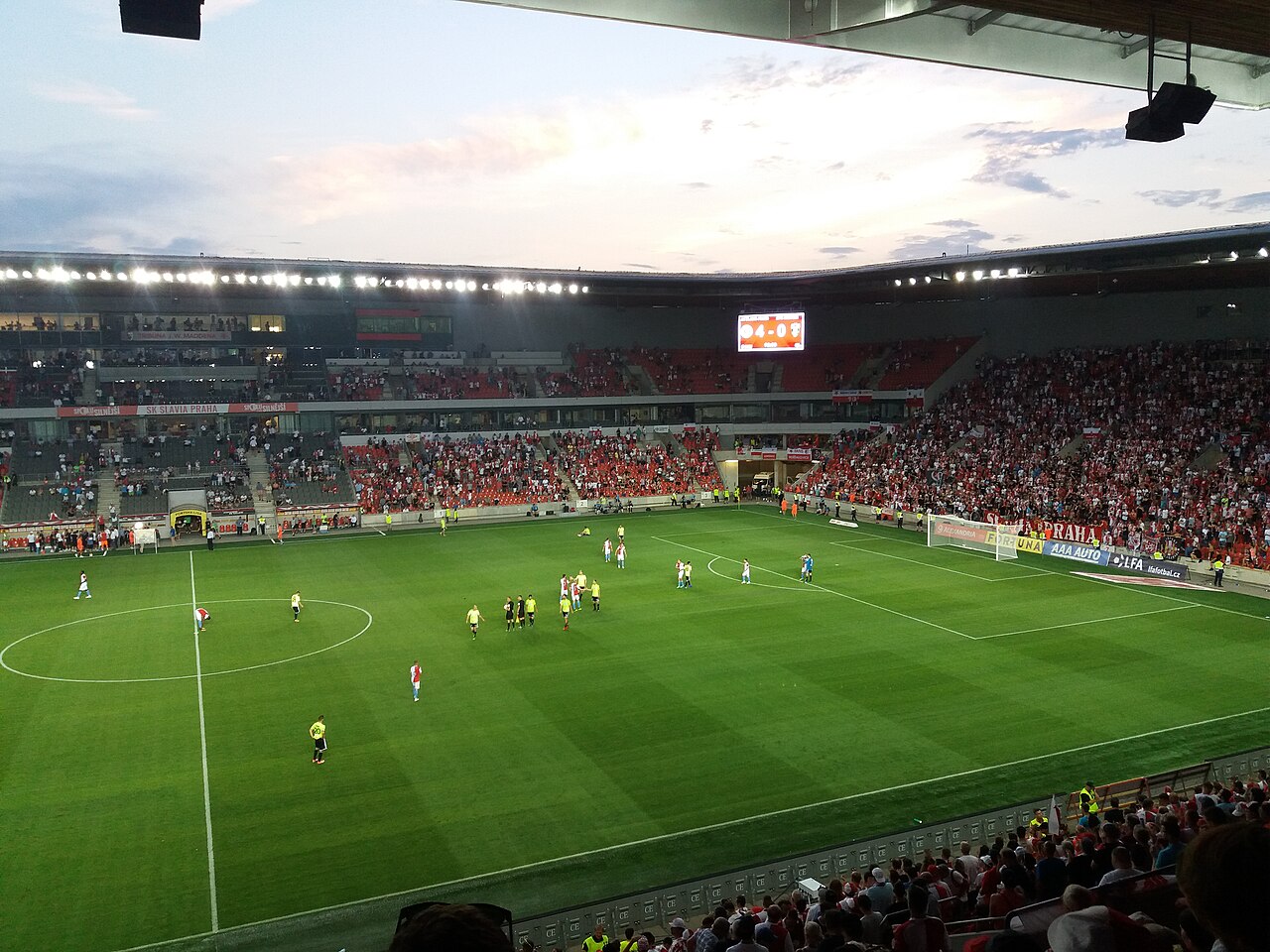
The stadium opened in 2008 on the site of Slavia's historic Eden ground and has carried several sponsor names since — you will see it called Eden Arena, the Sinobo Stadium and the Fortuna Arena in sources of different vintages. It is the same building.
What makes it good is a decision most modern grounds get wrong: every stand is single-tier and fully covered. No upper deck, no corporate layer cutting the ground in half, sightlines that work from anywhere. At just under twenty thousand it is comfortably the best modern stadium in Czechia and one of the better ones in this part of Europe.
Eating and drinking at the ground
Czech stadium catering is beer-led and unapologetic about it. Expect klobása (sausage) off a grill, langoš (fried dough with garlic and cheese), and lager.
Two differences from Poland that visitors notice immediately:
- The beer is proper beer. Czech law does not cap stadium alcohol at 3.5% the way Polish law does, so what is served is normal lager at normal strength.
- It is very cheap — inside the ground as well as outside.
Some Czech grounds use a token or card system at the kiosks rather than taking payment at each one. Look for the sign when you go in.
Prague before the match — the eastern side

What to see
The castle and the Charles Bridge do not need another guide. Eden is in a part of Prague most visitors never reach, and that is the recommendation:
- Vršovice — the district around the ground: an ordinary, lived-in Prague of corner pubs and interwar apartment blocks. Náměstí Svatopluka Čecha and the streets off it are where to eat.
- Vinohrady — one tram stop closer to the centre, and the most pleasant residential quarter in the city. Riegrovy sady park has a beer garden with a view over the whole of Prague.
- Žižkov — north of Vinohrady, historically the working-class district, with the television tower and the highest concentration of pubs in the city.
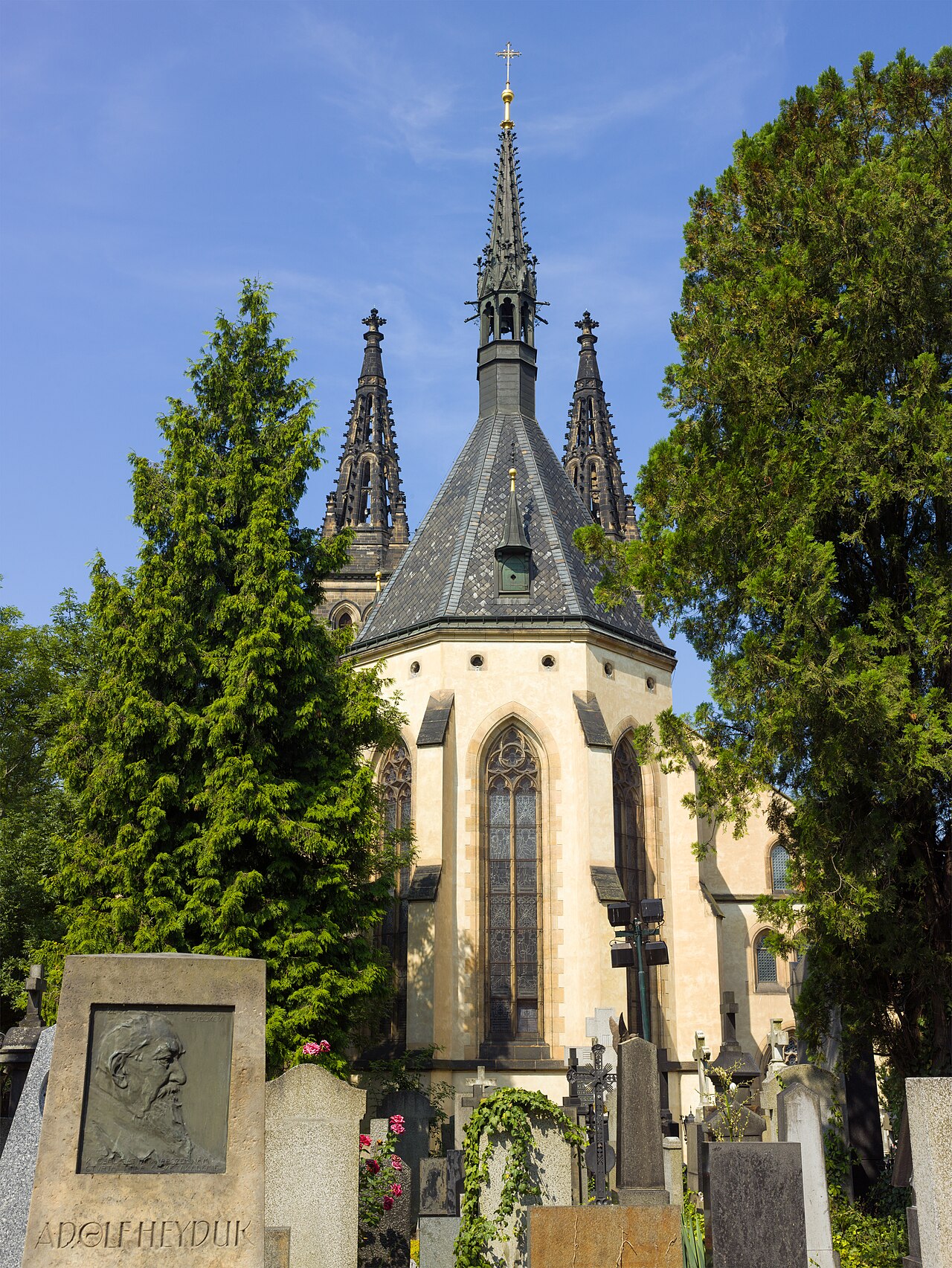
- The Vyšehrad fortress — south-west of Eden, on a rock above the Vltava, with the cemetery where much of Czech culture is buried. Quieter than the castle and better on a clear afternoon.
What to eat and drink
Czech pub cooking is heavy, cheap and very good when it is done properly:
- Svíčková na smetaně — beef in a root-vegetable cream sauce with bread dumplings, cranberries and a spoon of whipped cream. The national dish, and it sounds stranger than it tastes.
- Guláš with dumplings — the pub standard.
- Smažený sýr — a slab of fried cheese with tartare sauce. Not sophisticated. Perfect after a match.
- Nakládaný hermelín — pickled soft cheese, the classic thing to eat while drinking rather than instead of it.
On beer: order by the tank if a pub offers tankové pivo, drink where locals do rather than on the tourist streets, and note that a proper Czech pub charges less for half a litre of some of the best lager in the world than most European cities charge for coffee.
Common questions
Do I really not need any ID or card?
For an ordinary league fixture, no. Bring a passport anyway — you are travelling — but the Polish obstacle does not exist here.
Slavia or Sparta first?
Slavia for the better stadium; Sparta for the older ground and the more central location. If you are only doing one, check which has the bigger fixture that weekend.
Is it worth planning a Prague weekend around football?
Two top-flight grounds inside one city with excellent public transport, cheap tickets and no bureaucracy — yes. Prague is arguably the easiest groundhopping city in Central Europe.
Two clubs, one city, and a ticketing system that actually lets you go. Add Eden to your bucket list and check whether Sparta are at home the same weekend.