 Groundhopper
Start free
Groundhopper
Start free
Bohemians 1905 stadium guide — Ďolíček, Prague
A kangaroo on the badge from a 1927 tour of Australia, and a hundred-year-old ground in the same Prague district as Slavia. Two stadiums, one walk.

Why a Prague club has a kangaroo on its shirt
In 1927 the club, then called AFK Vršovice, was invited on a tour of Australia. It was an extraordinary undertaking for a Czechoslovak side at the time and it changed the club permanently.
The name went first: Vršovice was judged unpronounceable for Australian audiences, so the team travelled as AFK Bohemians and kept the name when it came home. Then came the badge. The kangaroo appears on Australia's coat of arms, and the club adopted it as its own.
A century later a football club in a landlocked Central European country still plays in green with a marsupial on the crest. It is the best origin story in Czech football and the reason a lot of neutrals adopt Bohemians as a second club.
Two grounds, one district
Ďolíček sits in Vršovice, south-east of the centre. So does the Fortuna Arena, where Slavia play. The two grounds are close enough to walk between, and Bohemians even played at Eden temporarily between 2010 and 2012 while their own ground's future was uncertain.
For a visiting groundhopper that is a gift. If the fixture list puts Slavia and Bohemians at home across the same weekend, you get two Czech top-division grounds without leaving one Prague district — and they could not be less alike. One is a modern nineteen-thousand-seat arena. The other is a cramped old ground where you can hear the players.
Tickets
Czech ticketing rules apply and they are visitor-friendly: no mandatory supporter card for ordinary league fixtures, no national identification number required, and payment by card or in cash. There is nothing resembling the Polish PESEL obstacle.
The constraint here is size rather than bureaucracy. Ďolíček holds around six thousand, Bohemians have a devoted following, and the ground fills for anything significant. Buy ahead rather than assuming a walk-up, particularly for a Prague derby.
Where away fans sit
The visiting allocation at a ground this small is correspondingly small, and it is set per fixture according to the policing category of the match. Confirm the arrangement for your specific game.
If you are a neutral, this is a ground where sitting among home supporters is part of the point. Buy a normal ticket and behave like a guest.
The ground itself
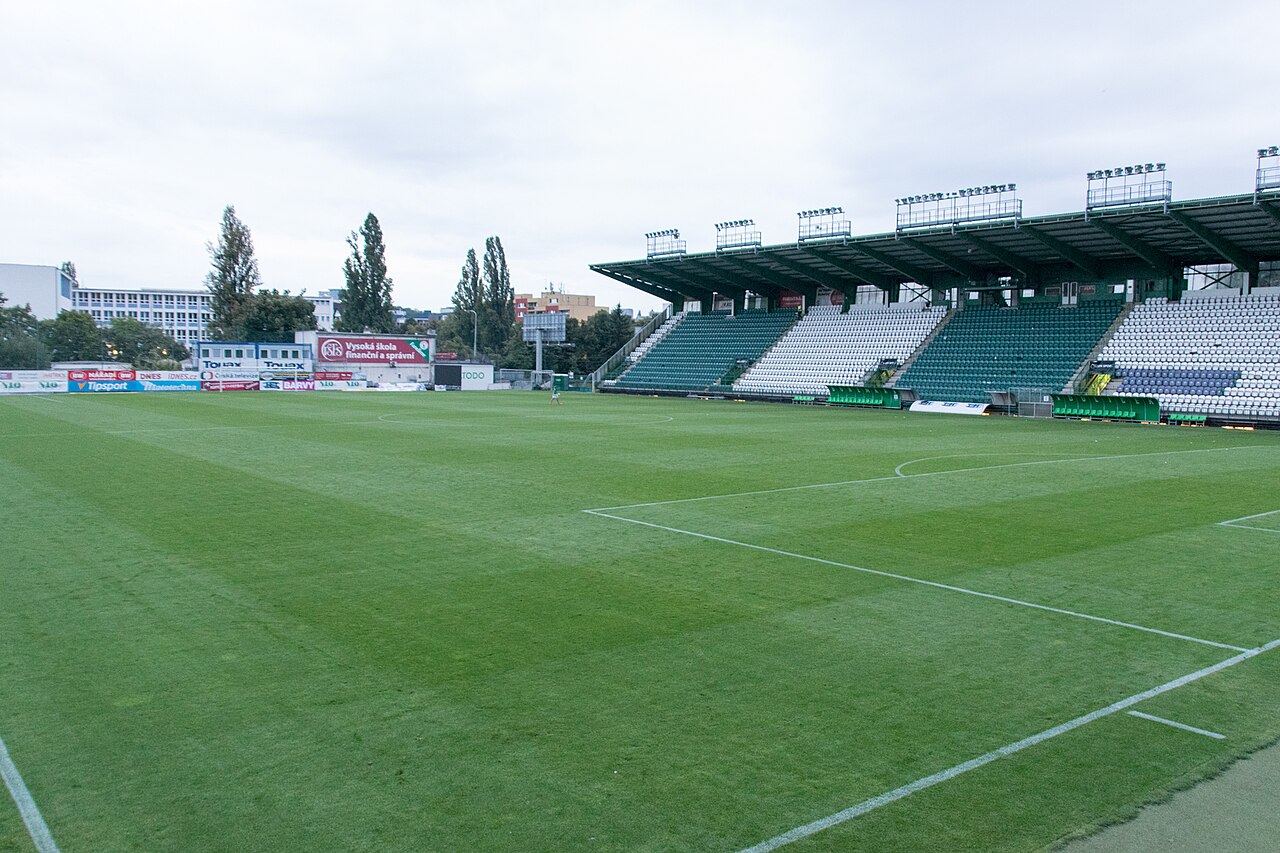
Ďolíček has hosted football since the early twentieth century and it looks it. One covered main stand in club green and white does most of the work; the rest is low, open and close to the touchline, with advertising hoardings and trees where a second tier would be at a bigger ground. Capacity figures vary by source and by season — expect somewhere between five and six and a half thousand.
This is the opposite of everything else in this series. No lattice cladding, no drone photograph, no corporate tier, and nothing that would look impressive from the air. What it has instead is the thing modern stadiums spend fortunes trying to manufacture: a crowd close enough to the pitch that the noise has nowhere to go.
The club has spent much of the last two decades in financial difficulty and under threat of losing the ground entirely. Go while it is there.
Eating and drinking at the ground
Czech stadium catering: klobása off the grill, langoš, and full-strength lager — Czech law does not cap stadium beer the way Polish law does.
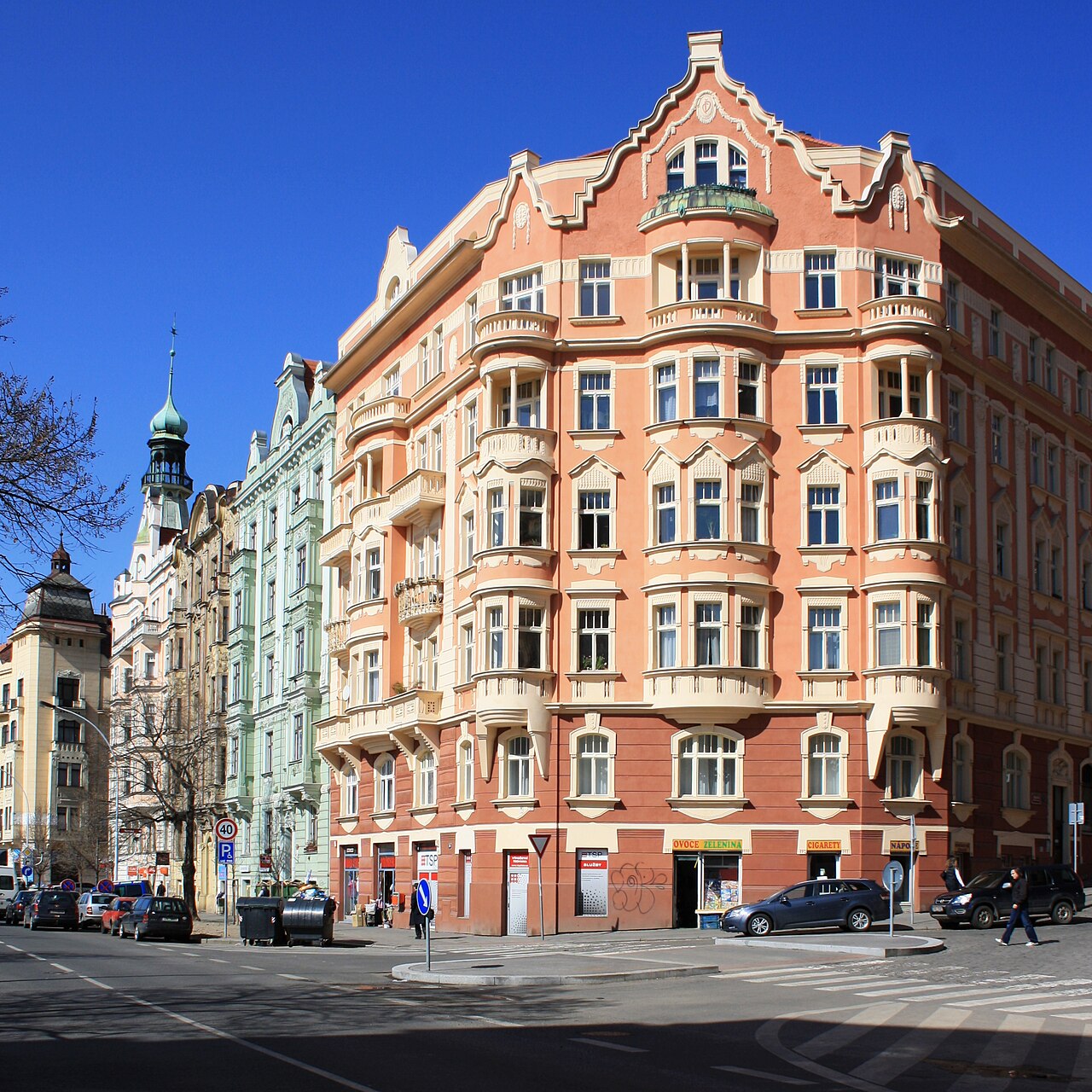
At a ground this size, the more interesting option is the district itself. Vršovice is a residential quarter full of ordinary Prague pubs, and the ones around Ďolíček are the closest thing in the city to a proper matchday pub culture. Arrive early and drink where the supporters do.
Vršovice before the match

What to see
This is not the tourist Prague, and that is the recommendation:
- Náměstí Svatopluka Čecha — the square at the heart of Vršovice, with the extraordinary interwar church of St Wenceslas rising above it in stepped concrete.
- Havlíčkovy sady (Grébovka) — a hillside park between Vršovice and Vinohrady with a working vineyard and a pavilion serving wine above the rooftops.
- Vinohrady — next door, the most pleasant residential district in Prague, with Riegrovy sady and its beer garden looking out over the whole city.
- The walk to Eden — worth doing on foot even if you are not going to a second match, because it shows you how ordinary Prague actually lives.
What to eat and drink
Czech pub food, in a district where the pubs are for residents:
- Svíčková na smetaně — beef in cream sauce with bread dumplings and cranberries.
- Guláš with dumplings, and smažený sýr — fried cheese with tartare sauce.
- Nakládaný hermelín and utopenec — pickled soft cheese and pickled sausage, the standard things to eat while drinking.
Look for tankové pivo where a pub advertises it. Half a litre in an ordinary Vršovice pub costs less than a coffee in most European capitals, and it will be better beer than you can buy at home at any price.
Common questions
Can I really do two grounds in one district?
Yes, if the fixtures fall right. Ďolíček and the Fortuna Arena are both in Vršovice and a walk apart. Check both clubs' fixture lists before choosing a weekend.
Is the ground going to survive?
It has been in doubt more than once, and the club has been through repeated financial trouble. Nobody can promise you it will look like this in ten years, which is a reason to go now rather than later.
Why do people adopt Bohemians as a second club?
The kangaroo helps. So does the green. Mostly it is that this is a small, poor, stubbornly independent club in a district of a capital city, with a ground it keeps nearly losing and a support that keeps it alive anyway. That is a recognisable shape to anyone whose own club has been through something similar.
Bohemians or Slavia, if I only have one match?
Slavia for the better stadium and the bigger occasion. Bohemians for the older ground, the closer view and the story. If you collect grounds rather than fixtures, Ďolíček is the more distinctive tick.
A hundred-year-old ground with a kangaroo on the badge, ten minutes from a modern arena. Add Ďolíček to your bucket list and see if Slavia are at home the same weekend.