 Groundhopper
Start free
Groundhopper
Start free
Korona Kielce stadium guide — Exbud Arena, Kielce
Widely regarded as the first modern stadium in Poland — the template everything newer copied. Also why Polish capacity figures never quite agree.
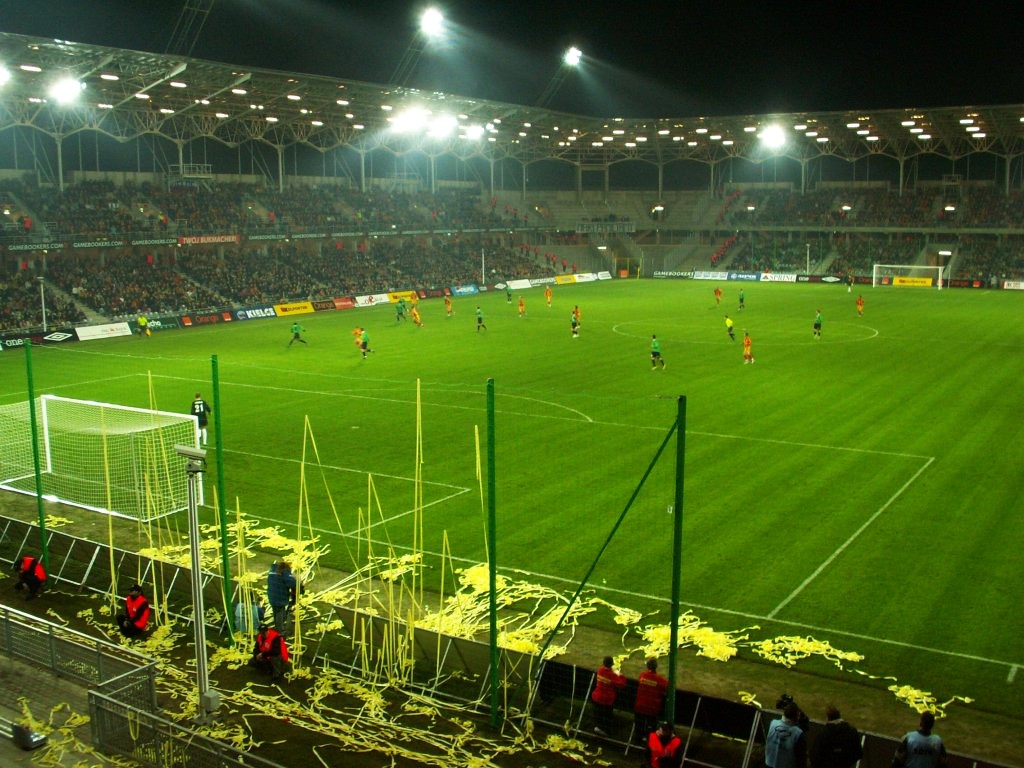

The ground that started it
Poland's stadium landscape was transformed between about 2008 and 2015: Euro 2012 arenas, club rebuilds, new municipal grounds in mid-sized towns. Almost every stadium in this series belongs to that wave.
Kielce came first. Ground was broken in November 2004 and the stadium hosted its first match in April 2006, at a point when most of the Ekstraklasa was still playing in concrete bowls with athletics tracks. It is routinely described as the first genuinely modern football-specific stadium in the country.
Twenty years on it is no longer remarkable to look at, and that is precisely the point of visiting it: this is the template, and everything newer in Poland is a variation on it.
Getting there
The stadium is at ul. Ks. P. Ściegiennego 8, within reach of the centre of Kielce on foot or by city bus.
- By train: Kielce sits on the line between Warsaw and Kraków, which makes it a natural stop rather than a special journey. Roughly two hours from Warsaw, a little less from Kraków.
- Locally: city buses serve the ground; the walk from the centre is manageable in good weather.
Buy and validate a transport ticket before boarding. Inspections happen and visitors are not excused.
Tickets: what actually works for a foreigner
The Polish system applies: personalised tickets tied to an account, with the online purchase form built around a PESEL — the Polish national identification number. Without one the purchase generally stops at the last field.
Bring your passport and buy in person. Photographic identification is what the ticket window needs.
A fifteen-thousand-seat ground in a city of under two hundred thousand means ordinary league fixtures are usually obtainable. Judge the fixture rather than the average.
Where away fans sit — and why the capacity numbers disagree
This ground is a good place to explain something that confuses visitors across Polish football: you will see two different capacity figures for almost every stadium in the country.
Polish regulations require a buffer zone of empty seats between home supporters and the visiting section. At Kielce that means a nominal capacity of around 15,500 but a league-match arrangement of roughly 13,823 home seats and 777 away seats, with the rest kept empty by rule.
So when a source quotes a capacity and the ground looks fuller or emptier than that suggests, this is usually why. The away allocation itself is set per fixture according to the policing category of the match — confirm your specific game.
The ground itself
Four stands, all seated, football-specific, with a heated pitch measuring the standard 105 by 68 metres. It was one of the most modern grounds in Poland when it opened and is now a solid, ordinary, well-kept stadium — which is a fair description of what twenty years does.
Eating at the ground
The Polish stadium standard: kiełbasa grilled and served in a roll with mustard, zapiekanka, hot dogs, chips.
- Beer is capped at 3.5% ABV by Polish law on mass events, and availability depends on the security category of the fixture.
- Bring a card. Assume cashless.
Kielce before the match
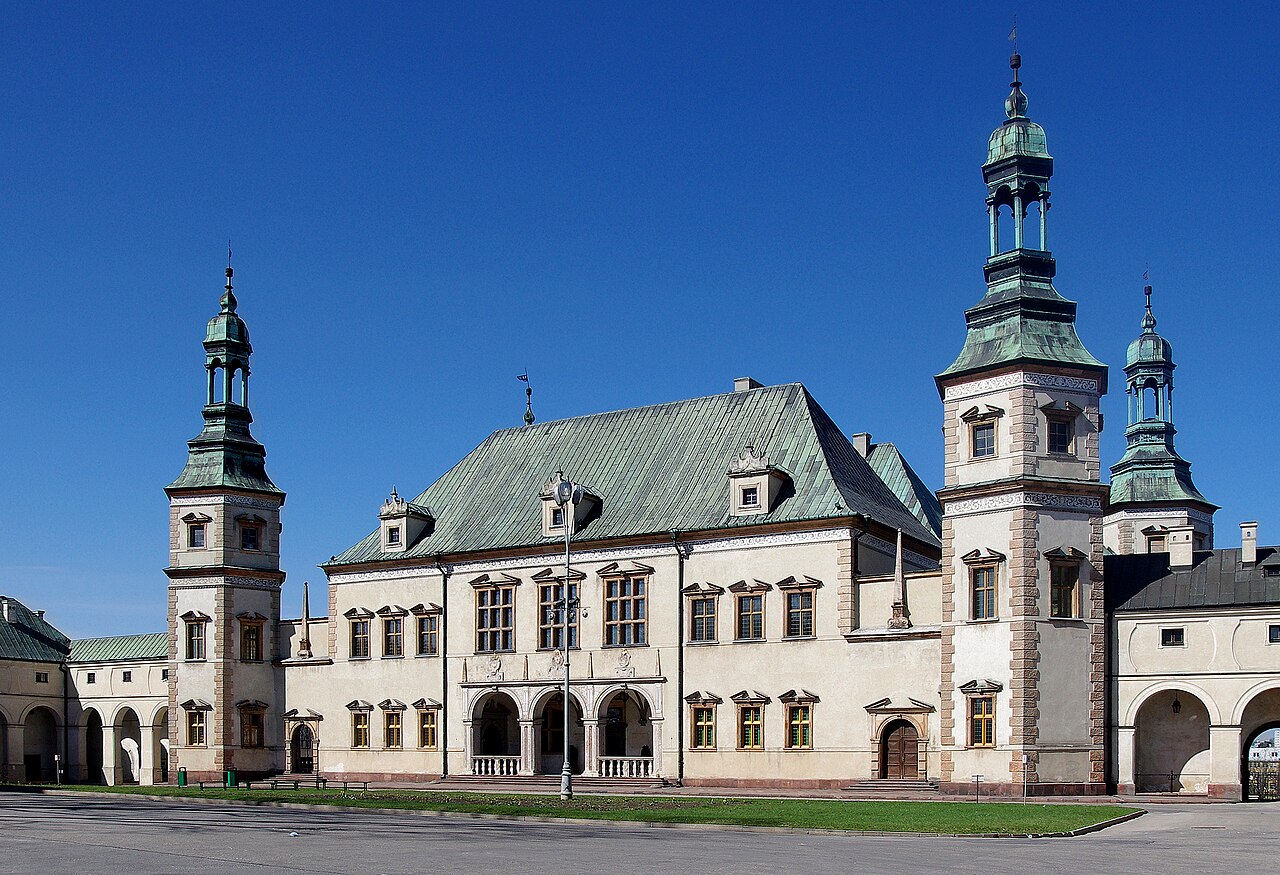

What to see
- The Świętokrzyskie Mountains — among the oldest mountain ranges in Europe, worn down over hundreds of millions of years into forested ridges rather than peaks. Łysa Góra and the Święty Krzyż monastery on top of it are the classic walk, half an hour east of the city.
- The Palace of the Kraków Bishops — a seventeenth-century residence in the middle of Kielce with its original interiors largely intact, which is rare in Poland.
- Kadzielnia — a former limestone quarry inside the city, now a reserve with an amphitheatre and caves, with fossils in the rock face.
- The handball. Kielce's handball club is one of the strongest in Europe and routinely outdraws the football in local attention. If you are here on the right night and want an unusual entry in a sporting collection, look at their fixture list too.
What to eat, and where
The Świętokrzyskie region cooks from what grows in poor soil and thick forest:
- Prażonki — potatoes, bacon, sausage and vegetables cooked slowly in a pot, traditionally over a fire in the fields. The regional dish.
- Zalewajka — sour rye soup with potatoes and mushrooms, which you also find westward towards Łódź.
- Forest mushrooms — in season this region is serious about them, and it shows on menus in autumn.
The restaurants concentrate around ul. Sienkiewicza, the main pedestrian street, which runs through the middle of the city and is the obvious place to spend the hours before kick-off.
Common questions
Why do sources disagree about the capacity?
Because of the mandatory buffer zone between home and away sections. The nominal figure and the league-match figure are both real; they measure different things.
How does Kielce fit into a route?
It sits between Warsaw and Kraków, so it works as a stop on that journey rather than a destination. Break the trip here rather than making a special one.
What made it "the first modern stadium"?
Three things that are now standard and were not then: no athletics track, so the stands sit on the touchline; a roof over every seat; and a pitch built for football with undersoil heating rather than a municipal athletics surface with goals on it. Polish grounds before this were mostly communist-era bowls with a running track and open terracing. Kielce was the first to be built without any of that, and within a decade the whole country followed.
Is the mountain trip realistic before a match?
For an evening kick-off, yes. Święty Krzyż and back is a morning. For an early afternoon fixture, do it the following day.
The first modern ground in a country is a specific kind of entry — and the sort of thing a list is for. Add Kielce to your bucket list and break the Warsaw–Kraków journey around it.