 Groundhopper
Start free
Groundhopper
Start free
Portsmouth stadium guide — Fratton Park, Portsmouth
The oldest surviving Archibald Leitch truss in Britain, a mock-Tudor pavilion given to the club in 1905, and a chant older than most football clubs.

The oldest ironwork in English football
Archibald Leitch was the Scottish engineer who built most of British football's grandstands in the first half of the twentieth century, and whose criss-cross steel balcony truss is the single most recognisable piece of design in the British game. Most of them have gone.
Fratton Park has the oldest one left. The South Stand's truss dates from Leitch's 1925 reconstruction, and it is the oldest surviving example anywhere in the UK. If you have any interest at all in what football grounds looked like before the 1990s, this is the thing to come and stand in front of.
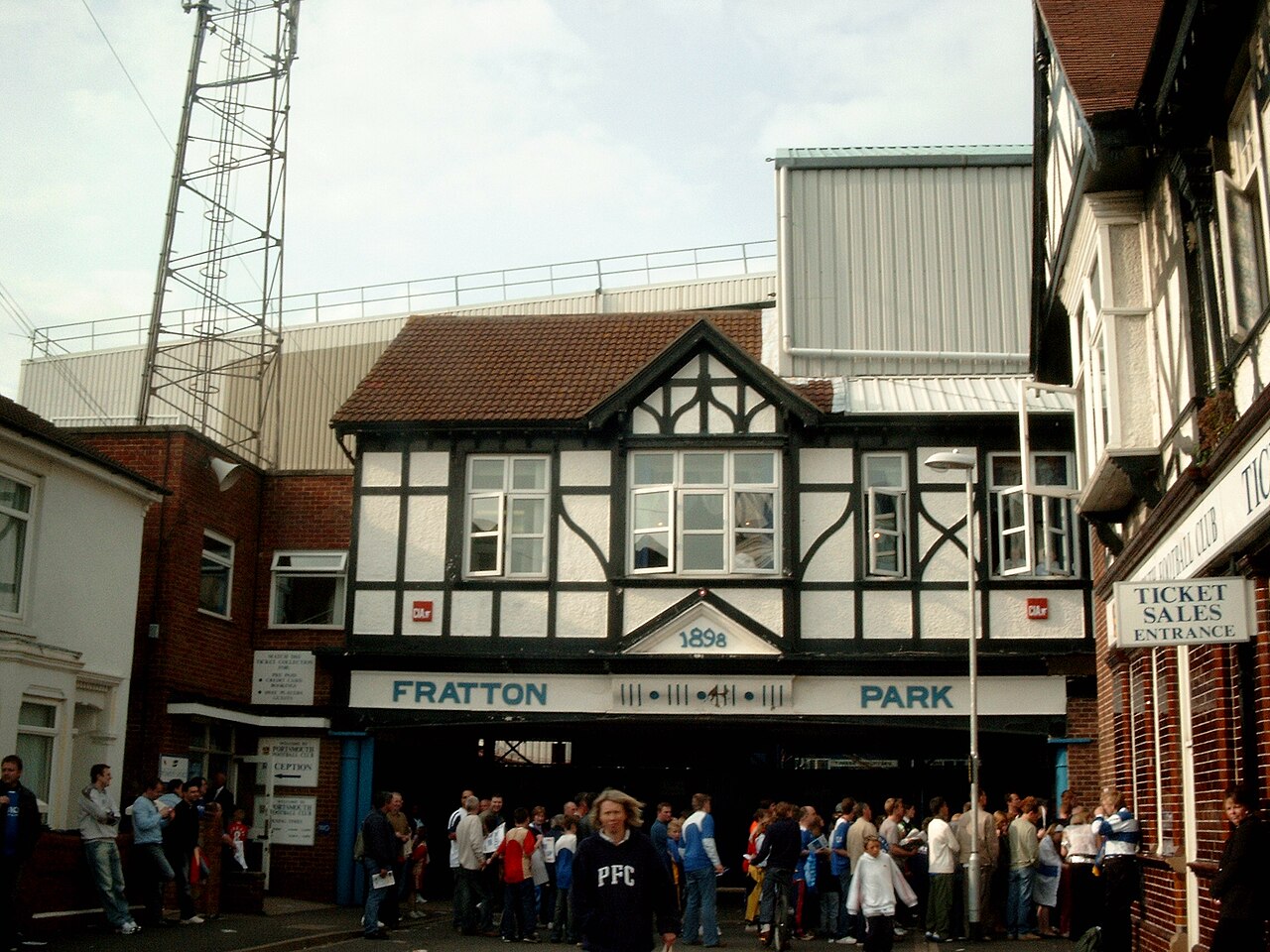
There is more of the same vintage. The mock-Tudor pavilion at the south-west corner was given to the club in 1905 by a director, Sir John Brickwood, and is still there. So is The Pompey, a former pub built in 1900 that now houses the ticket office and is the oldest building on the site.
A note this series will return to in the Bradford City guide: Leitch also built Valley Parade's main stand in 1911, in wood. What survives at Portsmouth in steel is the same man's work.
Standing in the Championship
The English rule, as set out in the Luton and Accrington guides, is that the top two divisions are all-seater and terracing survives in the third tier and below.
Portsmouth is where that needs qualifying. Since August 2023 the Fratton End has licensed standing — rail seating, where a seat locks flush into a waist-high barrier so people can stand safely in a designated area. Trials began in the Premier League and Championship in January 2022 and have spread since.
So the accurate version is: you cannot stand on a terrace in the top two divisions, but you can now stand in a licensed rail-seated area at a growing number of clubs. If standing matters to you, check whether your fixture and your stand are covered.
Getting there
- By train: Fratton station is a short walk from the ground and is the stop to use, not Portsmouth Harbour. London Waterloo is about an hour and forty minutes.
- From the ferry: Portsmouth is a major ferry port with sailings to France and Spain. Arriving at a football match by overnight ferry is available here and at very few other grounds in this series.
- Match ticket and transport: as everywhere in England, the ticket does not cover local transport.
Tickets
The English pattern: no document demanded, sale online through the club, away allocations routed through the visiting club. As a neutral you buy a home seat.
Portsmouth are one of the better-supported clubs at this level and Fratton Park is not large. Treat this as a difficult ticket by Championship standards — not Wrexham, but do not leave it to the week of the match. Season-ticket holders and members take a large share.
The ground itself, and the noise
Four stands, tight to the pitch, no running track, and an atmosphere that has a considerable reputation in England. The Fratton End is where it comes from.
What visitors mostly come for is the Pompey Chimes — the crowd singing "Play up Pompey, Pompey play up" to the rhythm of a chiming clock, one of the oldest continuously sung football chants in the world. There is also a bell, rung by a supporter, and it is taken seriously.
Do not arrive at kick-off. The pre-match at Fratton Park is most of the point.
Where away fans sit
Visiting supporters use the Milton End, the smallest stand at around 3,200. It is partly open to the weather, which on the south coast in winter is a genuine consideration. Bring a coat and check the forecast rather than assuming a roof.
The alcohol rule
Under the Sporting Events (Control of Alcohol etc.) Act 1985 you may not drink alcohol within sight of the pitch. Concourse only, sale stopping around fifteen minutes before kick-off and resuming at half-time.
Worth noting where that Act came from: it was passed in the summer of 1985, in the immediate aftermath of a catastrophic season for English football that included the Bradford City fire in May. The law you are obeying at the bar has a specific and grim origin.
Eating and drinking at the ground
English football catering: pies, chips, Bovril. Concourse beer only. Card payment throughout.
Outside the ground, Portsmouth is a naval town with a serious pub culture and the pre-match drink is where the day actually happens.
Portsmouth before the match

What to see
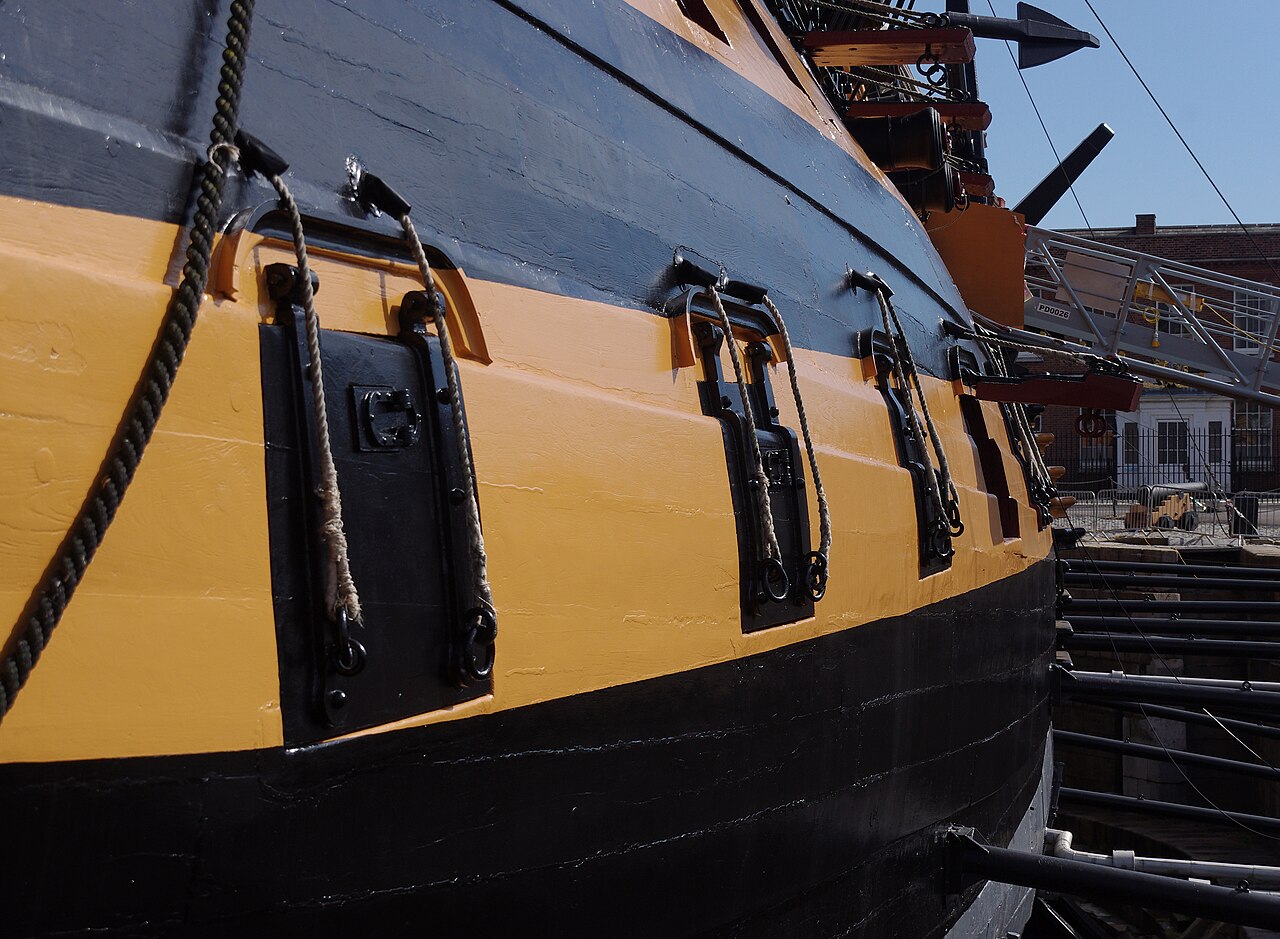
Portsmouth has been the home of the Royal Navy for five hundred years, and the historic dockyard is genuinely world-class:
- HMS Victory — Nelson's flagship from Trafalgar, in dry dock, and the oldest commissioned warship in the world. You walk through it.
- The Mary Rose — Henry VIII's warship, sunk in 1545, raised from the Solent in 1982 and now displayed in a purpose-built museum with thousands of objects recovered from the wreck.
- HMS Warrior — the first iron-hulled armoured warship, from 1860, also afloat and open.
- The Spinnaker Tower — 170 metres above the harbour, with a glass floor, and the best view of the Solent and the Isle of Wight.
- Southsea — the seafront, with a castle, a common and a pebble beach. Charles Dickens was born in this city and there is a small museum in the house.
What to eat and drink
- Fish and chips — on the south coast, from a proper shop, eaten out of the paper. Ask for salt and vinegar and do not negotiate.
- Local seafood — crab, mackerel and oysters along the coast either side.
- A pint of bitter — the naval city has old pubs and takes them seriously.
- Pompey Royal — the local bitter historically brewed by Brickwoods, the family who gave the club its Tudor pavilion. Revived versions turn up around the city.
Common questions
What are the Pompey Chimes?
A chant sung to the rhythm of a chiming clock — "Play up Pompey, Pompey play up" — and one of the oldest football chants still in regular use anywhere. Get in early enough to hear it properly.
Can I stand at Fratton Park?
In the licensed rail-seated area of the Fratton End, yes, since August 2023. Not on a terrace — the Championship has none.
Is the Leitch stand really the oldest?
The truss from his 1925 rebuild is the oldest surviving Leitch truss in the UK. Several grounds have Leitch fabric; this is the senior piece.
Which end will I be in as a neutral?
A home stand, and probably a side. The Milton End is for visiting supporters and is partly uncovered.
The oldest Leitch truss in Britain, a Tudor pavilion from 1905, and a chant older than most clubs. Add Fratton Park to your bucket list and give the dockyard a full morning.