 Groundhopper
Start free
Groundhopper
Start free
Bradford City stadium guide — Valley Parade, Bradford
Twenty-five thousand seats in the third tier, a UNESCO village three miles away, and the fire of 1985 that ended wooden stands in British football.
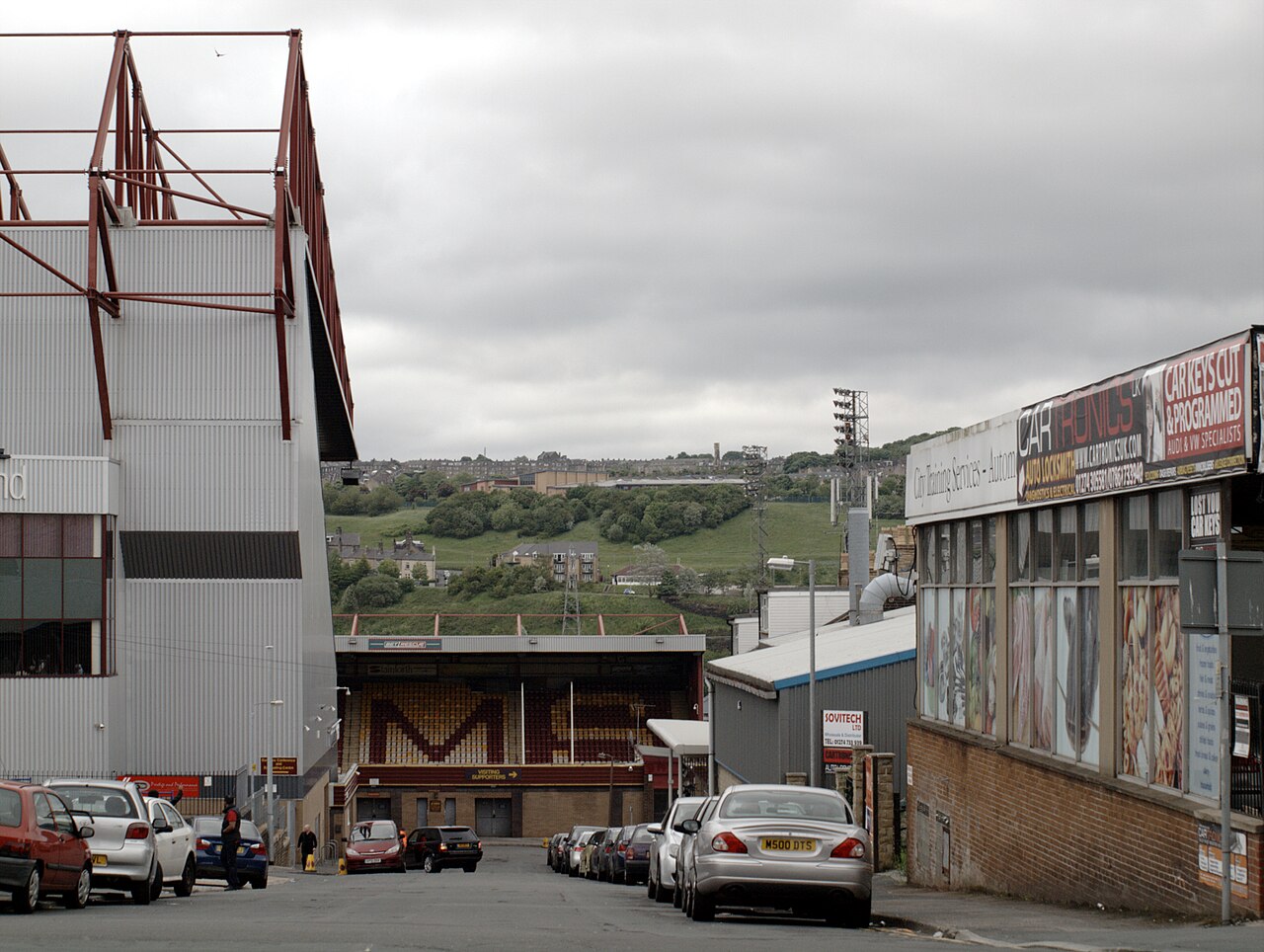

11 May 1985
It was the last day of the season and Bradford City were being presented with the Third Division championship trophy. The opponents were Lincoln City.
The main stand had been built in 1911 by Archibald Leitch, in timber, with a wooden roof covered in bituminous felt. Rubbish had accumulated in the void beneath the floorboards over many years. The stand had already been officially condemned and was due to be replaced with a steel structure as soon as the season ended.
A dropped cigarette fell through a gap in the floorboards into that rubbish. The entire stand was consumed in about 270 seconds — four and a half minutes. Fifty-six people were killed, fifty-four Bradford supporters and two from Lincoln, and at least 265 were injured. Eleven of the dead were under eighteen; twenty-three were sixty-five or over.
The Popplewell Inquiry followed. New wooden grandstands were banned at British sports grounds, unsafe existing ones were closed, smoking was prohibited in those that remained, and a new safety regime was imposed across the country.
Two disasters, one architect, and every ground you will visit
This series covered Hillsborough in the Sheffield Wednesday guide: 1989, crushing, fences, the Taylor Report, all-seater stadiums. Bradford is the other half of the explanation, and it comes first.
- 1985, Bradford: fire in a timber stand — no more wooden grandstands anywhere in Britain.
- 1989, Hillsborough: crushing behind fences — fences removed, top two divisions made all-seater.
There is a detail that is hard to shake. Archibald Leitch built both the stand that burned here in 1911 and the truss at Portsmouth that this series recommends going to admire. The same engineer's steelwork is the most treasured surviving fabric in English football; his timber, in this one case, killed fifty-six people. Both facts are true and neither cancels the other.
A memorial stands outside the ground on Valley Parade, and there is another in the city centre. Treat both the way you would treat any memorial.
Twenty-four thousand in the third tier
Valley Parade holds 24,840, which for a League One club is remarkable, and Bradford routinely take crowds that embarrass clubs two divisions above them.
The ground is built into a hillside in a residential district north of the centre, which is why the stands are wildly different heights — the main stand rises in two enormous tiers on one side while the far end is comparatively low. It is one of the more visually striking grounds in England precisely because it was never planned as a whole.
The practical consequence for you: a big ground, third-tier opposition, and tickets that are generally obtainable. As at Sheffield Wednesday, this is the combination worth travelling for.
Getting there
- On foot: about twenty minutes uphill from Bradford Forster Square station. Note the word uphill; the ground is above the city.
- By train: Leeds is twenty minutes away and has far more hotels and trains. Manchester is about an hour and a half.
- Nearby grounds: Leeds, Huddersfield, Barnsley and both Sheffield clubs are all within an hour. Yorkshire is second only to Lancashire for density in England.
- Match ticket and transport: not included, as everywhere in England.
Tickets
The English pattern: no document demanded, online sale, away allocations through the visiting club. Buy a home seat as a neutral.
Nearly twenty-five thousand places means most fixtures are straightforward, though Bradford's support is large enough that a promotion push tightens things. Buy a week or two ahead and you will be fine.
The alcohol rule
Under the Sporting Events (Control of Alcohol etc.) Act 1985, no alcohol within sight of the pitch. Concourse only, sale stopping around fifteen minutes before kick-off.
That Act was passed in July 1985 — two months after the fire in this stadium, in a summer when Parliament was legislating about football in a hurry. The restriction you meet at the bar dates from the same season as the disaster commemorated outside the ground.
Where away fans sit
Visiting supporters have their own section with the allocation set per fixture. English grounds segregate strictly. Neutrals should take a home seat on the side.
Eating and drinking at the ground
Pies, chips, Bovril, and concourse beer. Card payment throughout.
Save your appetite. The reason is in the next section.
Bradford before the match
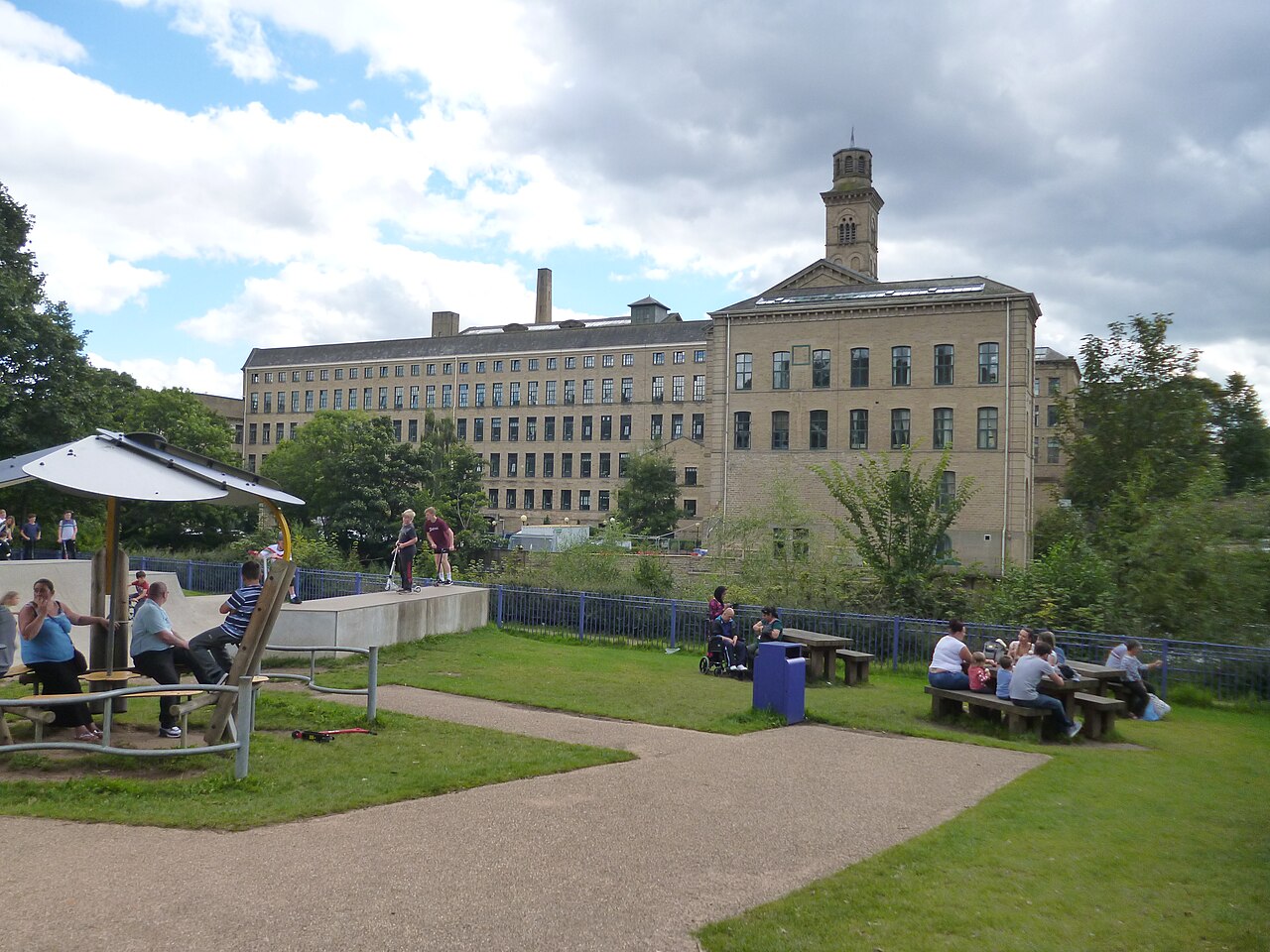

What to see
- Saltaire — a UNESCO World Heritage Site three miles away: a complete Victorian model village built by the mill owner Titus Salt for his workers, with the vast Salts Mill now holding a permanent collection of David Hockney, who was born in Bradford. The single best half-day anywhere in the English series so far.
- The National Science and Media Museum — in the city centre, free, and covering photography, film, television and video games. It holds the world's earliest surviving negative.
- The Bradford Industrial Museum — a preserved worsted mill with working machinery and the mill owner's house alongside the workers' cottages.
- The Brontë Parsonage at Haworth — about forty minutes away, where the Brontë sisters wrote, with the moors behind it.
What to eat and drink
This is the important part. Bradford has repeatedly been named the curry capital of Britain, and the South Asian cooking here is the best reason to arrive hungry:
- A Kashmiri or Punjabi curry — from a proper unlicensed café rather than a tourist restaurant. Many are bring-your-own or serve no alcohol at all; ask first.
- Naan the size of the table — several Bradford places serve a family naan that arrives on its own stand and has to be seen.
- Yorkshire pudding — the other local speciality, with roast beef and gravy.
- Cask bitter — Yorkshire is strong country for it, served cool and often with a thick head.
Common questions
Is it appropriate to visit given what happened here?
Yes. It is a working ground with a memorial outside it, and the city marks the anniversary every year. Read the memorial, understand what it is for, and then watch the football.
How hard is a ticket?
Not hard. Twenty-five thousand places in the third tier, and one of the better-attended grounds at this level in Europe.
What should I do with a spare morning?
Saltaire. A UNESCO World Heritage village with a Hockney collection inside a Victorian mill, three miles from the ground, and almost no visiting football supporter goes.
Can I combine it?
Leeds is twenty minutes, Huddersfield and Barnsley under an hour, Sheffield about an hour. Yorkshire supports a three-ground weekend easily.
Twenty-five thousand in the third tier, a UNESCO village three miles away, and the best curry in Britain. Add Valley Parade to your bucket list and give Saltaire the morning.