 Groundhopper
Start free
Groundhopper
Start free
Piast Gliwice stadium guide — Stadion Piotra Wieczorka, Gliwice
A ten-thousand-seat ground belonging to a champion of Poland, ten minutes from Zabrze — and the tallest wooden structure in the world down the road.

The smallest champions in Poland
Gliwice is a town of under 180,000 people with a ten-thousand-seat football ground, and in 2018–19 it won the Ekstraklasa.
Piast finished the season four points clear of Legia Warsaw, sealing it by beating Lech Poznań 1–0 in the thirty-seventh round under Waldemar Fornalik. They finished second the following season. It remains the club's only title and they carry the white star above the crest for it.
For a groundhopper this is the appeal. Big grounds are easy to find; a modest, well-kept, full-to-the-corners stadium belonging to a club that beat everybody is a much better afternoon than another half-empty bowl.
Getting there
The stadium is at ul. Okrzei 20, close to the middle of Gliwice rather than out on a ring road.
- From Katowice: around twenty-five to thirty minutes by train, running frequently. Most visitors base themselves in Katowice and treat Gliwice as a short hop.
- From Zabrze: ten minutes by train. Gliwice and Zabrze are effectively neighbours, which is why a double here is realistic.
- Locally: the ground is walkable from Gliwice's centre and served by city buses.
Buy and validate a transport ticket before boarding. Inspections happen and visitors are not excused.
Tickets: what actually works for a foreigner
The Polish system applies here as everywhere: personalised tickets tied to an account, with the online form built around a PESEL — the Polish national identification number. Without one the purchase stops at the last field.
Bring your passport and buy in person. Photographic identification is what the ticket window needs, and a foreign visitor is not required to hold a supporter card.
Ten thousand seats is a small ground. An ordinary league fixture is usually obtainable, but a Silesian derby — Górnik or GKS Katowice — is not something to leave until matchday. Judge the fixture, not the average.
Where away fans sit
Away allocations are set per fixture according to the policing category of the match, so confirm the sector for your specific game rather than relying on a previous season's arrangement. At a ground this size the visiting allocation is modest and goes quickly when there is a travelling following.
Neutrals should ask for a side stand.
The ground itself
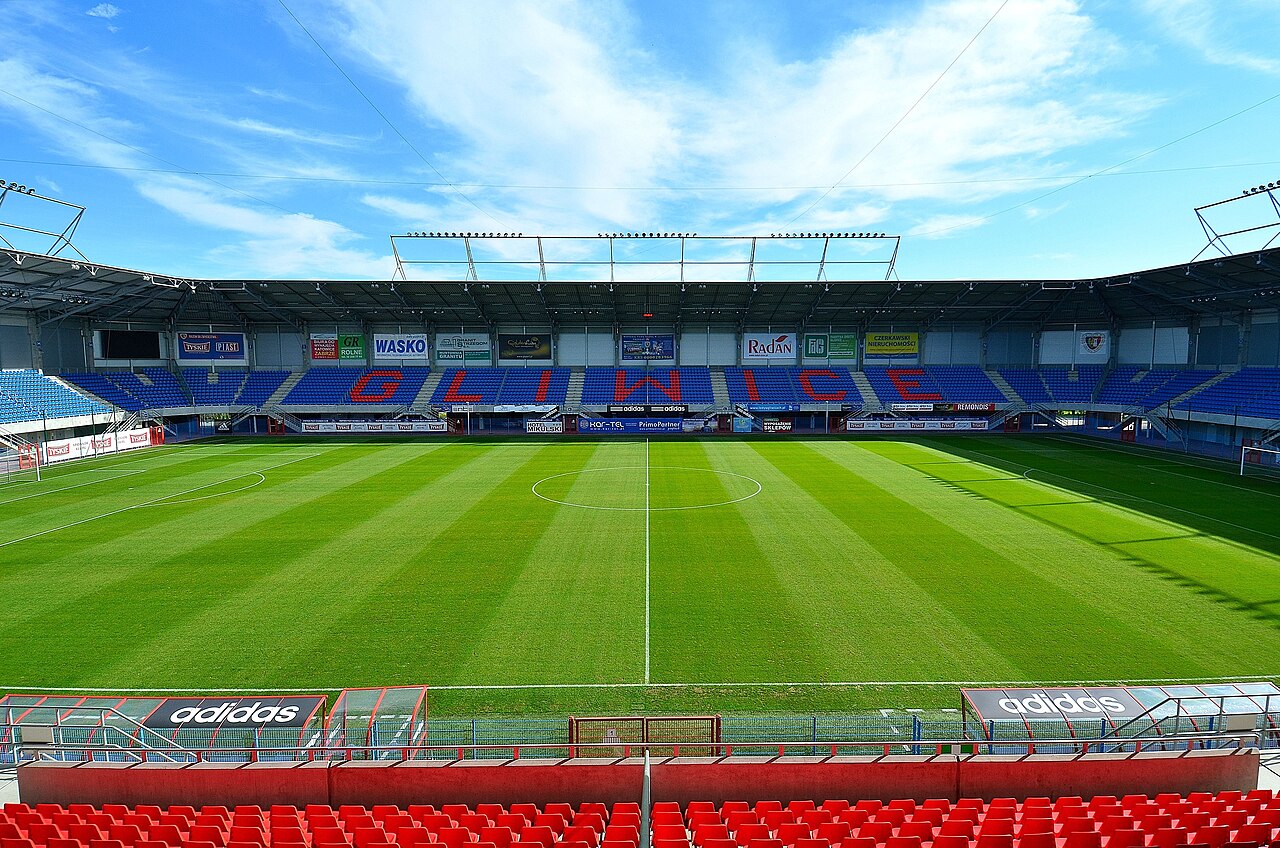
The stadium was completely rebuilt between September 2010 and July 2011: four stands, all seated, all covered, no running track, meeting UEFA standards. Capacity is a shade over ten thousand.
It is not a remarkable piece of architecture and it does not pretend to be. What it is, is finished — which in a country where several grounds have spent a decade half-rebuilt is worth something. It carries the name of Piotr Wieczorek, a Piast player and later a figure at the club.
Eating at the ground
The Polish stadium standard, on a small scale: kiełbasa off a grill in a roll with mustard, zapiekanka, hot dogs, chips.
- Beer is capped at 3.5% ABV by Polish law on mass events, and availability depends on the security category of the fixture.
- Bring a card. Assume cashless.
Silesian regional cooking — rolada, kluski śląskie, modra kapusta, krupniok — is the reason to eat off the ground, and Gliwice's centre is a short walk away. Katowice has the better choice if you are staying there.
Gliwice before the match
What to see
Gliwice has one site of genuine world-historical importance, and most people who pass through the town have no idea it is there.
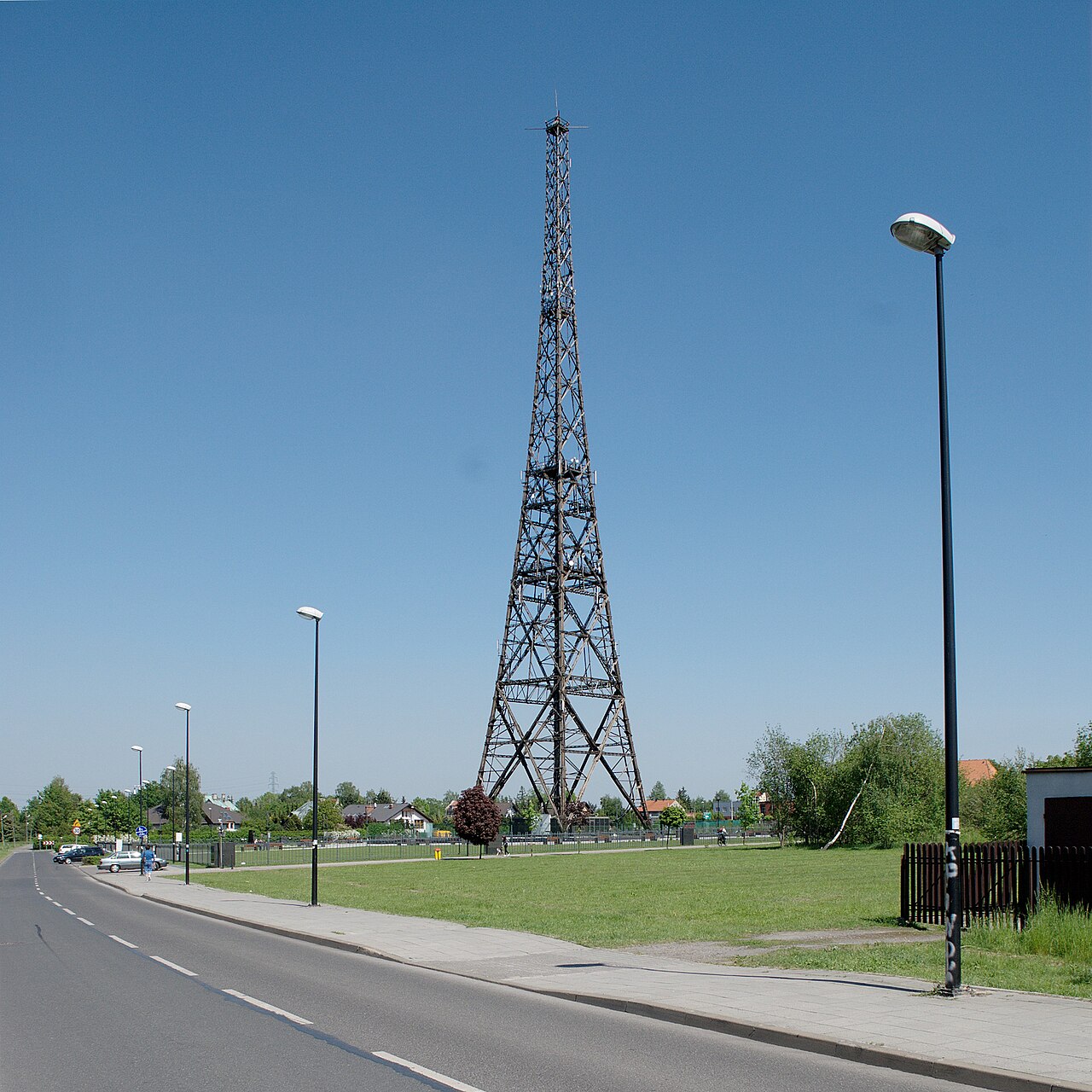

- The Gliwice Radio Tower. A 112-metre wooden mast completed in 1935, built from impregnated Siberian larch and assembled entirely with brass screws — not a steel nail in it. It is the tallest standing wooden structure in the world and the only surviving wooden broadcasting tower of its kind.
- What happened underneath it. On 31 August 1939 the radio station was the site of the Gleiwitz incident: a staged attack by German operatives dressed as Poles, used the next morning as a pretext for the invasion of Poland. A local Silesian, Franciszek Honiok, was abducted and killed there and is often described as the first victim of the war. The station is now a museum. Standing at the foot of that tower is not like visiting another town's local attraction.
- The Kłodnica Canal and marina — Gliwice is an inland port, connected to the Oder, which is not what anyone expects of a Silesian town.
- The old town and Piast Castle — small, compact and easily done in the hour before kick-off.
What to eat, and where
You are in Upper Silesia, so order the regional plate: rolada (beef roulade rolled around bacon, onion and pickled cucumber), kluski śląskie (round potato dumplings with a dimple to hold the sauce) and modra kapusta (red cabbage with apple and bacon). The three together are the dish of the region and any decent kitchen serves them as one plate.
Gliwice's restaurants cluster around the old town square. For a wider choice, the regional authority's Śląskie Smaki trail lists certified restaurants across the voivodeship at slaskiesmaki.pl — more durable than any single address.
Common questions
Can I combine Gliwice with Zabrze?
Easily. They are ten minutes apart by train. If the fixture list puts both at home across a weekend, that is two grounds for one hotel booking.
Is the ground worth the trip on its own?
On its own, probably not — it is a solid modern 10,000-seater rather than a spectacle. As part of a Silesian weekend, absolutely, and the radio tower justifies the morning regardless of the football.
Where should I stay?
Katowice, unless you have a reason not to: more accommodation, better evenings, and everything in the conurbation within half an hour.
Two grounds in a day is normal in this region and difficult almost everywhere else. Add Gliwice to your bucket list and pair it with Zabrze.