 Groundhopper
Start free
Groundhopper
Start free
Holstein Kiel stadium guide — Holstein-Stadion, Kiel
German champions in 1912, and it took another hundred and twelve years to reach the Bundesliga. Fifteen thousand places on a Baltic fjord.

Champions of Germany, 1912
Holstein Kiel won the German championship in 1912, beating Karlsruhe in the final. That is the club's one national title and it is older than the Bundesliga, older than the Weimar Republic and older than most of the stadiums in this series.
For the century that followed they were a small northern club playing in front of small northern crowds, and they only reached the top flight for the first time in 2024. A hundred and twelve years between a championship and a first season in the Bundesliga is, as far as anyone can establish, a gap without parallel in European football.
They are back in the second division now. The ground has not changed much, which is the reason to come.
Fifteen thousand, in a city of a quarter of a million
The Holstein-Stadion holds 15,034, which put Kiel among the very smallest grounds ever to host Bundesliga football — a distinction they have now handed on to Elversberg.
The practical effect for a visitor is the same as at Paderborn, Osnabrück and Heidenheim. You are close to the football. Small grounds with a full house sound better than large grounds with gaps, and this is a full house more often than the club's league position suggests.
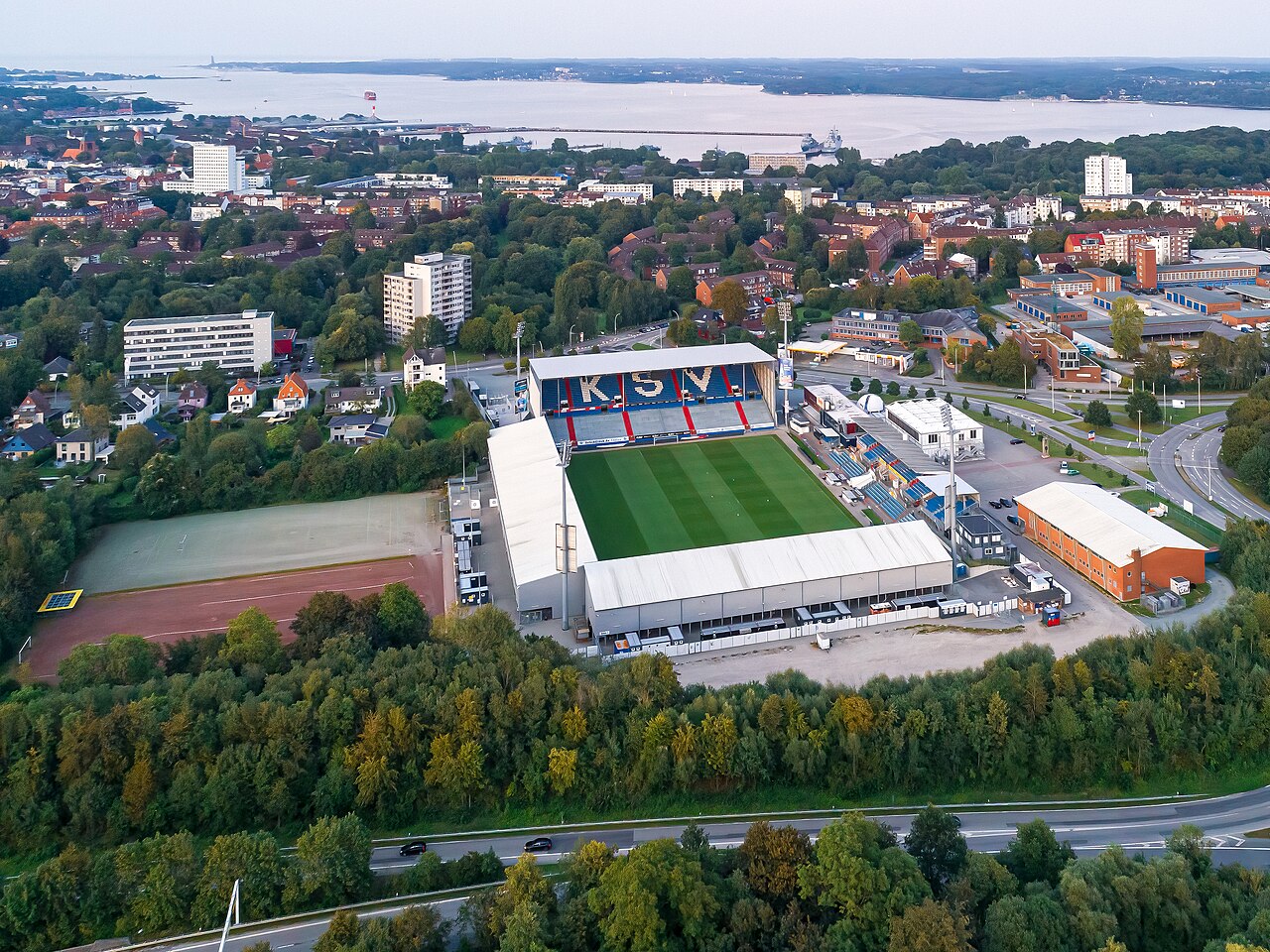
The ground is old, has been extended piecemeal, and looks it. Expect a proper north German football ground rather than an arena.
Getting there
- By bus or on foot: the stadium is close to the middle of the city and a reasonable walk from the Hauptbahnhof.
- By train: Hamburg is around an hour and a quarter, which makes Kiel a comfortable day trip and an obvious pairing with St. Pauli or HSV.
- By ferry: Kiel is a major Baltic port with overnight sailings to Oslo and Gothenburg. Arriving at a football match by ship is available here and almost nowhere else in this series.
- Match ticket and transport: as at most German grounds, the ticket covers local transport on the day.
Tickets
The German pattern: no document demanded, season-ticket holders and members first, general sale some weeks out. Buy from the club.
Fifteen thousand places against a city of a quarter of a million makes this harder than the division average. It is not St. Pauli, but leave a couple of weeks and do not assume you can walk up.
Where away fans go
Visiting supporters get the share German league rules require, which in a ground this size is a noticeable proportion of the whole. Arrangements are set per fixture, so confirm yours. Neutrals should take a side stand and expect to be close to everything.
The ground itself
Fifteen thousand places, built up over decades rather than designed in one go, football-specific, with terracing and a low roofline. It is not a showpiece and there is no point pretending otherwise.
What it is, is one of the last genuinely small grounds in German professional football, in a city that is worth the trip regardless. Collect it while it exists in this form; clubs that reach the top flight generally do not leave grounds like this alone for long.
Eating and drinking at the ground
Northern catering, which on the Baltic means fish alongside the usual: Bratwurst, Currywurst, and Fischbrötchen — a roll with pickled or fried fish, as in Hamburg. Beer at full strength, and Lübecker Rotspon or a schnapps if the wind is up.
Payment by stadium card: load it on arrival, cash out afterwards. Cups carry a Pfand deposit.
Kiel before the match

What to see
Kiel was a naval base, was bombed to almost nothing, and rebuilt plainly. The city is about the water rather than the architecture:
- The Kiel Fjord — the inlet the city sits on, with a promenade along it and small ferries running up and down as ordinary public transport. Take one.
- Kieler Woche — the last full week of June, and the largest sailing event in the world, with several thousand boats and millions of visitors. If your fixture falls in it, book accommodation months ahead. If it does not, you have missed the best week here.
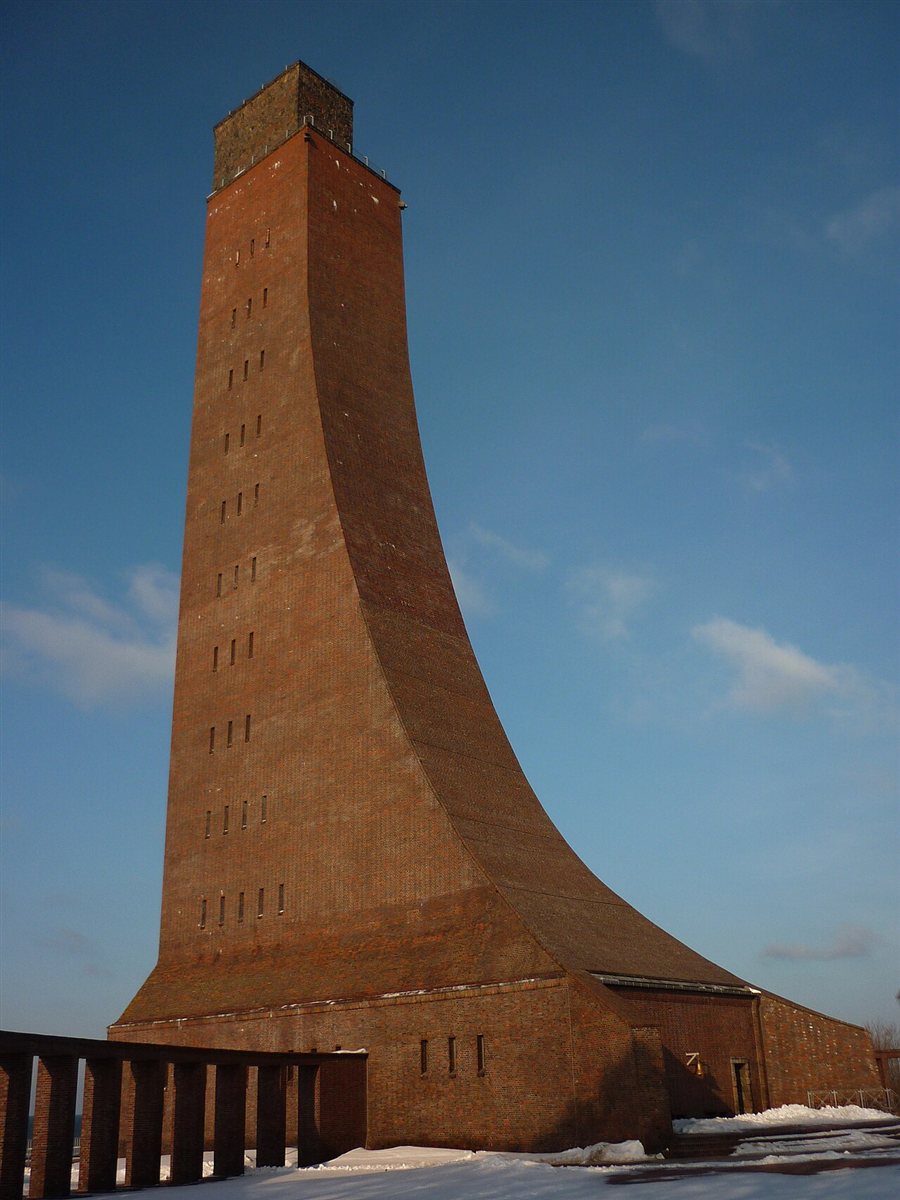
- The Laboe Naval Memorial — a tower at the mouth of the fjord commemorating sailors lost at sea, with a real U-boat, U-995, preserved on the beach beside it that you can walk through. Sobering and genuinely worth the trip out.
- The Kiel Canal — the artificial waterway linking the Baltic to the North Sea, and the busiest of its kind in the world. Watching container ships cross a field is a better hour than it sounds.
What to eat and drink
- Kieler Sprotten — smoked sprats, the city's own, eaten whole on dark bread.
- Labskaus — the north German sailors' dish of salt beef, potato and beetroot with a fried egg and a rollmop.
- Fischbrötchen — at the harbour, standing up, as in Hamburg.
- Holsteiner Katenschinken — the regional smoked ham, and a beer or a Köm, the north German caraway schnapps.
Common questions
Were they really champions in 1912?
Yes. It is the club's only national title and it stood alone for one hundred and twelve years before they first reached the Bundesliga.
How hard is a ticket?
Harder than the club's profile suggests, because the ground is small. Two weeks' notice is sensible.
Can I pair it with Hamburg?
Easily — an hour and a quarter by train. If Kiel and one of the Hamburg clubs are at home across a weekend, that is a straightforward two-ground trip with one hotel.
Why are they called the storks?
Die Störche comes from the club's blue and white and the bird's association with the region. You will see it on flags and hear it in the chants long before anyone explains it.
When should I go?
Any fixture works, but a match during or near Kieler Woche in late June turns a football trip into something else entirely. Book early if you try it — the whole city is full, and the harbour is worth more of your day than the football.
A championship from 1912, fifteen thousand places, and the world's biggest sailing week on the fjord outside. Add the Holstein-Stadion to your bucket list and hang it off a Hamburg weekend.