 Groundhopper
Start free
Groundhopper
Start free
DAC Dunajská Streda stadium guide — DAC Aréna, Dunajská Streda
A new 12,700-seat arena in a town where three quarters of the population are ethnic Hungarians — and where the football happens in a different language from the league.

A Hungarian club in the Slovak league
Dunajská Streda — Dunaszerdahely in Hungarian — sits on the Žitný ostrov, the flat island between two arms of the Danube east of Bratislava. The region was part of Hungary until the borders were redrawn after the First World War, and the population never changed with them. Around 75 per cent of the town is ethnically Hungarian.
DAC is the football expression of that. The chants are in Hungarian, the flags are Hungarian, the club is followed on both sides of a border twenty kilometres away, and the whole thing operates inside the Slovak league system with a Slovak licence.
For a visiting groundhopper this is genuinely unusual: a top-division club in one country whose matchday runs in the language of another. Central Europe has plenty of complicated history; not much of it is this legible from a seat in a stand.
A word of care, because it deserves one. This is a live identity rather than a curiosity, and the politics around it are real. Go, watch, listen, and do not treat somebody's community as an exhibit.
Getting there
- From Bratislava: around an hour by train or road, running regularly. This is an easy day trip from the capital.
- From Budapest: roughly two hours, which is why a substantial part of the support arrives from Hungary.
- From Vienna: about two hours in total via Bratislava.
- Locally: Dunajská Streda is small — the ground is walkable from the station and the centre.
Tickets
DAC sell online and at the ground, at prices low even by Slovak standards.
The same caveat as at every Slovak ground in this series: no national supporter-card scheme comparable to Poland's appears in Slovak clubs' published ticketing information, but this guide could not confirm the position as firmly as it can for Poland and Czechia. Try online, bring your passport, keep the ticket office as the fallback.
DAC draw well for a town of twenty-three thousand — the catchment is the whole region and a slice of Hungary. Matches against Slovan sell.
Where away fans sit
Allocations are set per fixture according to the policing category of the match, and at this ground in particular the arrangement for certain fixtures is managed carefully. Confirm the sector for your specific game rather than assuming.
Neutrals should ask for a side stand.
The ground itself
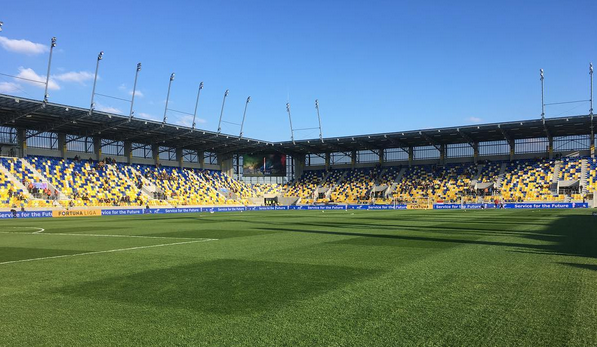
The DAC Aréna — also seen under a sponsor name — was built between 2016 and 2019 to replace the club's old municipal stadium on the same site. All seated, all covered, 12,700 places, and UEFA category four, which means it can host serious international fixtures.
For a town this size that is an extraordinary piece of infrastructure, and it is one of the newest and best-appointed grounds anywhere in this series. It fills more consistently than several larger stadiums in bigger cities do, because the support does not come only from the town.
What it is actually like in the stand
The practical experience differs from anywhere else in this series in one specific way: the matchday runs in Hungarian. Announcements, chants, the songs from behind the goal, the conversations around you. Slovak is everywhere too — this is a bilingual town, not a monolingual one — but the football happens in the minority language.
Two things follow. If you speak neither, you will follow the game exactly as you would anywhere, because football does not require the language. And if you have any interest in how borders and identity actually work day to day rather than in a museum, ninety minutes here explains more than a week of reading.
The club has invested heavily in its youth academy and its ground, and the ambition on show is disproportionate to the size of the town. That is what happens when a community decides a football club is the thing that represents it.
Eating and drinking at the ground
Slovak and Hungarian catering meet here, which is a better combination than either alone: sausage off a grill, langoš — the Hungarian lángos, fried dough with garlic, sour cream and cheese — and beer. Cheap, and the langoš is done properly.
Bring a card.
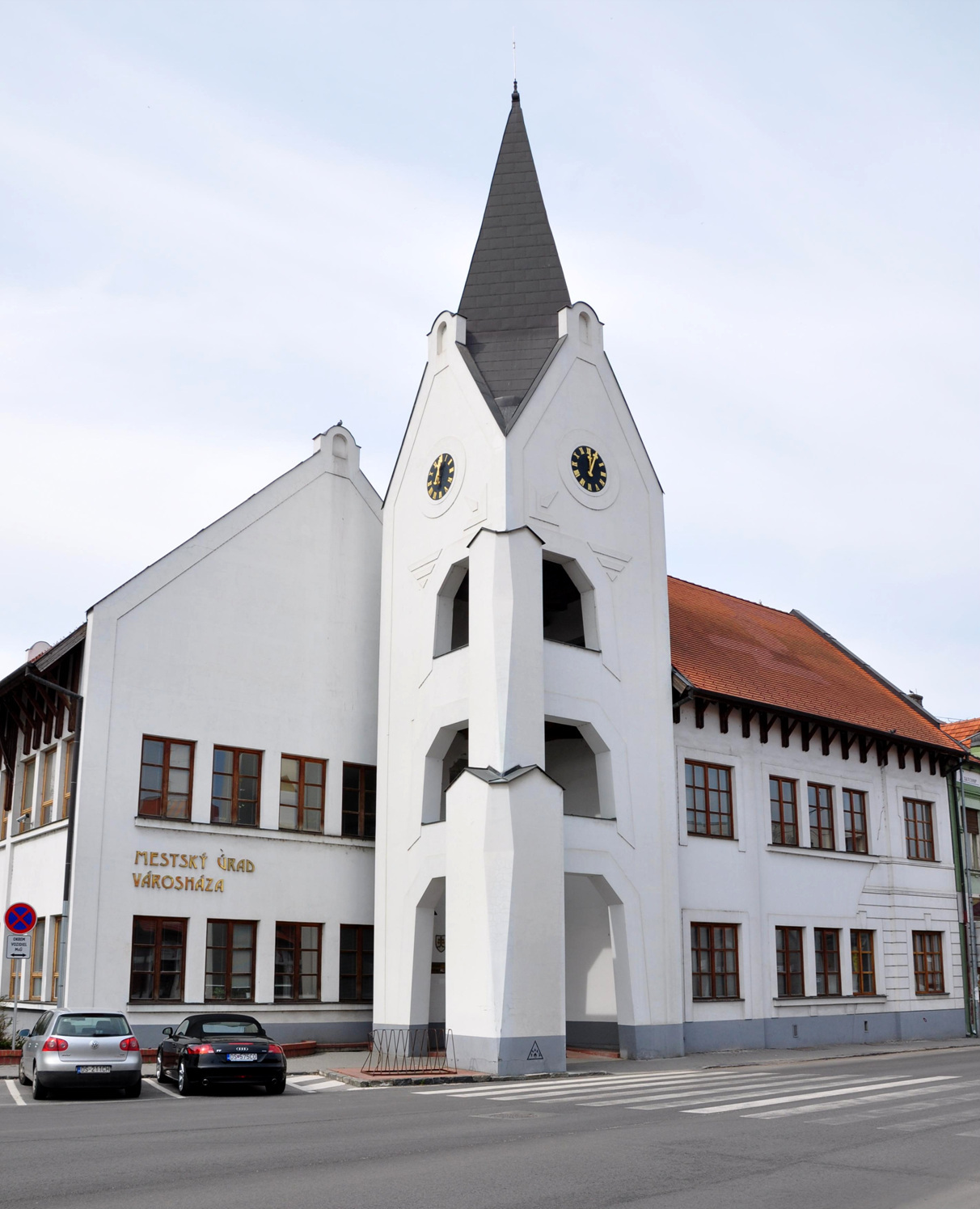
Dunajská Streda before the match

What to see
The town is small and the region is flat, so this is not a sightseeing weekend in the usual sense. What it offers instead:
- The Žitný ostrov — the largest river island in Europe, formed between two branches of the Danube, and the agricultural heart of southern Slovakia. Flat, green and utterly unlike the mountainous north of the country.
- Thermal baths — Dunajská Streda has a large thermal spa complex, and the region is full of them. This is what people from Bratislava come here for.
- Yellow Castle (Žltý kaštieľ) — the small baroque manor house in the town centre, now a museum.
- Bratislava — an hour away, and the sensible base if you want a city as well as a match.
What to eat and drink
This is where the trip becomes properly interesting, because the food here is Hungarian rather than Slovak:
- Lángos — fried dough with garlic, sour cream and cheese. Eaten here as a matter of course rather than as a novelty.
- Gulyás — the Hungarian version is a soup, not a stew, and the distinction matters to people here.
- Halászlé — paprika fish soup, made with Danube fish in a region that has always fished the river.
- Bryndzové halušky — the Slovak national dish is on menus too, and the contrast on one page is the point.
Common questions
Do I need Hungarian?
No, and you will hear both languages. Slovak and Hungarian are both in daily use here, and English works in the usual places.
Is it a day trip from Bratislava?
Yes, comfortably — about an hour each way. It is also reachable from Budapest, which is worth knowing if you are building a route through Hungary.
Which fixture should I choose?
Any home match will show you the language and the flags. For the fullest ground, a visit from Slovan.
A brand-new stadium in a small town, where the football happens in a different language from the league. Add Dunajská Streda to your bucket list and go from Bratislava.