 Groundhopper
Start free
Groundhopper
Start free
Sheffield Wednesday stadium guide — Hillsborough, Sheffield
Forty thousand seats in the third tier, at the ground where English football was forced to change after 1989 — and where every all-seater stadium in the country begins.

15 April 1989
On 15 April 1989 Hillsborough staged an FA Cup semi-final between Liverpool and Nottingham Forest. Liverpool supporters were allocated the Leppings Lane end. A crush developed in the two central standing pens, and 97 people died: 94 on the day, one fourteen-year-old four days later, one in 1993 and one in 2021, both after years of irreversible injury.
In the immediate aftermath supporters were publicly blamed. That account was false, and it took twenty-seven years to be formally undone. The 2016 inquests returned verdicts of unlawful killing, found that failures by police commanders, the club, the ambulance service and the design of the ground caused or contributed to the deaths, and concluded explicitly that the behaviour of supporters did not.
If you visit this ground, that is the fact to carry in with you. The people who died were blameless, and saying so plainly still matters a great deal in this country.
Why every English ground looks the way it does
The Taylor Report followed. It recommended removing the perimeter and lateral fencing that had turned terraces into pens, converting major grounds to all-seater, and rebuilding crowd safety practice from the ground up.
Everything a visitor notices about English stadiums descends from that. No fences between crowd and pitch. Seats rather than terraces in the top two divisions — a requirement relaxed in July 1992 for the third and fourth tiers, which is why terracing survives at Accrington and not here. Numbered seating, stewarding, capacities that are enforced rather than estimated.
This series has explained several national quirks by pointing at a law. In England the law has a date and a place, and the place is this one.
The largest ground outside the top two divisions
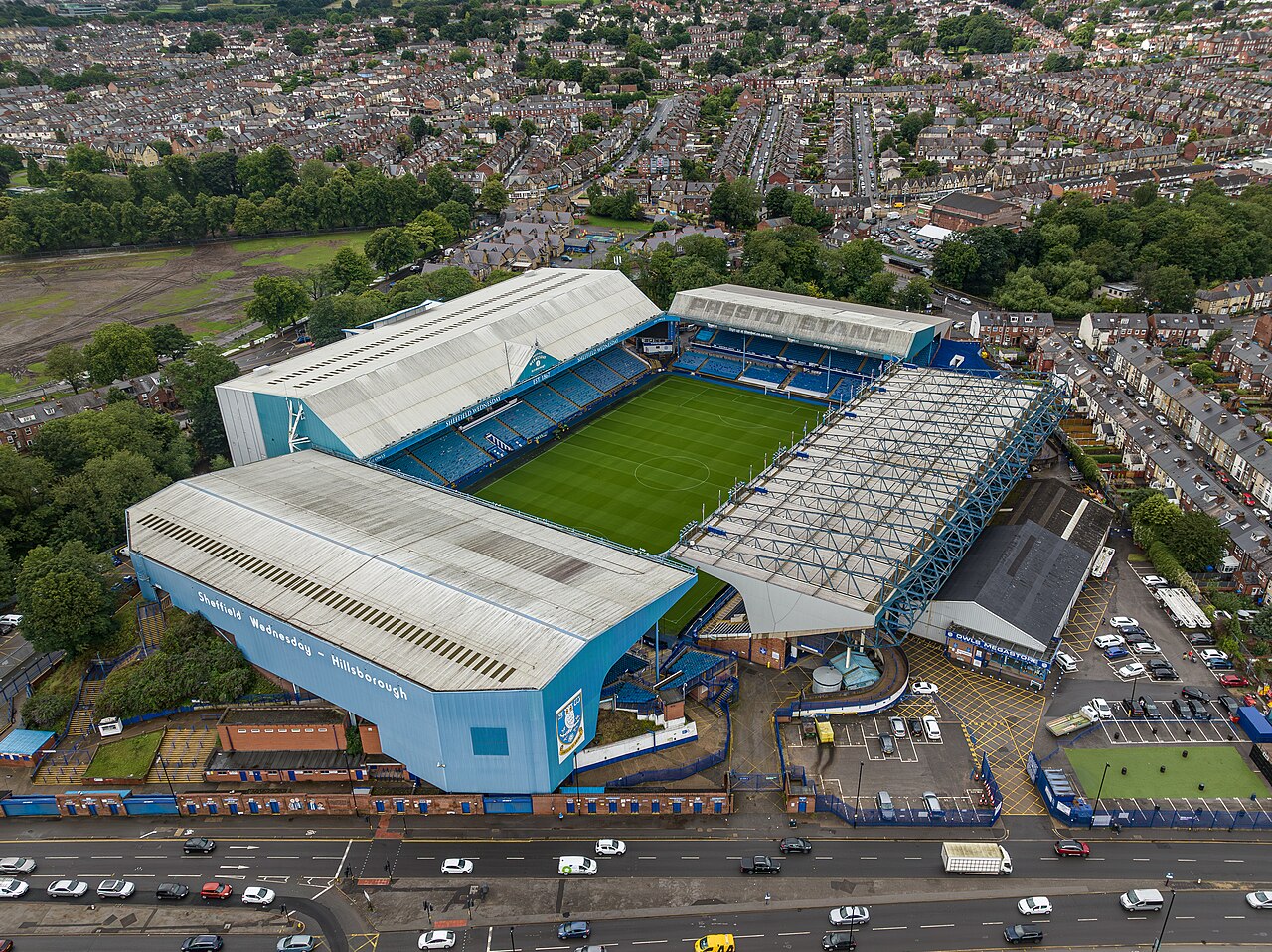
Hillsborough holds 39,732. Sheffield Wednesday are in League One.
Nothing else in England comes close at this level, and very little in Europe does. It puts Wednesday in the same category this series has built up in Germany — Hertha's 74,000 in the second division, Kaiserslautern's 49,000, Nürnberg's 50,000 — a stadium built for a bigger club than the one currently playing in it.
The practical consequence is the useful one. Forty thousand places against third-tier demand makes this one of the more obtainable large grounds in England, and Wednesday still take large crowds, so it is rarely a flat atmosphere either.
Getting there
- By tram and bus: Hillsborough is north-west of the city centre and served by the Sheffield Supertram to Hillsborough, then a short walk.
- By train: Sheffield is about two hours from London St Pancras and under an hour from Manchester or Leeds.
- The other Sheffield ground: Sheffield United's Bramall Lane is across the city and in the Championship. Two grounds in one city, one weekend, if the fixtures allow.
- Match ticket and transport: as everywhere in England, not included.
Tickets
The English pattern: no document demanded, online sale through the club, away allocations routed through the visiting club. As a neutral, buy a home seat.
Nearly forty thousand places in League One means most fixtures are straightforward. Derbies and promotion matches are not. Buy ahead but do not expect a fight.
Where away fans sit
Visiting supporters are housed at the Leppings Lane end, which is the stand involved in 1989 and has been substantially rebuilt since. Arrangements are set per fixture.
Visitors sometimes ask whether it is appropriate to sit there. It is an ordinary working stand at a football ground, used every fortnight, and nobody objects to people occupying it. What is not appropriate is treating it as a curiosity, photographing it as a spectacle, or making jokes about it — and this last needs saying because chanting about Hillsborough is a real and ugly problem at some English grounds. Do not join in with any of it.
The alcohol rule
Under the Sporting Events (Control of Alcohol etc.) Act 1985, alcohol may not be drunk within sight of the pitch. Beer is sold in the concourse, sale stops around fifteen minutes before kick-off and resumes at half-time.
Note the date. That Act came four years before Hillsborough and belongs to a period when English football was governed largely as a public-order problem. The fencing that killed people in 1989 came from the same thinking. The alcohol restriction survived; the fences did not.
The ground itself
Four stands, all-seater, football-specific, holding 39,732, with a large two-tiered Kop behind one goal. Parts of it are old and it looks it; the South Stand's roof and gable are among the more recognisable pieces of stadium architecture in England.
It is a proper big English football ground of a type that is becoming rare: not a new bowl, not corporate, built up in pieces across a century in a residential part of a northern city. Come for that, and for a crowd that turns out in numbers the division does not deserve.
Eating and drinking at the ground
English football catering: pies, chips, Bovril, and beer in the concourse only. Card payment throughout.
Sheffield before the match

What to see
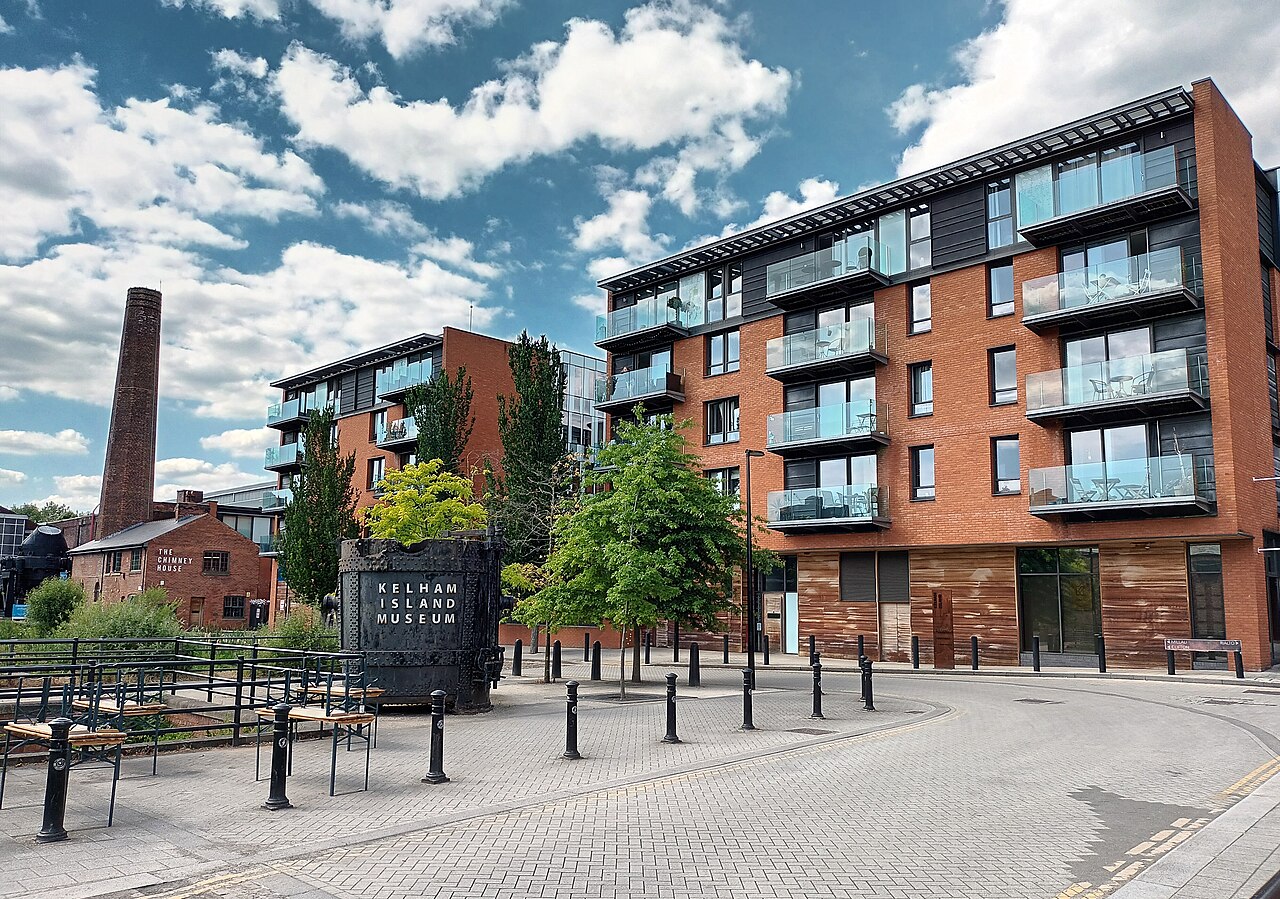
- Kelham Island Museum — Sheffield made the world's steel and invented stainless steel, and this museum has the River Don Engine, a vast working steam engine that is fired up for visitors. The surrounding Kelham Island quarter is now the best place in the city to eat and drink.
- The Peak District — the national park begins at the city boundary. Sheffield claims to be the greenest city in England and is genuinely a walking base.
- The Winter Garden and Millennium Gallery — a large glasshouse and a gallery in the middle of the city, both free.
- Sheffield's football history — Sheffield FC, founded in 1857, is the oldest football club in the world, and still plays locally. Sheffield United's Bramall Lane, across the city, is one of the oldest grounds still in use for professional football.
What to eat and drink
- Yorkshire pudding — batter baked in hot fat, served with roast beef and gravy, and in this county sometimes as a course of its own.
- Henderson's Relish — a spiced sauce made in Sheffield since the nineteenth century, put on everything here, and the subject of unshakeable local loyalty.
- Chips with gravy or curry sauce — northern, correct, non-negotiable.
- Real ale — Sheffield has one of the densest concentrations of good pubs and small breweries in Britain, mostly around Kelham Island.
Common questions
Is it appropriate to visit Hillsborough as a tourist?
Yes. It is a working football ground and visitors are welcome. Treat the history with the seriousness it deserves, do not photograph the Leppings Lane end as an attraction, and never join in with chanting about the disaster.
Were the supporters ever cleared?
Yes. The 2016 inquests concluded the 97 were unlawfully killed and that the behaviour of supporters did not cause or contribute to the deaths. The original blaming of fans was false.
How hard is a ticket?
Not hard. Forty thousand places in the third tier is one of the better ratios in England.
Can I do two Sheffield grounds?
If the fixtures line up, yes — Bramall Lane is across the city and in the Championship. Add Sheffield FC, the oldest club in the world, and it becomes a genuinely unusual weekend.
Forty thousand seats in the third tier, in the ground where English football was forced to change. Add Hillsborough to your bucket list and give Kelham Island the evening.