 Groundhopper
Start free
Groundhopper
Start free
AFC Wimbledon stadium guide — Plough Lane, London
Founded by supporters in 2002 after their club was moved sixty miles away, promoted five times in nine years from the ninth tier, and back on the road they were taken from.
.jpg)
The club that was taken away
In 2002 the Football Association permitted Wimbledon FC to relocate to Milton Keynes, about sixty miles north. The club moved in 2003 and renamed itself Milton Keynes Dons in 2004.
Wimbledon's supporters did not go with it. They met in The Fox and Grapes, a pub on Wimbledon Common, and started a new club from nothing.
AFC Wimbledon entered the Combined Counties League in 2002–03 — the ninth tier of English football, several divisions below anything most visitors have heard of. Nine years and five promotions later they were in the Football League. No club formed in the twenty-first century had managed that before.
Ownership stayed where it started. The Dons Trust, a supporters' organisation, is pledged to retain at least 75% control of the club. Nobody can move this one.
Both clubs are in the same division
Here is the fact that makes a visit worth planning around: AFC Wimbledon and Milton Keynes Dons are both in League One. They play each other, twice a season, home and away.
There is no equivalent fixture anywhere in European football — a club against the corporate continuation of the club it replaced, on level terms, in the same league. Whatever you think about either side of the argument, it is the most loaded ninety minutes in England.
Practically: that fixture is a hard ticket and a heavily policed one. Any other home match is straightforward, and the story is in the building either way.
Back on Plough Lane
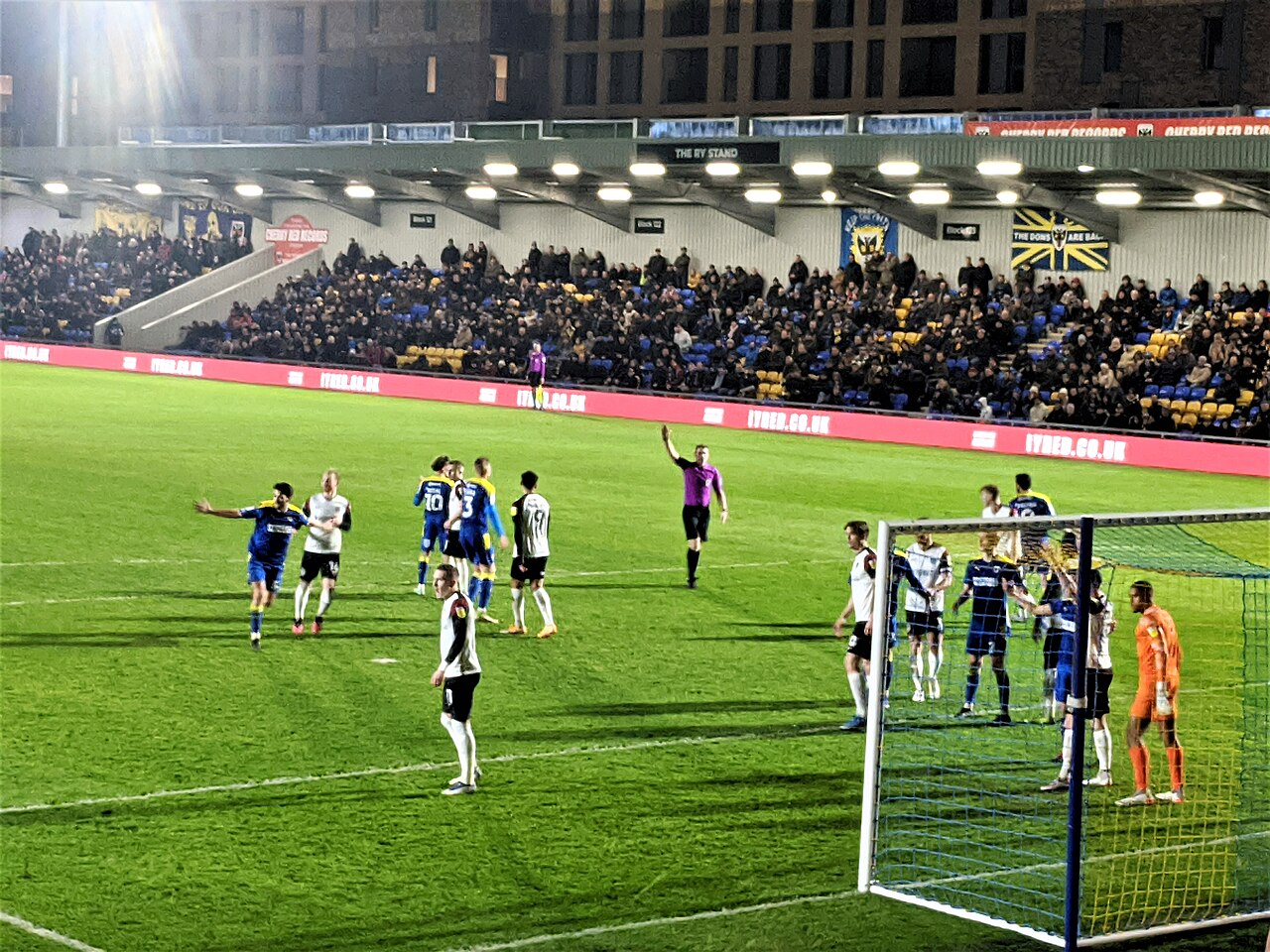
The old Wimbledon FC played at a ground on Plough Lane until 1991. The new club returned to the same road in November 2020, building a stadium on the site of the former greyhound track a few hundred metres from where the original stood.
Capacity is 9,215, with room to expand towards 20,000 as the club grows. It is modern, compact, entirely functional, and about a hundred metres from a river and a retail park — but the address is the point. A supporters' club took itself from the ninth tier back to the street it was thrown off.
Getting there
- By train: Haydons Road is the nearest station; Wimbledon and Earlsfield are both within walking distance and better connected. Wimbledon is on the District line and the tram network.
- From central London: around twenty-five minutes. This is one of the easiest grounds in the English series to reach if you are already in the city.
- Match ticket and transport: as everywhere in England, not included.
Tickets
The English pattern: no document demanded, sale online through the club, away allocations routed through the visiting club. Neutrals buy home seats.
Nine thousand places, a committed support and a London location make this moderately difficult. Book a couple of weeks out. The Milton Keynes fixture is a different matter entirely and will not reach general sale in useful quantity.
The alcohol rule — and where it stops
Under the Sporting Events (Control of Alcohol etc.) Act 1985 you may not drink alcohol within sight of the pitch at a designated match. AFC Wimbledon are in the Football League, so this ground is designated: concourse only, sale stopping around fifteen minutes before kick-off.
Worth knowing for the rest of this batch: designation covers the Premier League, the Football League and the National League — the top five tiers — plus internationals and the FA Cup from the first round proper. Below that, matches are generally not designated, and many clubs at the sixth tier and lower serve beer in view of the pitch. The other guides in this group are mostly at that level.
Where away fans sit
Visiting supporters have their own section with the allocation set per fixture. Segregation is strict, as everywhere in England, and unusually so for the Milton Keynes match.
Eating and drinking at the ground
Pies, chips, Bovril, concourse beer, card payment. Standard English fare in a new building.
Wimbledon before the match

What to see
- The All England Club — the tennis. The Wimbledon Lawn Tennis Museum is open year-round and the tour takes you to Centre Court, which is a genuinely impressive room when it is empty.
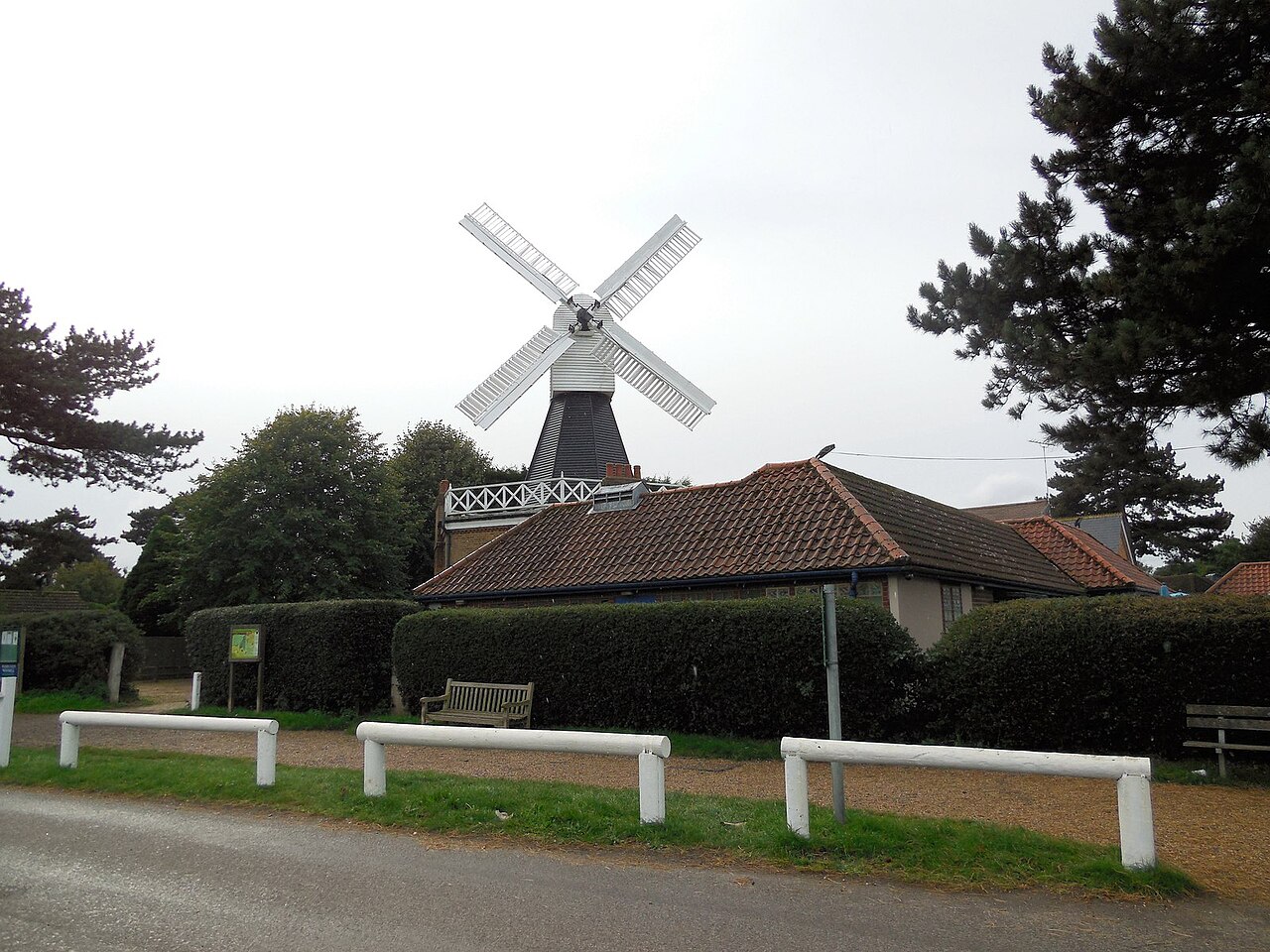
- Wimbledon Common — four hundred hectares of rough heath and woodland inside London, with a working windmill on it. The pub where the club was founded, the Fox and Grapes, is on its edge.
- Wimbledon Village — up the hill from the town, and a different world from the ground.
- Central London — twenty-five minutes. If you are here for a weekend you are not short of options.
What to eat and drink
- A pint in the Fox and Grapes — where the club was decided on in 2002. Do this before the match, not after.
- A Sunday roast — beef, Yorkshire pudding, roast potatoes and gravy. In a London pub, on a Sunday, it is the single best English meal available to a visitor.
- Pie and mash with liquor — the old south London dish: minced beef pie, mashed potato and a green parsley sauce. Increasingly rare and worth seeking out.
- Cask bitter — London has a serious pub culture and cask ale is the point of it.
Common questions
Are AFC Wimbledon the same club as the old Wimbledon FC?
Legally no; in the eyes of their supporters, yes. The FA's decision in 2002 to permit the move is still regarded in England as one of the worst it has ever made, and the honours of the old club were eventually returned to the London Borough of Merton rather than kept in Milton Keynes.
Can I see the derby?
Only with planning. Both clubs are in League One, so it happens twice a season, and it is the hardest ticket either club sells.
Can I drink in my seat here?
No — this is a designated ground. At most of the non-league clubs in this group you can.
Is the new ground worth seeing?
As architecture, it is ordinary. As the end of a twenty-year story that began in a pub on a common, it is one of the most meaningful grounds in England.
Nine thousand seats, five promotions from the ninth tier, and a club that rebuilt itself on the street it was taken from. Add Plough Lane to your bucket list and start in the Fox and Grapes.