 Groundhopper
Start free
Groundhopper
Start free
Tranmere Rovers stadium guide — Prenton Park, Birkenhead
A club that moved its home matches to Friday nights so its own supporters could watch Liverpool or Everton on the Saturday. The most sensible scheduling in English football.
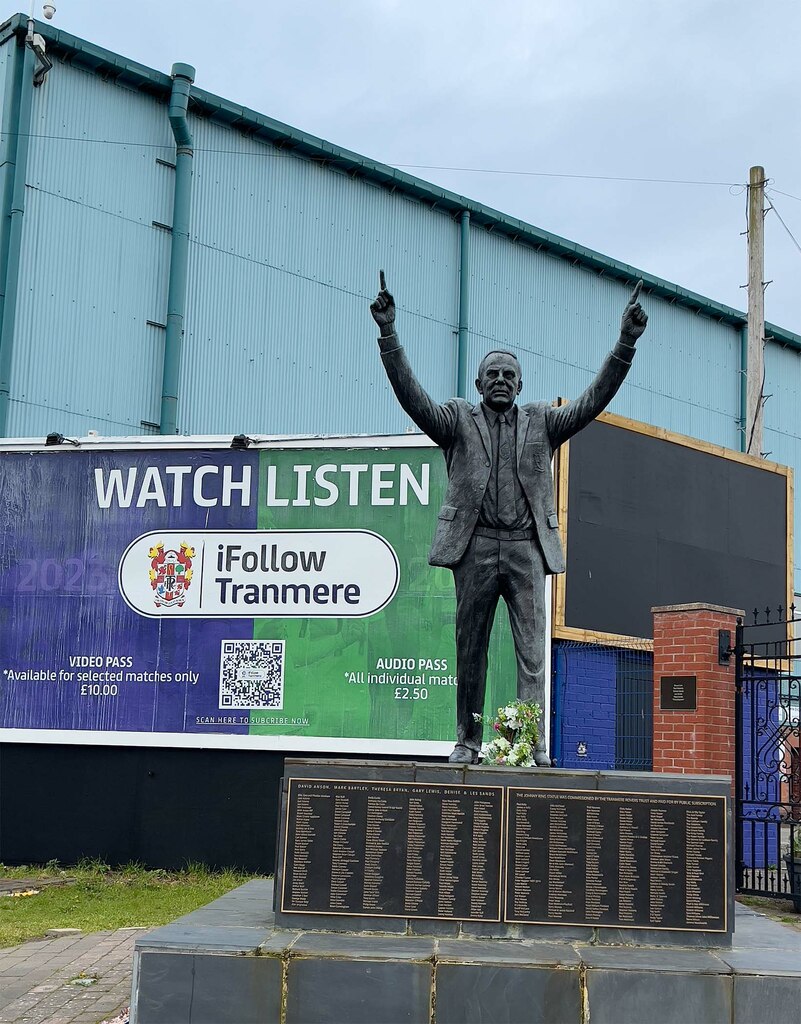

Friday night football, on purpose
Being a third club in a two-club city is normally a slow death. Tranmere turned it into a timetable.
In 1961, after floodlights were installed, manager Dave Russell moved Tranmere's home fixtures to Friday evenings. The logic was simple and completely unsentimental: nobody in Merseyside had to choose between Tranmere and the First Division sides across the water. You went to Prenton Park on Friday and to Anfield or Goodison on Saturday.
The practice ran into the 1990s. For a groundhopper it is the single most useful fact about this club, because Friday fixtures still appear and they are gold: a Friday night at Prenton Park followed by a Saturday on Merseyside is two grounds and one hotel, with no clash to resolve.
Check the fixture list for Friday kick-offs before you book anything.
Birkenhead, not Liverpool
Prenton Park is in Birkenhead, on the Wirral peninsula, across the Mersey. It is close enough to central Liverpool to be easy and far enough to be a different place entirely, with its own accent and a long shipbuilding history.
The crossing is part of the appeal. You can take the Mersey Ferry or the underground line beneath the river, and either way you arrive somewhere that does not feel like the city you left twenty minutes earlier.
How a third club survives
This series has met clubs squeezed by a bigger neighbour before — Fürth beside Nuremberg, Notts County three hundred metres from Nottingham Forest, St. Pauli across Hamburg from HSV. Each has found a different answer.
Tranmere's is the most practical of the lot, and it is worth spelling out because it explains what you will find in the ground. The club never tried to compete with Liverpool and Everton for the same supporter on the same afternoon. It competed for a different evening. The result is a crowd that is genuinely local to the Wirral rather than a diluted version of a Merseyside crowd, in a ground built for a division higher than the one they are in.
For a visitor that means something specific: this does not feel like a small club in a big city's shadow. It feels like the main club of a place that happens to be next to a bigger one.
Getting there
- By train: the Merseyrail Wirral line runs under the river from Liverpool. Rock Ferry is the nearest station at about 1.2 miles; buses run closer.
- By ferry: the Mersey Ferry to Birkenhead, then a bus. Slower, better.
- By bus: the 464 runs direct from Liverpool.
- Match ticket and transport: not included.
Tickets
The English pattern: no document demanded, online sale, away allocations through the visiting club.
Sixteen and a half thousand places in League Two is a generous ratio, so this is straightforward and often available on the day. As at Accrington, Grimsby and Oldham, walk-up is realistic — which remains the practical argument for collecting English football from the bottom rather than the top.
The ground itself
Four stands and 16,587 places: the Kop (5,696), the Main Stand (5,957), the Johnny King Stand (2,414) and the Cowshed (2,500).
The Johnny King Stand is named after the manager who took Tranmere from the bottom of the Fourth Division in the 1980s to within one division of the top flight, and the Cowshed is named exactly what you would expect a stand called the Cowshed to be named after. Prenton Park was substantially rebuilt in the 1990s and is comfortable, enclosed and rather bigger than the current division needs — which is the same pattern as Hertha, Kaiserslautern and Sheffield Wednesday in this series, scaled down.
Where away fans sit
Visiting supporters are housed in the Cowshed, around 2,500. Arrangements are set per fixture. Neutrals should take a side stand.
The alcohol rule
Under the Sporting Events (Control of Alcohol etc.) Act 1985, no alcohol within sight of the pitch. Concourse only, sale stopping around fifteen minutes before kick-off and resuming at half-time.
On a Friday night this matters more than usual, because the natural instinct is to treat the evening as a night out. The pub before, the concourse during, and Birkenhead or Liverpool afterwards.
Eating and drinking at the ground
Pies, chips, Bovril, concourse beer, card payment. Standard, and better than it sounds on a cold Friday.
The Wirral and Liverpool before the match

What to see
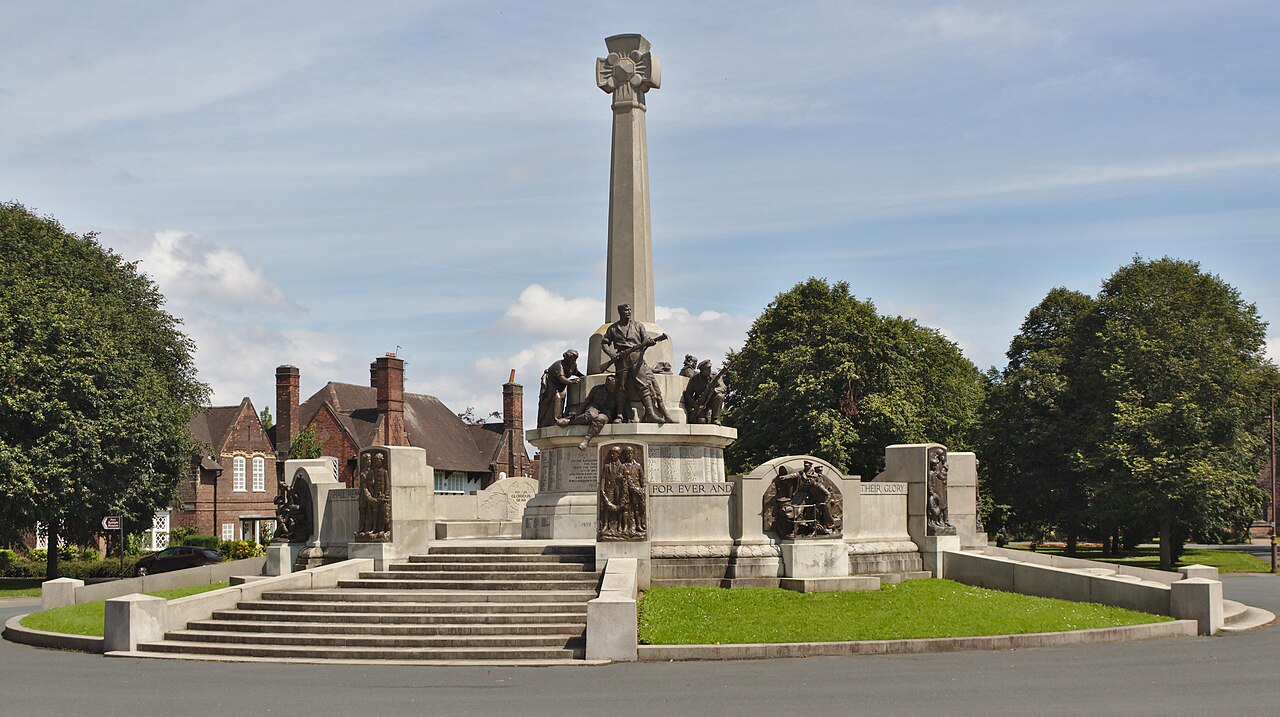
- Port Sunlight — four miles away: a complete model village built from 1888 by the Lever soap company for its workers, with nine hundred listed buildings and an art gallery full of Pre-Raphaelites. It is the Wirral's answer to Saltaire, which this series recommends in the Bradford guide, and the two make a good pair.
- The Mersey Ferry — the crossing itself, with the Liverpool waterfront from the water. Ordinary public transport that happens to be a sightseeing trip.
- Liverpool's waterfront — twenty minutes away: the Three Graces, the Albert Dock, Tate Liverpool and the Museum of Liverpool.
- Birkenhead Park — opened in 1847 and the first publicly funded park in the world. Frederick Law Olmsted visited, took notes, and went home to design Central Park in New York.
What to eat and drink
- Scouse — the lamb or beef stew the city is named after, served with pickled red cabbage and beetroot. Eat it in a pub in winter.
- Chip barm — chips in a soft bread roll. Carbohydrate on carbohydrate, and non-negotiable on Merseyside.
- Fish and chips — the Wirral coast is good for it.
- Cask bitter — Birkenhead has some genuinely old pubs, and Liverpool's Victorian ones are among the best in England.
Common questions
Do they still play on Fridays?
Not as a rule — the systematic policy ran from 1961 into the 1990s — but Friday fixtures still appear. Check before you book, because a Friday here plus a Saturday in Liverpool is the best two-ground weekend in the north-west.
Is it in Liverpool?
No. Birkenhead, across the Mersey, on the Wirral. Twenty minutes and a different town.
Can I turn up on the day?
Usually. Sixteen thousand places and League Two demand.
What should I do beforehand?
Port Sunlight if you have half a day, the Mersey Ferry if you have an hour.
A club that rescheduled itself around two giants, the first public park in the world, and a Friday night that pairs with a Saturday at Anfield. Add Prenton Park to your bucket list and look for a Friday kick-off.