 Groundhopper
Start free
Groundhopper
Start free
How many stadiums have you visited?
Grounds are not matches, memory undercounts, and the kilometres are the number nobody keeps by hand. How to work out the real figure.
Why the number is harder to work out than it looks
Ask a supporter how many grounds they have been to and you will usually get a pause, then a guess, then a lower revision. The reason is that the two obvious methods both fail.
Counting from memory undercounts, badly. You reliably remember the first, the furthest, the best and the most recent, and you lose almost everything in the middle — the midweek away game in a season that ended badly is exactly the entry that disappears.
Counting matches instead of grounds overcounts. Twenty home games is one ground. A cup run of four away ties might be four grounds or two. Until you separate the two numbers, neither is true.
Decide what counts, once
There is no official rulebook for this, so consistency is doing the work that an authority would. Answer these before you start, not at ground number ninety:
| Question | Common answer |
|---|---|
| Do I have to have been inside during a match? | Yes for most people. A stadium tour is not a visit. |
| Do friendlies and youth games count? | Usually yes — but decide, and apply it to every entry. |
| Rebuilt on the same site? | Normally one ground, not two. |
| Moved to a new site? | Two grounds. Different place, different visit. |
| New sponsor name, same concrete? | One ground. Name changes are not visits. |
| Temporary ground while a stadium is rebuilt? | Its own entry — you were somewhere else. |
Write your answers somewhere you will find them again. A number produced by rules you can state is worth something; a number produced by rules you have forgotten is a guess with a decimal point.
How to rebuild the list
Work through sources in this order. Each one recovers a different kind of forgotten match.
- The ones you remember cold. Write them down first, without dates. Ten minutes, and you have a spine.
- Your camera roll. Photos carry dates, and phone galleries can usually be searched by place. This is the single most productive source for anything after roughly 2010.
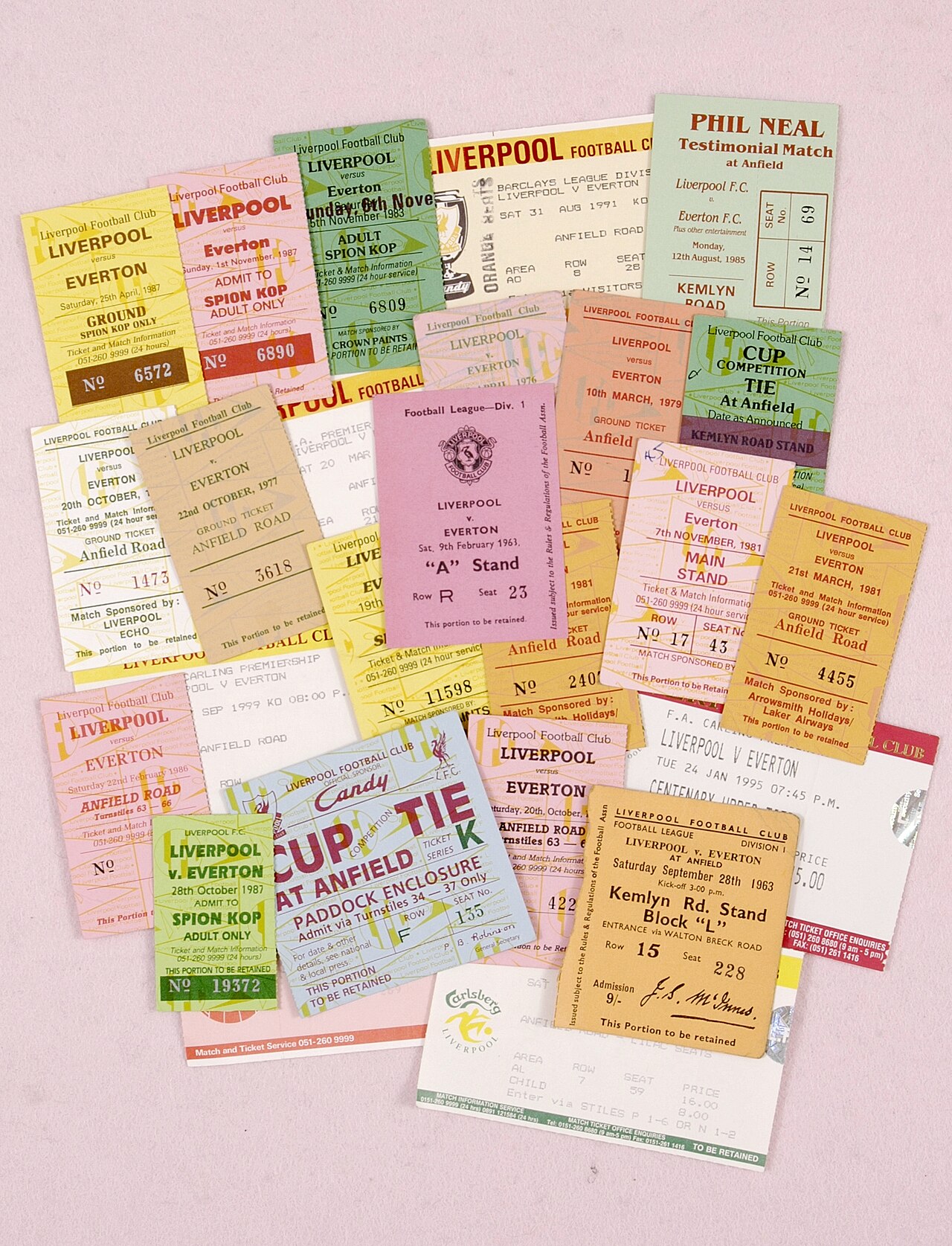
- Tickets and the drawer they live in. Physical stubs, and email confirmations if you search your inbox for the club name or the ticketing platform.
- Bank and travel history. A card payment near a stadium, a train booking, a hotel confirmation — all of these date a match you had otherwise lost.
- The people you went with. The last resort and often the best one. Somebody else remembers the trip you have completely erased.

Where a date is genuinely unrecoverable, use the closest one you can defend and mark it as approximate. An approximate entry is a ground you visited. An omitted entry is a ground you did not.
The four numbers worth having
One figure does not describe a football history. Four do, and they say different things:
- Grounds — how wide the collection is.
- Matches — how much football you have actually watched.
- Countries — how far the habit has travelled.
- Kilometres — the number nobody keeps by hand, and the one that surprises people most.
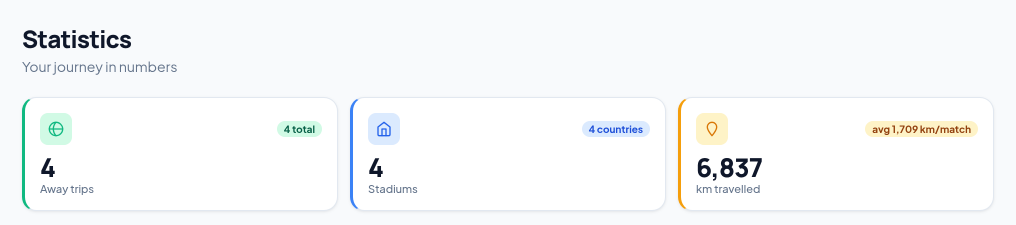
The distance figure is the reason spreadsheets fail. Looking up the distance from home to each ground and deciding whether to count the return leg is tedious enough that most people estimate after twenty rows and stop after forty.
This is the specific job Groundhopper does: you log the match and the ground, and the stadium count, the countries and the kilometres come out of it — including the return legs. Count your own grounds — free, no card.
Showing the number to someone else
A count on its own travels badly. „Forty-one grounds” means nothing to a person who has never counted, and it is the map that makes it land: the cluster near home, the long arcs abroad, the one outlier much further than the rest. If you want to show a football history to someone, show the shape of it and let the number sit underneath.
Common questions
Does a second visit to the same ground count?
As another match, yes. As another ground, no. Keep the two counts separate and the question stops being confusing.
What if the ground has been demolished?
It still counts. You were there. Grounds that no longer exist are frequently the most interesting entries in a long collection.
Should I count a stadium tour?
Most people do not, and it is the cleaner rule — otherwise the list stops being a record of football you watched. If you do count them, mark them separately so the main number stays comparable.
What is a normal number?
There isn't one, and chasing someone else's total is the fastest way to make an enjoyable habit feel like homework. Thirty grounds across six countries is a richer collection than sixty within one region. The count is a by-product of going, not the reason.