 Groundhopper
Start free
Groundhopper
Start free
1. FC Magdeburg stadium guide — Avnet Arena, Magdeburg
They beat AC Milan 2–0 in a European final in 1974 — the only club from East Germany ever to win one, and almost nobody in the west remembers it.

The only one
East German football produced good sides, packed grounds and a domestic league that ran for forty years. In all that time exactly one club from the GDR won a European competition, and this is it.
On 8 May 1974 Magdeburg played AC Milan — the holders, with a squad that had won the thing the year before — in the Cup Winners' Cup final in Rotterdam, and won 2–0. The crowd was tiny, the match is barely remembered outside Germany, and the result has never been repeated by any club from the East.
They also won three DDR-Oberliga titles, in 1971–72, 1973–74 and 1974–75. Then the country they played in stopped existing, and the club spent a long stretch in the lower divisions.
This series has covered the East before — Dresden's eight titles, Leipzig's complicated present, Union's members. Magdeburg is the one with the trophy, and it is the reason to come.
Getting there
- By tram: the ground is served directly and Magdeburg's tram network is quick. The stadium sits by the Elbe, south of the centre.
- By train: Magdeburg Hauptbahnhof is about ninety minutes from Berlin and forty from Leipzig.
- Pairing: Leipzig, Dresden and Berlin are all within reach, which makes this an easy addition to an eastern route rather than a trip on its own.
- Match ticket and transport: as at most German grounds, the ticket covers local transport on the day.
Tickets
The German pattern: no document demanded, season-ticket holders and members first, general sale some weeks out. Buy from the club.
Magdeburg fill this ground more consistently than the club's league position suggests, and the support is one of the more committed in the east. Treat it as moderately difficult — harder than Hertha or Nürnberg, easier than St. Pauli. Plan a couple of weeks ahead.
The capacity figure moves depending on configuration: 30,098 with the terraces in use, around 27,250 when the ground is converted to all-seated for international fixtures. The number quoted in any source tells you which arrangement it was describing.
Where away fans go
Visiting supporters get their own section with the allocation German league rules require, part of it standing. Arrangements are set per fixture, so confirm yours. Neutrals should take a side stand; the ground is football-specific, so every seat is close.
The ground itself
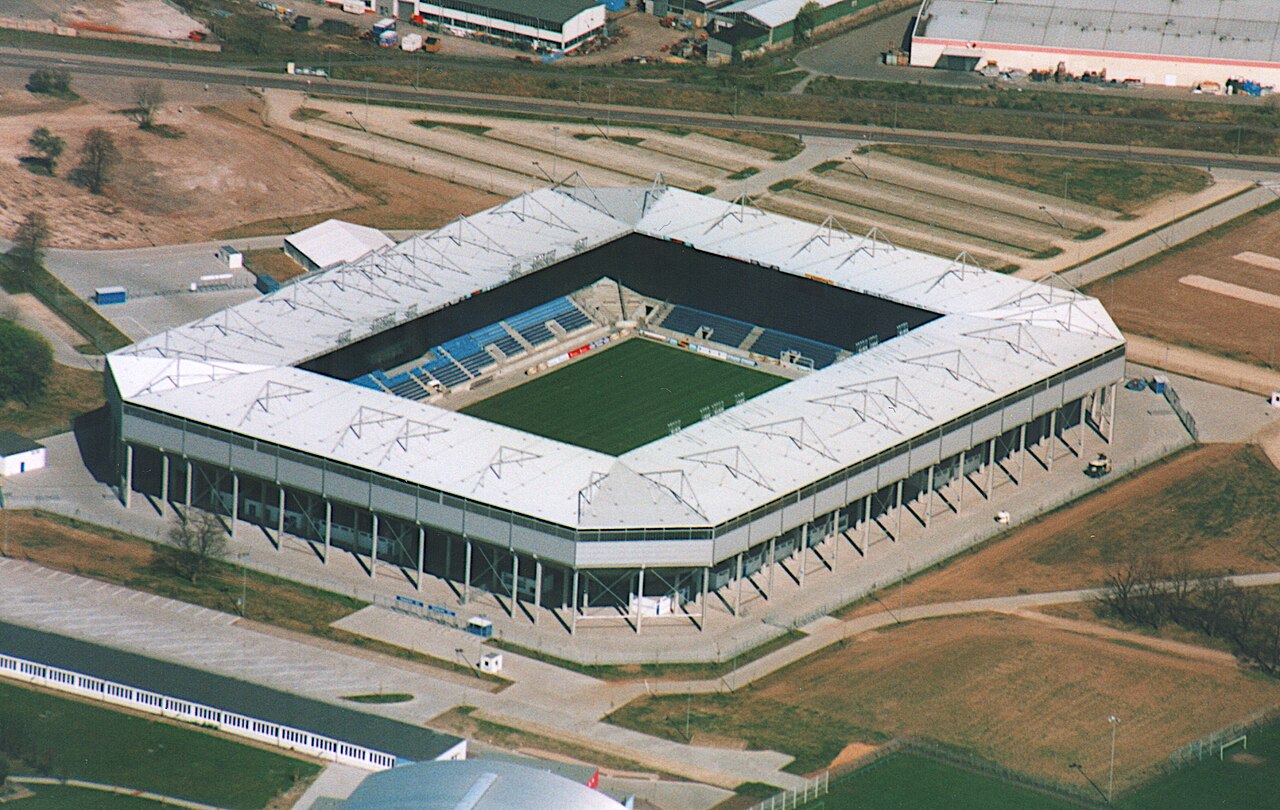
A modern, fully covered, football-specific bowl opened in December 2006, replacing a much older ground. Four steep stands, no running track, and a large terrace that converts to seating when the regulations require it.
It is a good building rather than a remarkable one. What makes the visit is the crowd: a support that has followed this club from a European trophy through the collapse of its league and two decades in the lower divisions, and turns out in numbers that embarrass clubs from much larger cities.
Eating and drinking at the ground
Saxony-Anhalt catering: Bratwurst, Currywurst, and full-strength Pilsner. Ask for Ketwurst if it is on — the East German answer to a hot dog, a sausage pushed into a hollowed roll, invented in the GDR and still sold in the east out of affection as much as hunger.
Payment by stadium card: load it on arrival, cash out afterwards. Cups carry a Pfand deposit.
Magdeburg before the match

What to see
Magdeburg was flattened in 1945 and rebuilt largely in the socialist style, which makes the survivals more striking:
- The Dom — the cathedral begun in 1209, the first Gothic cathedral built on German soil, with the tomb of Otto the Great inside. Otto was crowned Holy Roman Emperor in 962 and chose to be buried here.
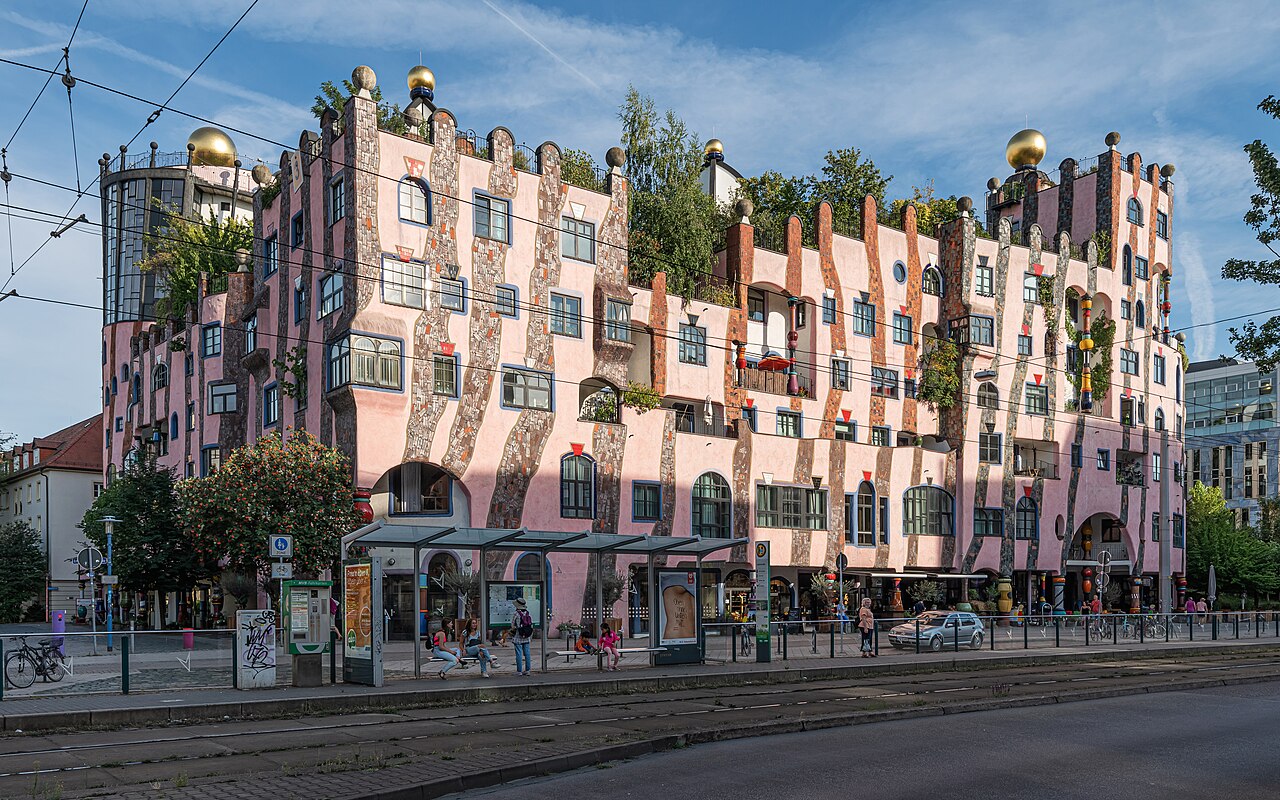
- The Grüne Zitadelle — a pink apartment building by Friedensreich Hundertwasser, finished after his death, with uneven floors, trees growing out of the windows and not a straight line in it. It sits opposite the cathedral, which is the joke.
- Kloster Unser Lieben Frauen — the Romanesque monastery, now an art museum and concert hall, and one of the oldest buildings in the city.
- The Elbe promenade — the river runs through the middle of the city and the walk along it is the best free hour here.
What to eat and drink
- Bötel mit Lehm und Stroh — the Magdeburg dish: cured pork knuckle with pea purée and sauerkraut. The name translates roughly as "with mud and straw", which tells you what it looks like and nothing about how it tastes.
- Soleier — eggs pickled in brine, eaten in old pubs across the east with mustard and beer.
- Baumkuchen from Salzwedel — the layered "tree cake" baked on a rotating spit, from a town an hour north and sold across the region.
- Regional Pilsner, and Rotkäppchen sparkling wine, the eastern brand that survived reunification and then bought several western ones.
Common questions
Did Magdeburg really beat AC Milan?
Yes — 2–0 in the 1974 Cup Winners' Cup final in Rotterdam, against the holders. It remains the only European trophy won by a club from East Germany.
How does it compare with Dresden?
Dresden is louder and the city is far more beautiful. Magdeburg has the trophy and an easier ticket. If you are collecting eastern grounds, do both — they are two hours apart.
Which capacity figure is right?
Both. 30,098 with the terracing, around 27,250 all-seated. Check what applies to your fixture.
Is the city worth a day?
Half a day. The cathedral and the Hundertwasser building are genuinely worth seeing and stand a few minutes apart; the rest is a rebuilt post-war city.
Three East German titles, a European trophy nobody in the west remembers, and Otto the Great in the cathedral down the road. Add the Avnet Arena to your bucket list and put Leipzig or Dresden on the same trip.