 Groundhopper
Start free
Groundhopper
Start free
Dulwich Hamlet stadium guide — Champion Hill, London
Eighty-five per cent terrace, the biggest crowds in the division, a developer who locked the club out of its own ground — and a pint you can drink watching the match.
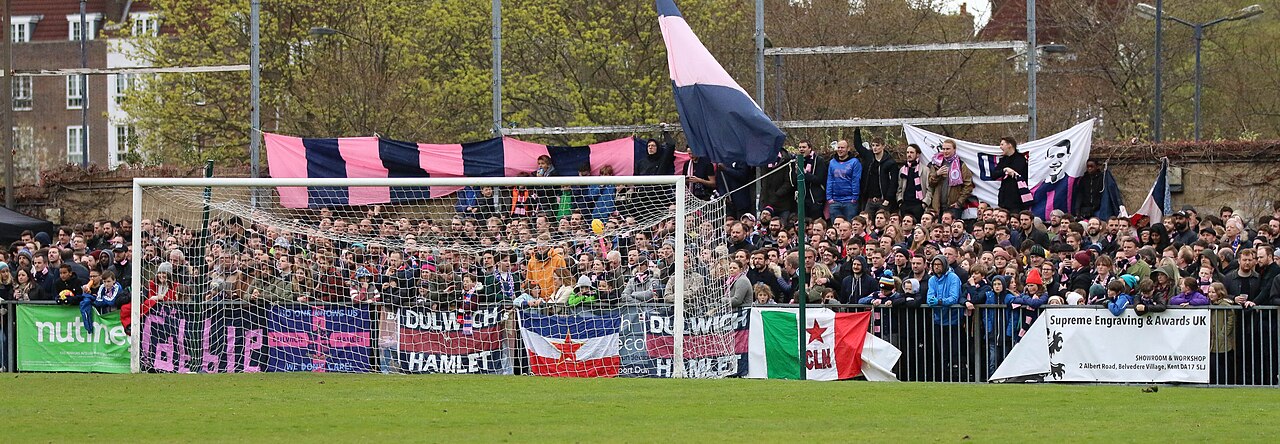

Two and a half thousand people, seventh tier
Dulwich Hamlet play in the Isthmian League Premier Division, the seventh level of English football, in front of crowds that make no sense for it. In 2022–23 they averaged 2,464 — the highest in the division — in a season they were relegated from.
The reason is the crowd rather than the football. Dulwich's support is explicitly political, organised around anti-racism, anti-fascism and inclusivity, and its fan group, The Rabble, has built something closer to a party than a matchday. Tickets are deliberately cheap. The colours are pink and blue and are worn with commitment.
If St. Pauli's guide in this series appealed to you, this is the English version at a twelfth of the size and a fraction of the price — and unlike St. Pauli, you can usually just turn up.
The nine months they were locked out
In February 2014 a property developer, Meadow Residential, bought Champion Hill for £5.7 million. In March 2018 the company forced the club out of its own ground.
Dulwich spent the rest of that season groundsharing at Tooting & Mitcham's Imperial Fields — with a rival club, several miles away. The campaign to get them back drew national attention and support from well outside non-league football, and in December 2018 they returned to Champion Hill.
It is a useful story to carry around English football, because it is the ordinary version of what happened to Wimbledon. Grounds in this country sit on land, land in London is worth more than football, and the only thing that reliably saves a small club is the number of people prepared to make a nuisance of themselves about it.
Standing, and drinking, and changing ends
Three things here are impossible at the grounds in the earlier English guides.
- You will be standing. Of 3,334 places, 500 are seats. Around 85% of this ground is terrace — a higher proportion than anywhere in the German series, Cottbus included.
- You can drink in sight of the pitch. The 1985 Act applies to designated matches: the top five tiers, internationals and the FA Cup proper. The seventh tier is not designated, and Dulwich sell beer you can take to the terrace.
- You can change ends at half time, as at most of this level, because there is no segregation of the Football League kind.
Taken together that is a completely different sport from the one described in the Luton or Leicester guides, in the same country, ninety minutes from each other.
Getting there
- By train: East Dulwich and Denmark Hill are both a short walk. From London Bridge or Victoria it is around fifteen minutes.
- On foot: the ground is in the middle of a residential area of south London, so the walk in is past houses rather than car parks.
- Match ticket and transport: not included.
Tickets
Cheap and usually available on the day at the gate. The club has kept prices deliberately low as a matter of policy.
Big fixtures and the local derby against Tooting & Mitcham draw considerably more than the average, so if you are travelling from abroad specifically for this, check.
The ground itself
Champion Hill is small, functional and largely uncovered terrace, rebuilt in the 1990s and not beautiful. Nobody comes for the architecture.
What you are coming for is a compact terrace holding two and a half thousand people who sing for the whole match in a city where the nearest Premier League ground charges twenty times as much for a worse afternoon.
Where away fans go
There is generally no strict segregation at this level. Visiting supporters gather at one end by custom rather than by fence, and moving around the ground is normal. Behave accordingly and nobody will mind you.
Eating and drinking at the ground
Better than the Football League, as is usual at this level: proper pies, burgers cooked in front of you, and a bar with real ale and craft beer that you can carry out to the terrace. The bar is part of the attraction rather than an afterthought.
South London before the match

What to see
- The Horniman Museum — twenty minutes away in Forest Hill: a Victorian collector's museum with an over-stuffed walrus that has been famous for a century, an aquarium, and gardens with one of the best views over London. Free.
- Dulwich Picture Gallery — the oldest purpose-built public art gallery in England, opened in 1817, with Rembrandts and Poussins in a village setting.
- Peckham — next door, and the best eating and drinking in south London, including rooftop bars in converted car parks.
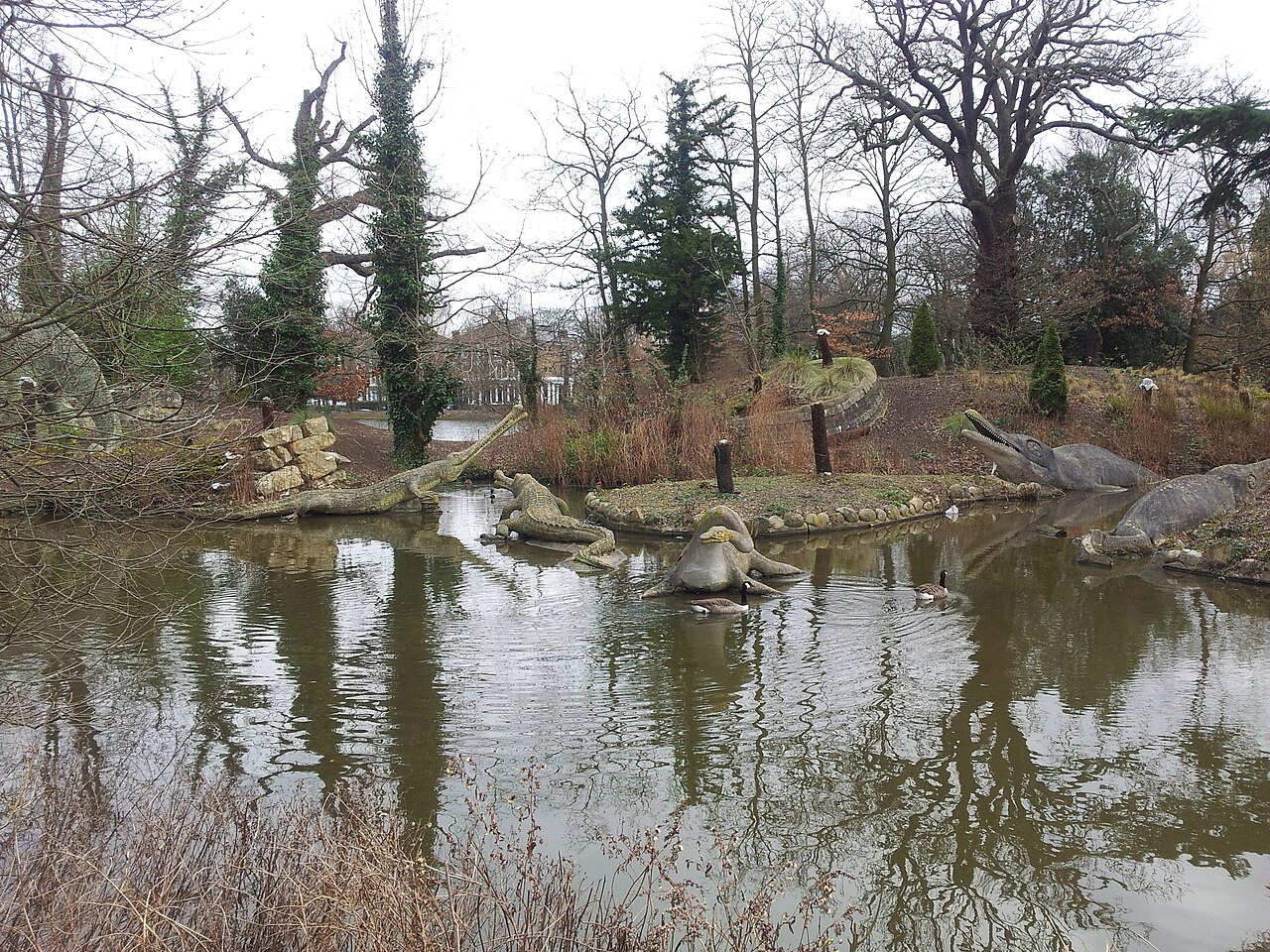
- Crystal Palace Park — twenty minutes, with the Victorian concrete dinosaurs of 1854, the first attempt anywhere to reconstruct extinct animals at full size. They are wrong in almost every anatomical detail and are protected monuments because of it.
What to eat and drink
- A pint at the ground — on the terrace, watching the match, which is the entire point.
- Sunday roast in a south London pub — if your fixture is a Sunday.
- Nigerian or Ghanaian food in Peckham — jollof rice, egusi, grilled fish. One of the best food scenes in London and almost entirely unvisited by tourists.
- London craft beer — the brewery arches under the railway lines around Bermondsey are twenty minutes away and open at weekends.
Common questions
Can I really drink watching the game?
Yes, at this level. Seventh-tier matches are not designated under the 1985 Act. It is the club's choice rather than a right, but Dulwich do it.
Is it comparable to St. Pauli?
In politics and atmosphere, closely. In scale, not at all — 3,334 against 29,546. The comparison is made often in England and the club has leaned into it.
How hard is a ticket?
Easy. Turn up, pay at the gate, stand where you like. This is the opposite of the St. Pauli problem.
Is it worth it if I do not care about the politics?
Yes. Cheap, loud, standing, in London, with a beer in your hand. The politics is the reason it is like that, but you do not have to sign anything.
Eighty-five per cent terrace, the biggest crowds in the division, and a pint you can drink where you can see the pitch. Add Champion Hill to your bucket list and go to the Horniman first.