 Groundhopper
Start free
Groundhopper
Start free
Luton Town stadium guide — Kenilworth Road, Luton
Away supporters reach their seats through a gap built into a row of terraced houses and up a staircase between the buildings. The ground closes in 2028.
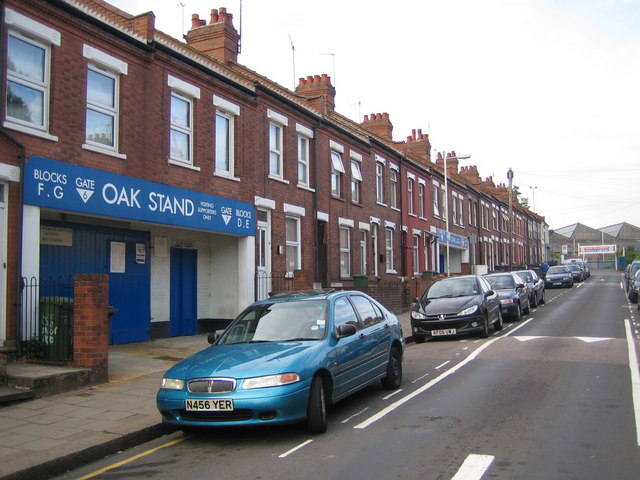

The turnstiles in someone's back garden
Every so often a ground survives long enough to become genuinely strange, and Kenilworth Road is the clearest example left in Europe.
The Oak Road End, which holds the away support, is not approached across a car park. It is approached down an ordinary residential street, through an entrance built into the terrace itself, and up a flight of stairs that passes directly between people's houses. Visiting fans climb a staircase with brickwork on both sides and emerge on a stand holding about 1,800.
Photographs of it circulate every time Luton are promoted, usually captioned by people who assume it is a joke. It is not. The ground was built in 1905, the town grew around it, and nobody ever moved either.
The rest of the stadium is the same idea: five stands of different heights and ages wedged into a residential block, including one, the Bobbers, that spent years as a row of executive boxes with no ordinary seats at all.
Go before 2028
This is not a general encouragement. It is a deadline.
Luton received planning permission on 16 December 2024 for Power Court, a 25,000-seat stadium in the middle of the town. Construction started in early 2025 and the new ground is expected to open for the 2028–29 season. At that point Kenilworth Road closes after 123 years and the staircase between the houses stops being a football entrance.
Of every ground in this series, this is the one with a published end date. Elversberg's stadium is being enlarged; Darmstadt's was rebuilt around the team. Kenilworth Road is simply going.
Getting there
- By train: Luton is about 25 minutes from London St Pancras. The ground is a short walk from Luton station, through the town.
- From the airport: London Luton Airport is in this town. If you are flying in from Poland on a budget airline, you may well land within three kilometres of the ground, which is not true of anywhere else in this series.
- Note the difference from Germany: your match ticket does not include public transport. Buy travel separately.
Tickets, and how England differs
This is the first English ground in the series, so the ground rules are worth setting out. They are not the German ones.
- No document is demanded — no ID, no fan card, nothing like the Polish PESEL problem.
- Home tickets are sold online and, at many lower-division clubs, at the gate. Luton is at the harder end: a small ground and a support that fills it, so buy ahead.
- Away tickets at English clubs are often restricted to the visiting club's own supporters, sold through that club, and at bigger clubs rationed by a loyalty-points system. As a neutral you generally buy a home ticket and sit quietly.
- Prices are high by continental standards. Expect to pay substantially more than for a Bundesliga ticket, for a much smaller ground.
The rule that surprises every visitor
Under the Sporting Events (Control of Alcohol etc.) Act 1985, you may not drink alcohol within sight of the pitch at a designated match in England and Wales.
In practice: you buy a beer in the concourse behind the stand, and you drink it there. General sale stops about fifteen minutes before kick-off and resumes at half-time. Carrying a pint up the steps to your seat will get you stopped.
For anyone arriving from Germany, where you drink full-strength beer in your seat, or Czechia, where the same applies, this is the single biggest practical difference. Plan the pre-match drink for a pub instead — which is what the local custom does anyway.
Where away fans sit
The Oak Road End, up the staircase, holding around 1,800. It is small, it is tight, and being in it is the reason many neutrals come.
Access arrangements are set per fixture. If you are a neutral, you will normally be in a home area and should behave accordingly — English grounds segregate more strictly and more visibly than German ones, and celebrating in the wrong stand is taken seriously.
Standing, and why you cannot do it here
Another English rule worth learning at the first ground. After the Hillsborough disaster in 1989, the Taylor Report and the Football Spectators Act 1989 required all-seater stadiums in the top divisions. The requirement was relaxed in July 1992 for the third and fourth tiers, which is why terracing survives lower down.
Kenilworth Road is all-seater. If you have come to England expecting terraces, you need League One and below — and even then, not everywhere. This is the exact reverse of Germany, where the biggest grounds have the biggest terraces.
Eating and drinking at the ground
English football food, which is its own category and not a good one: pies, Bovril, chips, burgers. The pie is the institution — meat and potato or steak, eaten standing in the concourse, and genuinely part of the experience.
Beer in the concourse only, as above. Payment is card almost everywhere; many grounds no longer take cash at all.
Luton before the match

What to see
Luton is an ordinary English town that most visitors pass through on the way to somewhere else. That is worth accepting rather than fighting:
- Stockwood Discovery Centre — free museum and gardens on the edge of town, with a large collection of horse-drawn carriages.
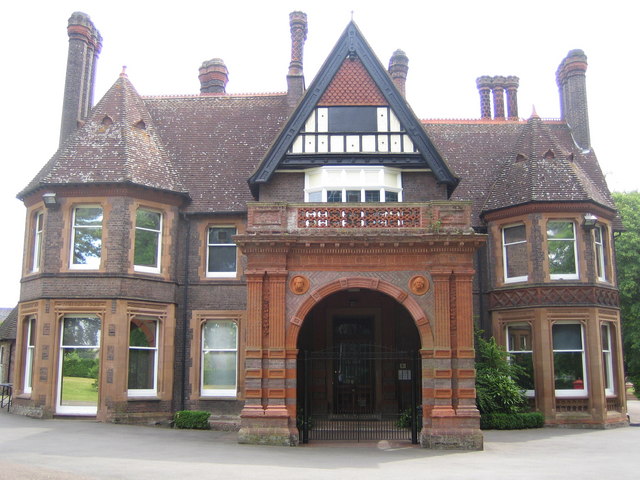
- Wardown Park and its museum — a Victorian house in a park, covering the town's hat-making trade. Luton made hats for the world, which is why the club are called the Hatters.
- St Albans — twenty minutes away by train, with a Norman cathedral, a Roman town and considerably more to look at.
- London — 25 minutes. If you are here for a weekend, base yourself there and come out for the match.
What to eat and drink
- A pie in the ground — do it once, on principle.
- A pre-match pint in a pub — since you cannot drink in your seat, the pub is where English matchday drinking actually happens. Ask which pubs take away supporters; some are home-only on matchdays and it is better to ask than to find out.
- A curry — Luton has a large South Asian population and the town's best eating by a distance is Bangladeshi, Pakistani and Indian.
- Real ale — the British contribution to beer is cask-conditioned bitter, served cool rather than cold. Look for a handpump on the bar.
Common questions
Is the entrance really through houses?
Yes. An entrance built into the terrace, then stairs up between the buildings to the Oak Road End. It is the single most distinctive way into a football ground in Europe.
When exactly does it close?
The new stadium at Power Court is expected to open for the 2028–29 season, which ends Kenilworth Road's 123 years. Treat any season before that as your window.
Can I drink in my seat?
No. Concourse only, and sale stops around fifteen minutes before kick-off. This applies across English professional football, not just here.
Can I just turn up?
Not reliably at Luton. Lower down the English pyramid you often can; here the ground is small and sells out. Buy in advance.
A staircase between two houses, twelve thousand seats, and a stadium with a published closing date. Add Kenilworth Road to your bucket list while it is still there.