 Groundhopper
Start free
Groundhopper
Start free
Grimsby Town stadium guide — Blundell Park, Cleethorpes
The lowest football ground in Britain, two feet above sea level, in a town the club is not named after — with a stand named after a frozen fish company.
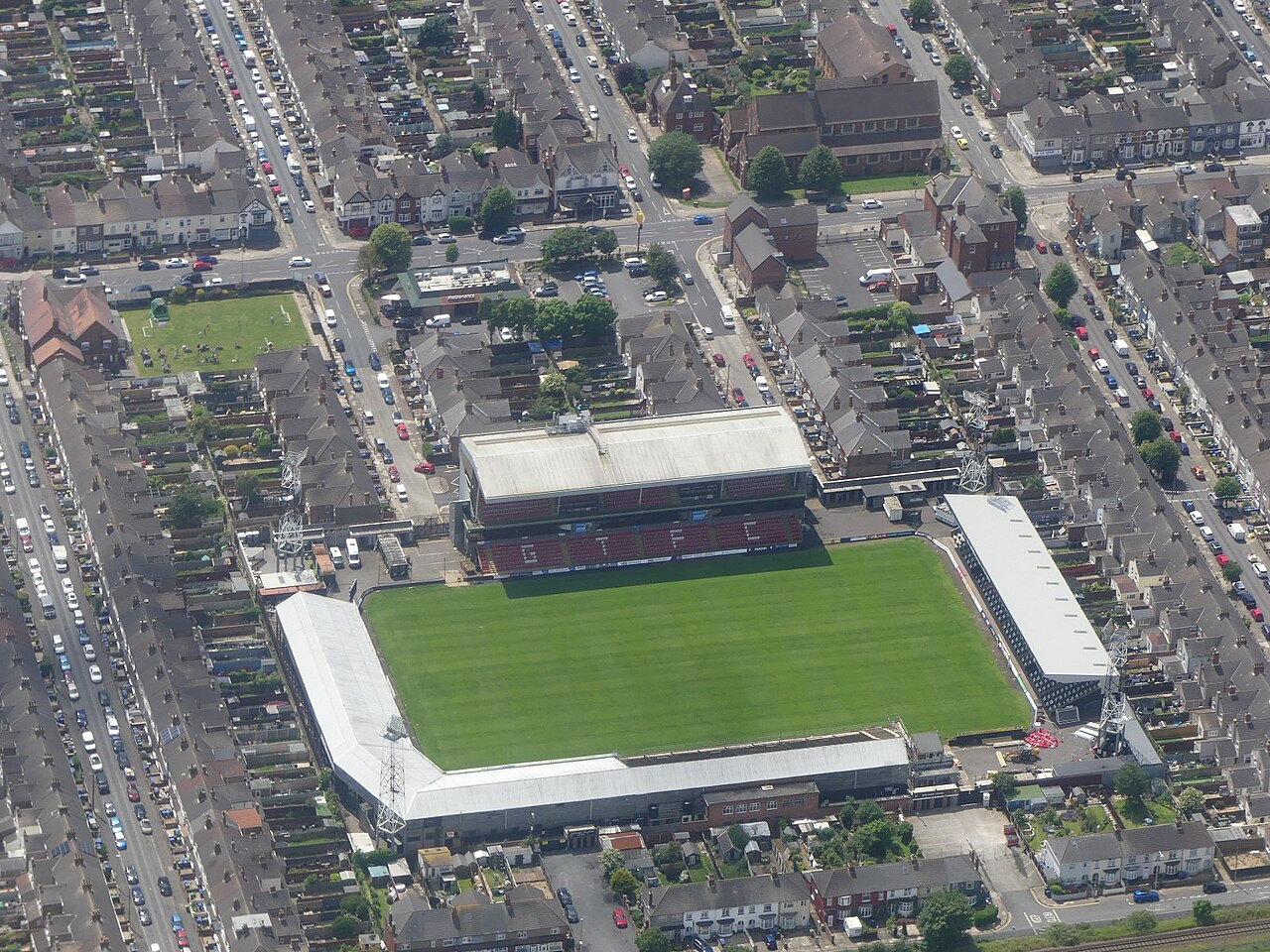

Two feet above the sea
Blundell Park sits among terraced houses beside the Humber estuary, roughly two feet above sea level — the lowest ground in the country.
Set that against the guide to Oldham Athletic in this same series, where Boundary Park stands at 526 feet and is nicknamed Ice Station Zebra. Two clubs in the same division, one at the top of a Pennine hill and one essentially at the waterline, about a hundred and twenty miles apart. That range is the argument for collecting the lower English leagues, and these two grounds make it better than any other pair in the country.
The practical version: it is exposed, it is beside the North Sea, and the wind comes off the estuary. Whatever you were going to wear, wear more.
The club that is not in its own town
Grimsby Town play in Cleethorpes. They have done since 1899.
This series has met the pattern before — Hoffenheim's ground is in Sinsheim, six kilometres from the village on the badge. Here the two towns run into each other along the coast, so the walk from one to the other is short, but the fact still catches people out. If you are booking a hotel, book Cleethorpes rather than central Grimsby: the seafront is nicer and the ground is closer.
A stand called Findus
The stands are the Main Stand (dating from 1901, and still containing original fabric), the Findus Stand, the Pontoon and the Osmond Stand, which houses away supporters.
The Findus Stand is named after the frozen food company, and in this town that is not an odd piece of sponsorship. Grimsby was once the largest fishing port in the world, the fish docks defined the place, and the food processing that followed the trawlers is still a major employer. A stand named after frozen fish in a fishing town is the most honest sponsorship deal in this series.
The Main Stand from 1901 is the thing to look at. Very little pre-war fabric survives anywhere in English football; this is a working example.
Getting there
- By train: Cleethorpes station is the end of the line and about fifteen minutes' walk from the ground along the front. Grimsby Town station is a stop earlier.
- From the north: around two hours from Leeds or Sheffield, three from Manchester. This is a corner of England most people never visit.
- Nearby grounds: Lincoln, Hull, Doncaster and Scunthorpe are all within about an hour, which makes a two-ground weekend realistic.
- Match ticket and transport: not included.
Tickets
The English pattern: no document demanded, online sale, away allocations through the visiting club.
Around nine and a half thousand places in League Two, in a town without competition, makes this generally straightforward — and, as at Accrington, walk-up on the day is often possible. Check the specific fixture, but this is the level of English football where turning up still works.
The alcohol rule
Under the Sporting Events (Control of Alcohol etc.) Act 1985, no alcohol within sight of the pitch. Concourse only, sale stopping around fifteen minutes before kick-off and resuming at half-time.
There has been pressure in England to relax this at League Two and National League level; the Crouch review of football governance recommended exploring pilot schemes at exactly this level. As things stand the rule applies here as everywhere else.
Where away fans sit
The Osmond Stand. Arrangements are set per fixture. Neutrals should take a side stand and expect to be close to everything; nine thousand people in a ground this old is a compact afternoon.
Eating and drinking at the ground
Pies, chips, Bovril, concourse beer. But the point of Grimsby is outside the ground and it is fish, so see below.
Cleethorpes and Grimsby before the match

What to see
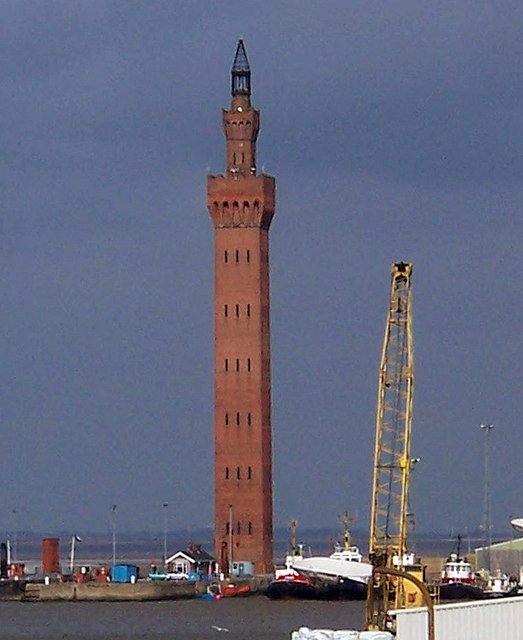
- Grimsby Dock Tower — a 94-metre brick tower of 1852 on the fish docks, built as a hydraulic accumulator to power the lock gates and modelled on the Torre del Mangia in Siena. It is visible from most of the town and is one of the strangest industrial buildings in England.
- The Fishing Heritage Centre — a museum reconstructing life aboard a 1950s deep-sea trawler, with a real trawler, the Ross Tiger, moored outside and open to walk through.
- Cleethorpes seafront — a proper English seaside promenade with a pier, amusement arcades and an enormous tidal beach. In summer it is busy; in February it is bracing and rather beautiful.
- The Humber Bridge — forty minutes north-west, a single-span suspension bridge that was the longest in the world when it opened in 1981. You can walk it.
What to eat and drink
- Fish and chips — in the town that landed more fish than anywhere on earth. Do not eat anything else for lunch. Haddock rather than cod is the local order.
- Grimsby smoked haddock — traditionally cold-smoked over oak in the town and protected by origin. Eaten for breakfast, poached, with a poached egg.
- Cleethorpes rock and chips on the front — the full seaside experience, eaten out of the paper while gulls circle with intent.
- Cask bitter — Lincolnshire has a solid pub tradition, and the walk from the seafront to the ground passes several.
Common questions
Is the ground really not in Grimsby?
Correct — it is in Cleethorpes and has been since 1899. The towns adjoin, so it is a short walk, but book Cleethorpes if you are staying over.
Is it really the lowest ground in Britain?
Yes, at roughly two feet above sea level. Oldham's Boundary Park, at 526 feet, is at the other end of the same list — and both are in League Two.
Can I turn up on the day?
Usually, yes. Check the fixture, but this is exactly the level where walk-up still works, which is the practical reason lower-league English grounds are worth collecting.
Will I be cold?
Yes. Estuary, North Sea, no shelter to windward. Dress for a boat rather than a stadium.
The lowest ground in Britain, a stand named after frozen fish, and the best fish and chips in England. Add Blundell Park to your bucket list and pair it with Oldham for the full range.